

Introduction: Why Your Shorts Keep Stalling at 500 Views
You’ve seen it happen.
You post a Short you genuinely believe in. Strong content. Good hook. Trending audio. You do everything the “experts” say. And then you watch the view counter stall. 200 views. 500 views. Maybe — if you’re lucky — a slow crawl to 2,000 over three weeks.
Meanwhile, a creator in your exact niche uploads something that looks less polished than your content. No fancy transitions. Average lighting. And it hits 800,000 views in four days.
What do they know that you don’t?
The answer isn’t talent. It isn’t luck. And it definitely isn’t paying for views. It comes down to understanding how the YouTube Shorts algorithm actually works in 2026 — and applying the specific YouTube Shorts algorithm hacks that directly influence whether the system pushes your content to hundreds, thousands, or millions of viewers.
In this guide, you’re getting the complete picture. The key algorithm signals. The real metrics that matter. The tactical YouTube Shorts algorithm hacks used by creators who grow consistently — not just occasionally. And you’ll discover why tools like ytZolo are giving a growing wave of smart creators an unfair advantage in the most competitive short-form landscape ever.
Let’s decode this algorithm — and then beat it.
Table of Contents
1. How the YouTube Shorts Algorithm Actually Works in 2026
Before you can hack something, you need to understand it deeply.
The YouTube Shorts algorithm is a recommendation engine that operates completely separately from the regular YouTube algorithm. This distinction matters more than most creators realize when applying youtube shorts algorithm hacks.
Here’s the core difference: regular YouTube videos are click-discovered. A viewer sees your thumbnail and title, then makes a conscious choice to click. With Shorts, there’s no click. Your video just starts playing the moment it enters the feed. The viewer’s only decision is whether to keep watching or swipe away.
This changes everything about what the algorithm actually measures and rewards.
Unlike long-form videos, click-through rate (CTR) is not a ranking factor for Shorts — since users don’t actively click Shorts, they swipe through them. So all the thumbnail optimization advice you’ve absorbed for regular YouTube? It applies very differently here.
Instead, the Shorts algorithm watches behavioral signals in real time:
- Does the viewer watch your Short to completion?
- Do they rewatch it — even accidentally, through looping?
- Do they swipe away in the first two seconds?
- Do they like, comment, or share after watching?
- Does your content match the viewer’s past viewing interests?
The algorithm tests fresh content with smaller audiences before successful videos reach broader viewership over time. Every Short you publish gets a test — one of the core youtube shorts algorithm hacks. Pass the test — and the algorithm opens the floodgates. Fail it — and your content disappears into the void.
YouTube Shorts generates 200+ billion views per day, up from 70B in March 2024. The platform is growing at an explosive rate — which means both the opportunity and the competition are bigger than they’ve ever been.
The YouTube Shorts algorithm hacks in this guide are built around this exact system. Every tactic is designed to improve one or more of those core behavioral signals. Master them — and you master the algorithm.

2. The 5 Metrics That Determine Everything
You can’t optimize what you don’t measure. Before diving into specific YouTube Shorts algorithm hacks, you need to know exactly which numbers actually move the needle.
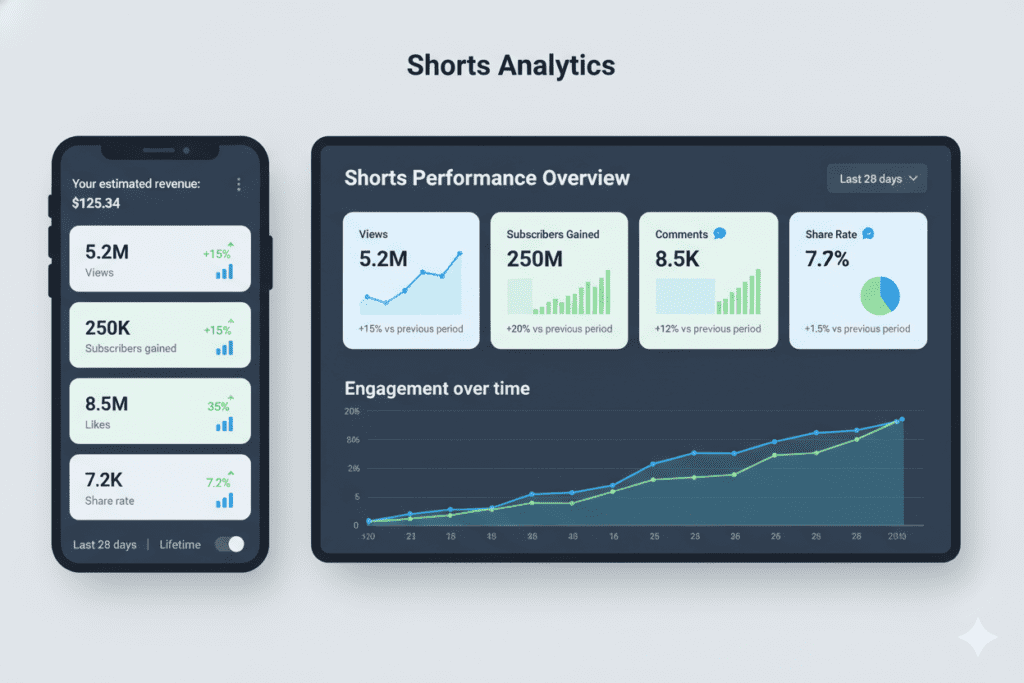
These five metrics are what the algorithm watches most closely — and what you should be obsessing over in YouTube Studio every week.
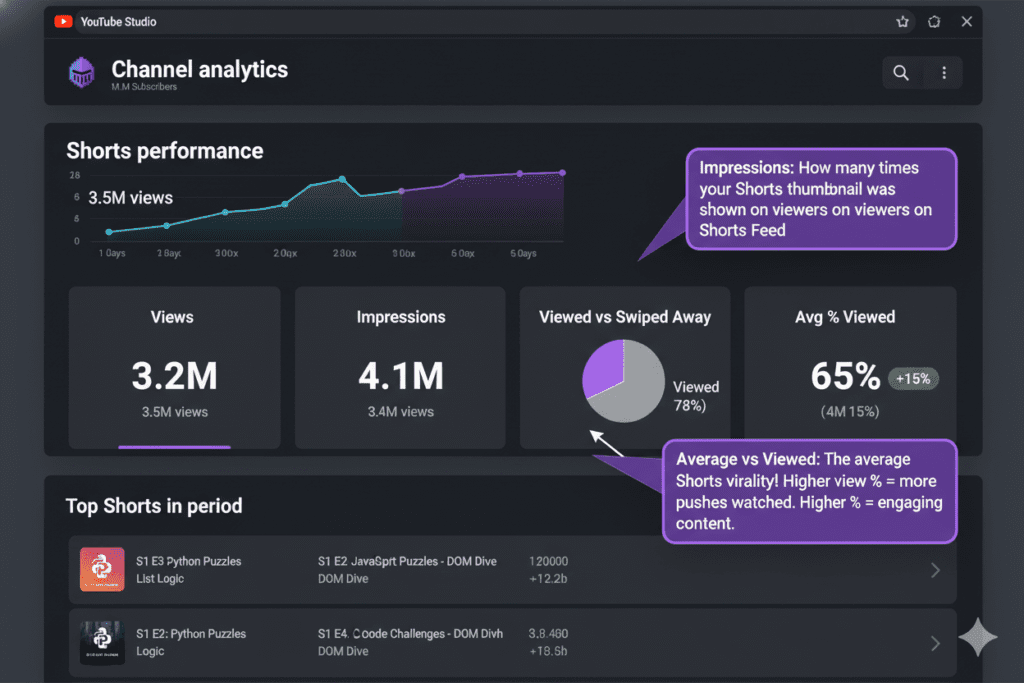
Metric 1: Viewed vs. Swiped Away Ratio
This is the most unique Shorts metric — and arguably the most important one for early-stage distribution.
It measures how many viewers stopped and watched your Short versus swiped past it without watching — one of the key youtube shorts algorithm hacks signals. Think of it as your hook’s report card.
Under 60% signals weak performance. Between 70–90% signals strong results. Aim for 75–80% viewed versus 20–25% swiped away. Hitting this benchmark significantly increases the likelihood of wider distribution from the algorithm.
If your ratio is sitting below 50%, the first second of your Short isn’t working. Fix the hook before anything else.
Metric 2: Average Percentage Viewed (APV)
This measures how much of your Short the average viewer actually watches. It’s the closest equivalent to watch time for long-form content — and the algorithm weights it heavily in youtube shorts algorithm hacks.
A 30-second Short with 85% watch time ranks better than a 60-second Short at 50% retention. Aim for 80%+ APV as your baseline target. For Shorts under 20 seconds, push for 90–100%.
Metric 3: Replays and Loop Rate
When your Average Percentage Viewed exceeds 100%, it means people are rewatching your Short — either intentionally or because your content loops so naturally they don’t realize they’re watching it again.
If the average percentage viewed exceeds 100%, viewers are rewatching a specific moment. Use those timestamps to design repeatable hooks — one of the smartest youtube shorts algorithm hacks. Replays are one of the strongest positive signals you can send the algorithm. Design for them intentionally.
Metric 4: Engagement Rate
YouTube Shorts has an average engagement rate of 5.91% — leading all major short-form video platforms and outperforming TikTok, Instagram Reels, and Facebook Reels.
Likes, comments, shares, and subscribers gained all contribute. Comments are especially powerful because they signal active emotional engagement, not just passive viewing.
Metric 5: Shown in Feed (Impressions)
This metric tells you how aggressively the algorithm is distributing your content — an important signal in youtube shorts algorithm hacks. Low impressions mean the algorithm isn’t pushing your Short. High impressions with low view rate means your hook is failing. High impressions with high view rate? That’s the combination that leads to viral momentum.
Track all five of these in YouTube Studio — and treat them as your weekly performance scorecard.
3. The “Explore vs. Exploit” System Explained
Here’s a critical piece of the algorithm most creators never fully grasp — and it explains why some Shorts suddenly blow up weeks after posting.
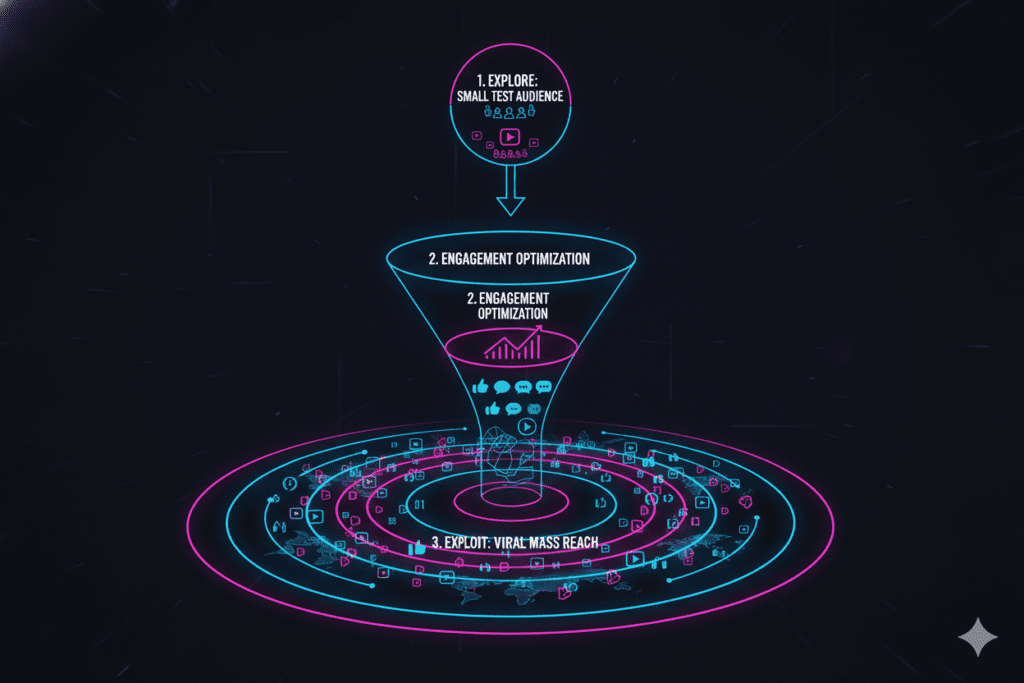
YouTube’s Shorts algorithm runs on an “explore vs. exploit” framework.
Explore phase: When you upload a new Short, the algorithm shows it to a small “seed” audience — typically a few hundred to a few thousand viewers. This group is used to test your content. The algorithm watches how this seed audience behaves. High retention + high view rate = strong content signal. Low retention + high swipe rate = weak content signal.
Exploit phase: If your Short passes the explore test, the algorithm begins exploiting that strong signal — one of the powerful youtube shorts algorithm hacks — pushing your content to progressively larger audiences. First hundreds. Then thousands. Then potentially millions, depending on how each new audience group responds.
The algorithm tests every Short with a small seed audience first. If that group does not engage strongly enough (low retention, high swipe-away rate), the algorithm stops pushing it further. To fix this, you need a stronger hook in the first 1–3 seconds.
This is why the first few hours after posting are so critical. Your seed audience encounter is your best shot at triggering the exploit phase. Post when your audience is active. Make your hook your absolute strongest. And never upload a Short you’re not fully confident in — because a poor seed performance essentially buries that video permanently.
Understanding this system is the foundation of every YouTube Shorts algorithm hack that follows.
4. YouTube Shorts Algorithm Hack #1: Engineer Your Hook
If there’s one single YouTube Shorts algorithm hack that delivers more impact than any other — this is it.
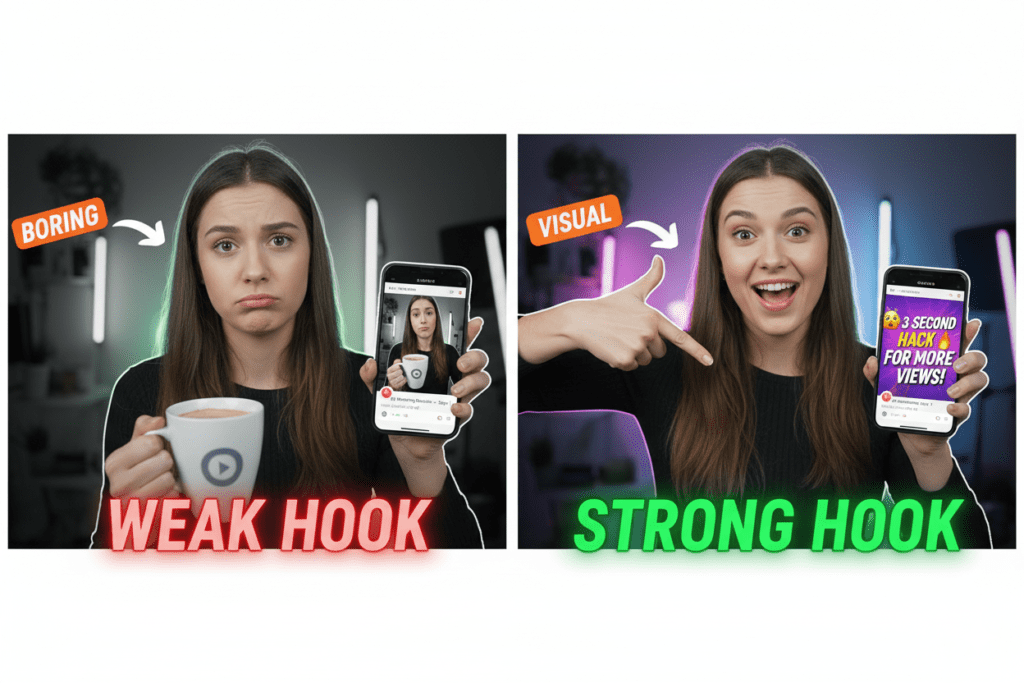
Your hook is the first 1–3 seconds of your Short. It’s the only thing standing between your content and a swipe. And it directly determines your Viewed vs. Swiped Away ratio — the metric the algorithm uses to decide whether to keep distributing your video.
Aim for 90–100% retention on Shorts under 20 seconds. Your content stops getting promoted quickly if viewers drop off early, especially in those critical first seconds.
Here’s what the best hooks accomplish in the opening seconds:
Hook Framework: The 4 Proven Openers
1. The Bold Claim Hook State something surprising, counterintuitive, or provocative immediately. “The productivity hack I use gets 8 hours of work done before noon.” “I stopped posting daily — and my views tripled.”
2. The Visual Action Hook Start mid-action — not at the beginning of the action. The brain is wired to seek resolution. If the viewer arrives in the middle of something happening, they instinctively stay to see how it ends.
3. The Direct Question Hook Ask a question your target viewer desperately wants answered. “Why does everyone else’s Short go viral except yours?” The question creates an open loop. The viewer’s brain needs closure. They stay.
4. The Curiosity Gap Hook Show a result — but withhold the method. “This one change doubled my channel in 30 days. Here’s exactly what I did.” Tease the answer just enough to make leaving feel impossible.
The First Frame Test
Before you publish any Short, ask yourself: would someone who has never heard of you stop scrolling because of this opening frame alone?
If the honest answer is “probably not” — reshoot or re-edit your hook before uploading. A weak hook poisons your seed audience performance and triggers the algorithm’s kill switch immediately.
Top creators aim for roughly 75–80% view rate. Hitting this level signals to the algorithm that your hook works — which leads to broader distribution every time.
5. YouTube Shorts Algorithm Hack #2: The Loop Trick
This is one of the most underused YouTube Shorts algorithm hacks in 2026 — and one of the highest-impact ones.
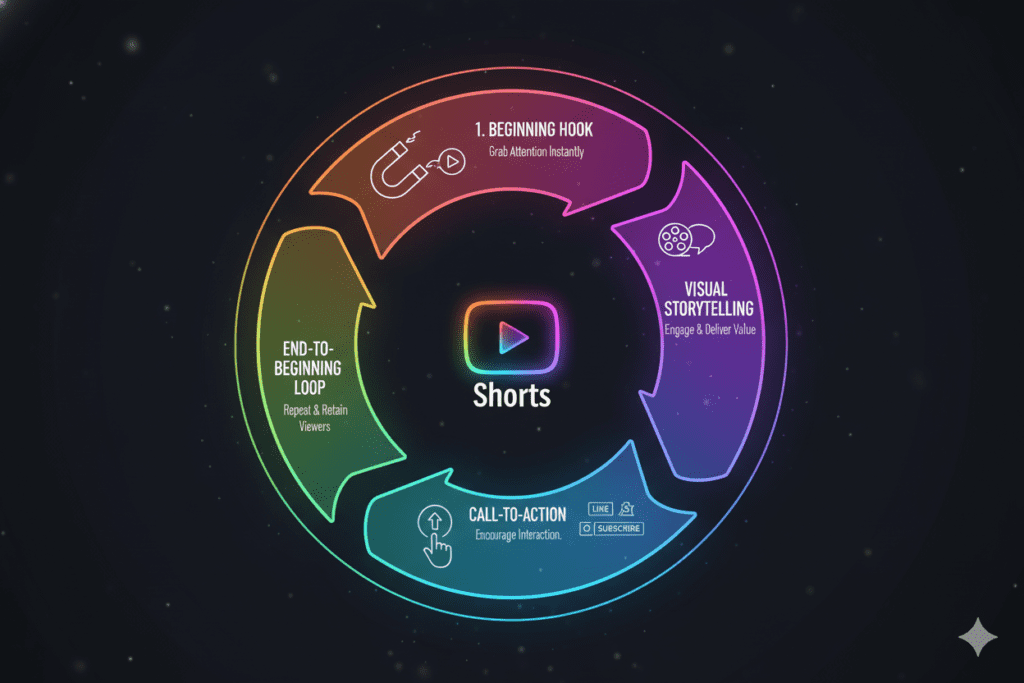
The Shorts feed is designed to loop. When your Short ends, it starts playing again immediately. Most creators ignore this. Smart creators engineer it.
When you design your Short to loop seamlessly — ending in a way that flows naturally back into the beginning — viewers often don’t realize they’re watching a second time. They’re halfway through the replay before they notice.
Shorts designed to loop seamlessly consistently outperform similar content without loops. If viewers watch it twice (even unknowingly), that’s 200% retention — which the algorithm treats as a gold-standard engagement signal.
How to Build a Perfect Loop
Method 1: The Question-Answer Loop Open your Short with a question. Answer it throughout the video. End on a frame or line that recontextualizes the question — making the viewer want to hear the answer again. When the loop replays, the opening hits with new meaning.
Method 2: The Visual Loop End your Short on the same visual or action you opened with. The brain perceives this as continuity rather than repetition — and keeps watching naturally.
Method 3: The Tease-and-Deliver Loop Show something intriguing early, build toward the reveal, then end in a way that makes viewers want to revisit what they might have missed at the beginning.
Loop design transforms a single watch into 150–200% average percentage viewed. That number is pure algorithmic gold.
6. YouTube Shorts Algorithm Hack #3: Nail Your Optimal Length
Length is a YouTube Shorts algorithm hack most creators overthink — but there is genuine data behind the optimal approach.
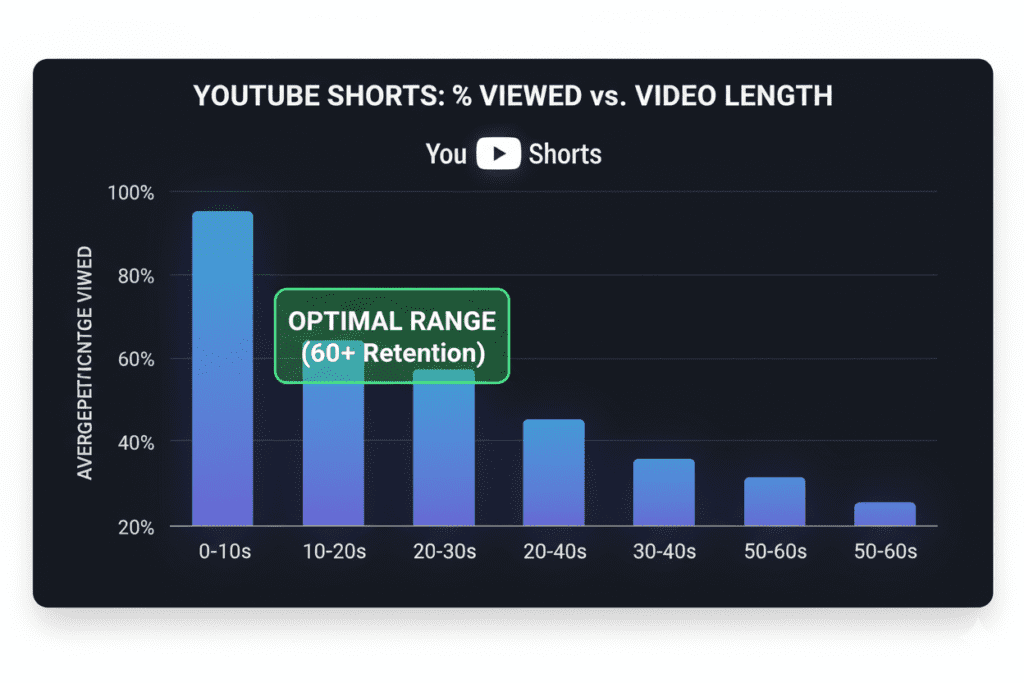
YouTube extended Shorts to 3 minutes in 2026. That doesn’t mean you should use 3 minutes. Longer Shorts amplify the difficulty of maintaining the high retention percentages the algorithm demands.
Here’s the data-backed breakdown by content type:
- Under 20 seconds: Maximum retention potential (aim for 90–100% APV). Best for single-insight tips, visual reveals, and quick humor.
- 20–45 seconds: The sweet spot for most niches. Enough time to deliver real value — short enough to hold attention comfortably.
- 45–60 seconds: Works well for tutorials, storytelling, and educational content — but every second must earn its place.
- 60–180 seconds: Only use this range if your content genuinely requires it. Retention drops significantly with length. If you can say it in 40 seconds, don’t use 90.
An analysis of 3.3 billion Shorts found that Shorts of around 50–60 seconds get greater numbers of views overall — suggesting viewers prefer Shorts that use their full time allowance meaningfully rather than cutting short artificially.
The universal principle: match your length to your content’s natural rhythm. Don’t pad. Don’t rush. The algorithm rewards completion — so the optimal length is whatever length your content can maintain near-perfect retention.
7. YouTube Shorts Algorithm Hack #4: Trend Timing Strategy
Trends are a force multiplier for YouTube Shorts algorithm hacks — but only if you use them strategically.
Most viral YouTube Shorts ride trends. But trends fade fast. The window is often just 2–3 days. Get in fast, create multiple takes, and iterate. Don’t just make one version — upload three, change the framing, and see what sticks.
Here’s the three-phase trend strategy the fastest-growing creators use:
Phase 1: Early Detection (48 Hours Before Peak)
Monitor these sources daily to catch trends before they saturate:
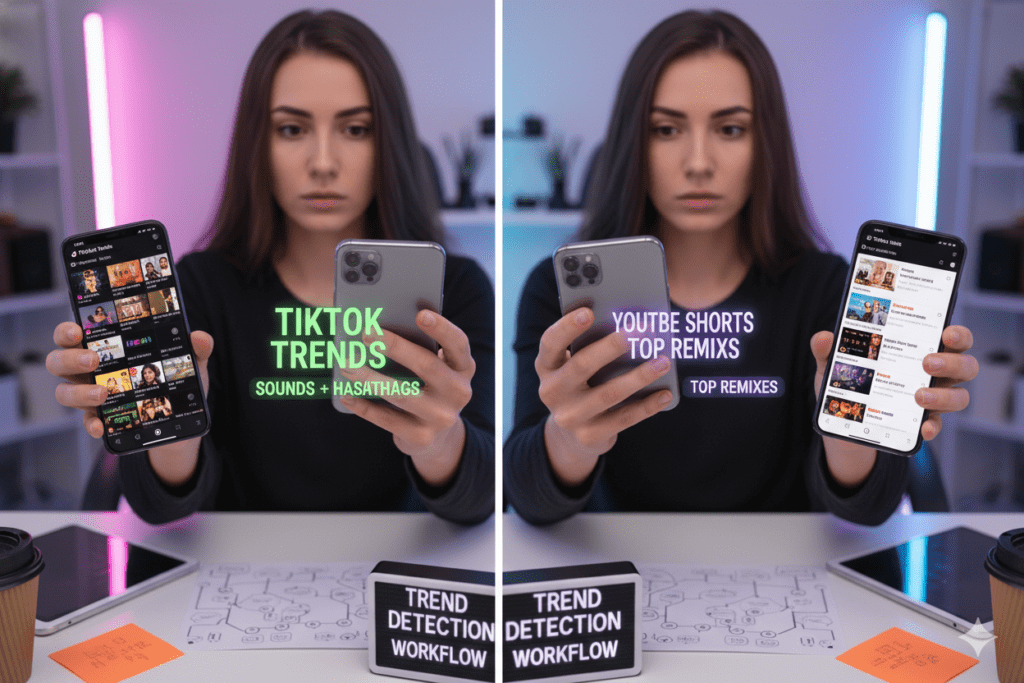
- TikTok For You Page — what’s trending on TikTok today typically arrives on Shorts in 48–72 hours
- YouTube Shorts feed in your niche — sort by “New” not “Popular”
- Google Trends Explore — search your niche keywords, filter for “past 7 days”
- Twitter/X trending topics — for cultural and news-driven opportunities
Phase 2: Rapid Creation (Within the Trend Window)
Speed matters more than perfection during a trend window. A solid Short posted on Day 1 of a trend will dramatically outperform a great Short posted on Day 5.
Create your first version fast. Use a trending audio. Adapt the format to your niche. Publish.
Phase 3: Iteration (While the Trend Is Hot)
Don’t make one version. Upload three — change the framing — and see what sticks. The algorithm tests each version independently. One might hit the explore-phase trigger while others don’t. More shots at the same trend multiply your chances of breakthrough.
The bonus: trending audio tracks get an algorithmic boost in the Shorts feed automatically. Using a currently trending sound is one of the fastest, easiest YouTube Shorts algorithm hacks available to any creator right now.
8. YouTube Shorts Algorithm Hack #5: Posting Time and Frequency
Timing is a YouTube Shorts algorithm hack that’s underestimated by beginners and obsessed over by veterans. The truth is somewhere in the middle — but it genuinely matters.
Why Posting Time Matters More for Shorts
For long-form YouTube, posting time matters relatively little. Shorts are different — because the explore phase happens in real time. Your seed audience encounter happens in the first hours after publishing. If you post at 3 AM when your audience is asleep, your seed performance suffers. Lower seed engagement means the algorithm may not push your Short into the exploit phase at all.
How to Find Your Optimal Posting Window
Go to the Analytics tab in your YouTube Studio. Navigate to Audience. Scroll down to find the audience activity heatmap. Identify when most of your viewers are online. If your data shows peak activity from Friday to Sunday between 4–7 PM — schedule your Short for 3:30 PM on Friday. Arrive slightly before the peak to catch viewers as their session begins.
Posting Frequency: What the Data Says
Frequent posting shows the YouTube Shorts algorithm that you’re reliable. Some creators find it takes up to 200 Shorts uploads before seeing consistent view increases. This sounds daunting — but it’s liberating too. Consistency is achievable because Shorts require far less production time than long-form content.
Here’s the frequency framework:
- Beginner (building momentum): 3–4 Shorts per week minimum
- Growth phase (warming the algorithm): 5–7 Shorts per week
- Scaling phase (established channel): 1–2 Shorts per day, with 1–2 rest days after a viral hit
Taking one to two days off after a successful post gives the algorithm time to fully distribute your hit Short before the next upload competes for feed placement.

9. YouTube Shorts Algorithm Hack #6: Metadata Optimization
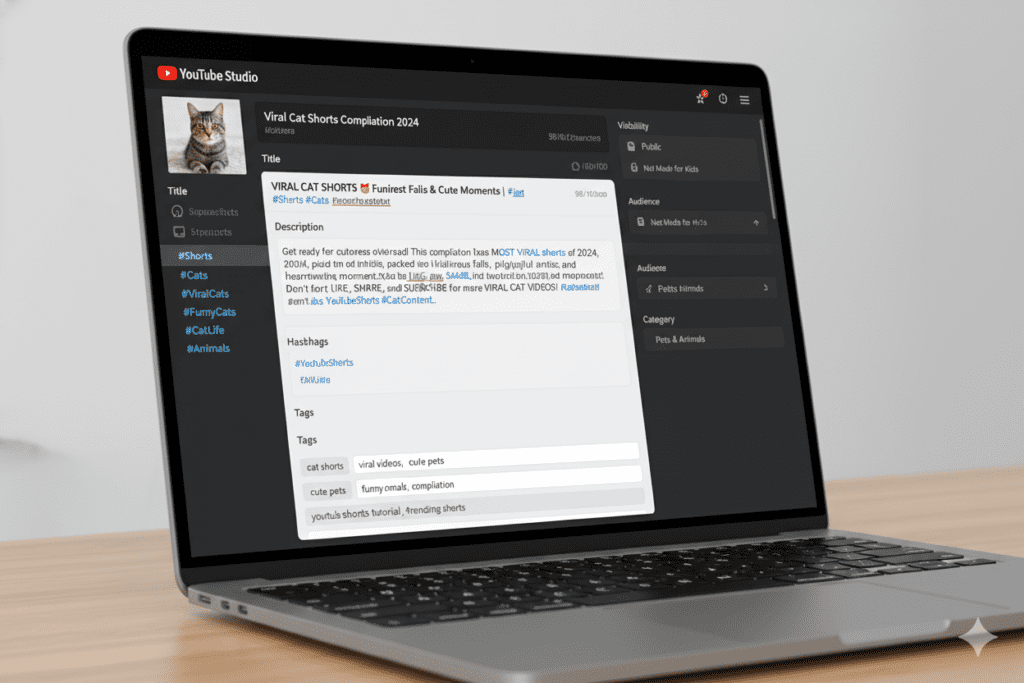
Here’s a YouTube Shorts algorithm hack that’s wildly underused: your metadata — title, description, hashtags, and tags — directly helps the algorithm understand who to show your content to.
The Shorts algorithm matches your content to viewers based on their interest profile. It needs clear topical signals to make that match accurately. Vague or generic metadata creates a fuzzy signal. Precise, targeted metadata creates a crystal-clear one — and the algorithm rewards you for it.
Title Optimization for Shorts
Your Shorts title still appears in search results and on your channel page. Make it:
- Front-loaded with the key topic — the algorithm reads left to right
- Specific, not generic — “3 Kitchen Hacks for Busy Parents” beats “Kitchen Tips”
- Emotionally driven — power words like “secret,” “hidden,” “mistake,” “never,” and “instantly” can double CTR in Shorts search results
Description Optimization
Your description is indexed by YouTube for search. Use it strategically:
- Include your primary topic keyword naturally in the first line
- Add 2–3 related keywords as you describe the video content
- Keep it concise — 2–4 sentences is enough for most Shorts
Hashtag Strategy
Use the 3-tier hashtag formula for maximum reach and relevance:
- 1–2 broad tags:
#Shorts#YouTubeShorts - 2–3 niche-specific tags:
#FitnessShorts#HomeWorkout#FitnessTips - 1–2 hyper-specific tags:
#QuickHomeWorkoutForBeginners
Total: 5–8 hashtags maximum. Quality and precision beat quantity every time.
The Competitor Metadata Hack
Open a competitor’s Short on desktop and replace ‘shorts’ in the URL with ‘watch.’ This opens the video as a regular YouTube video — revealing all channel tags and keyword metadata in the sidebar. Study the metadata of your top-performing competitors and identify the keyword and hashtag patterns they use consistently across their most-viewed content.
10. YouTube Shorts Algorithm Hack #7: Engagement Triggers
Engagement signals — likes, comments, shares, and subscribers gained — directly influence how aggressively the algorithm distributes your Short beyond the initial explore phase.
These are the most effective YouTube Shorts algorithm hacks for deliberately triggering meaningful engagement:
The Comment Magnet Technique
Ask one specific, easy-to-answer question at the end of your Short. Not “What did you think?” — that’s too open-ended. Try these instead:
- “Which one would you try first — A or B?”
- “Drop a 🔥 if this helped you”
- “What’s your biggest struggle with [topic]? Tell me below”
Specific, low-friction prompts generate far more comments than open-ended questions. And comments are one of the strongest engagement signals the algorithm measures.
The Save Trigger
Shares and saves signal to the algorithm that your content has lasting value beyond the initial viewing. Create Shorts that people will want to reference again:
- Checklists and step-by-step frameworks
- “Save this for when you need it” prompts
- Resource lists and tool recommendations
The Subscribe Hook
End your Short with a reason to subscribe — not just a request. “Follow for Part 2 tomorrow” is 10x more effective than “Subscribe for more videos.” Give viewers a specific reward for subscribing.
The Emotional Resonance Formula
Fear, joy, outrage, and amazement drive virality. A how-to Short that also makes people laugh consistently outperforms a dry tutorial. Emotional resonance equals shares, replays, and comments.
Every Short should make the viewer feel something. Identify the core emotion your content triggers — and lean into it deliberately.

11. YouTube Shorts Algorithm Hack #8: The Series Strategy
This is one of the most overlooked long-game YouTube Shorts algorithm hacks — and one of the most powerful for sustained channel growth.
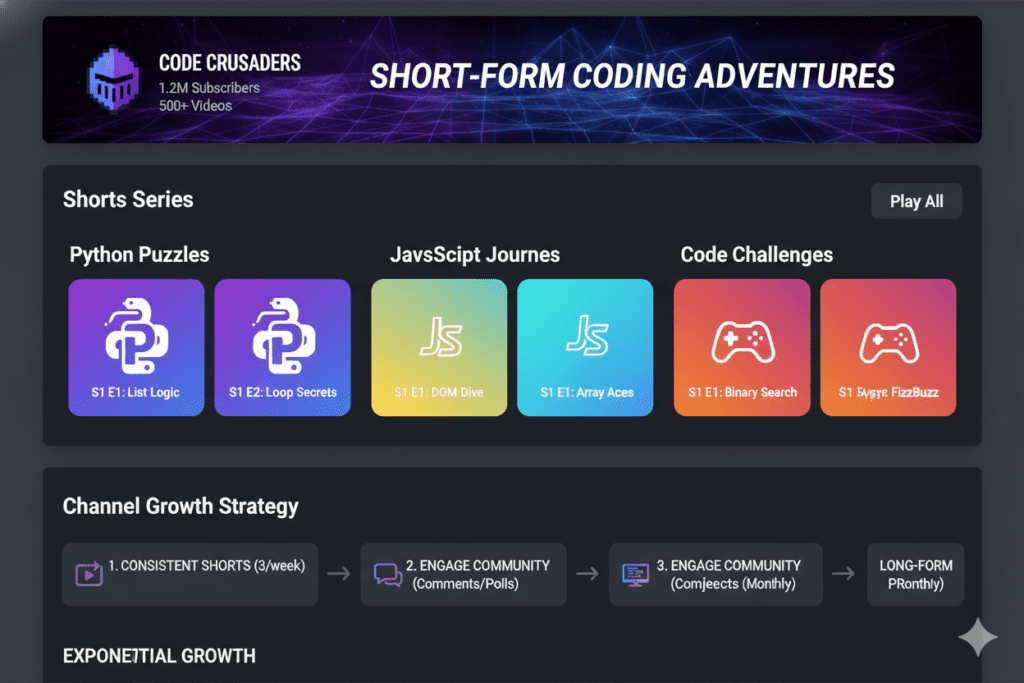
Creating Short-form series — content with explicit “Part 1,” “Part 2” structures — unlocks a growth mechanic most solo Shorts simply don’t have: series-based retention.
Viewers who see Part 1 and know Part 2 is coming are far more likely to subscribe. It’s not just a content strategy — it’s an algorithm strategy.
Why Series Work Across Multiple Algorithm Levels
Level 1 — Individual retention: Each Short in a series benefits from the viewer’s existing investment in the storyline or framework. They already care about the outcome.
Level 2 — Channel page browsing: Viewers who find Part 3 will naturally visit your channel to find Parts 1 and 2 — driving channel page traffic and increasing subscribers gained.
Level 3 — Playlist signals: Shorts grouped into thematic playlists send content-clustering signals to the algorithm. Clearer categorization means better audience matching — and more consistent distribution to interested viewers.
Creators who cluster Shorts around themes — “Mini cooking tips,” “Daily productivity hacks,” “Fitness in 30 seconds” — drive binge-watching behavior that YouTube’s algorithm explicitly rewards.
Build your content calendar around series. Plan your 3-part, 5-part, or 7-part series in advance. Tease the next installment at the end of each Short. This single structural shift can transform your subscriber growth trajectory.
12. Why Manual Strategy Is Losing the Battle
Let’s be completely honest about the competitive reality right now.
Manually implementing YouTube Shorts algorithm hacks — researching trends by hand, writing titles from scratch, testing hashtag combinations one by one, crafting descriptions and tags for each upload — takes hours per video.
And in 2026’s Shorts environment, that time cost is a serious competitive disadvantage.
According to the YouTube Creator Blog, the creators growing fastest on Shorts are posting 5–7 times per week — consistently, over months and years. At 2–3 hours of manual optimization per Short, that’s 15–20 hours of metadata work every single week. Work that has nothing to do with making your content better.
That’s not a sustainable creative workflow. That’s a second full-time job.
Meanwhile, as Hootsuite’s algorithm research confirms, the algorithm rewards consistent, high-quality output over time — not occasional peaks of manual effort.
Every hour you spend writing titles manually is an hour a competitor using ytZolo spent making a better Short. The gap between AI-assisted creators and manual creators is widening every single month.
Manual YouTube Shorts algorithm hacks aren’t wrong — they just don’t scale. And in a game of consistency and volume, scale is everything.

13. Why ytZolo Is Better Than Other Tools for Algorithm Growth
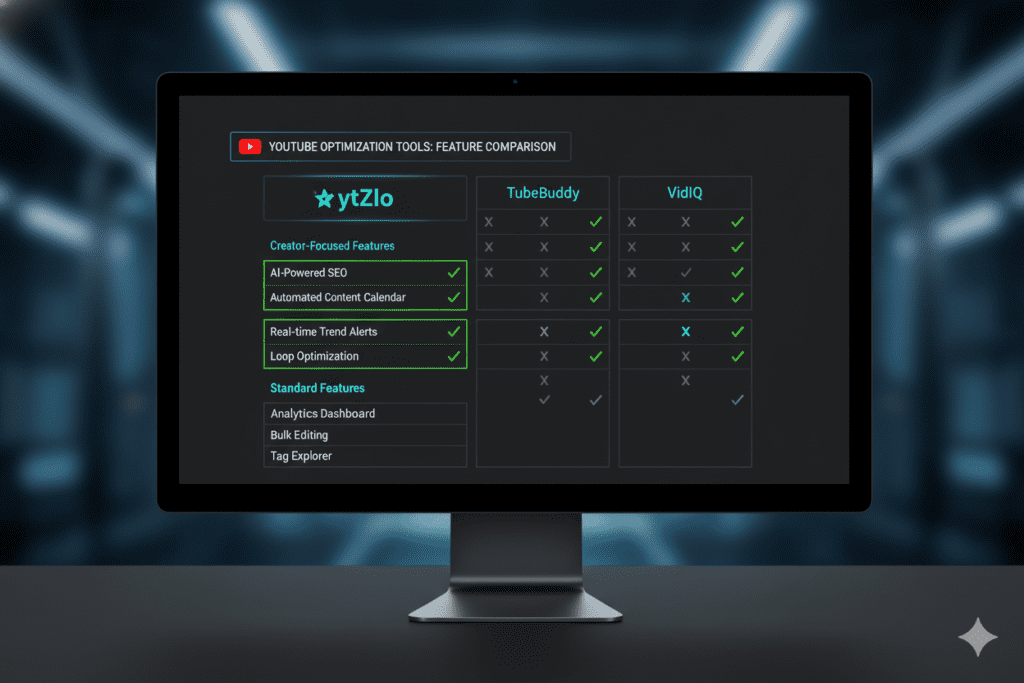
The YouTube growth tool market is crowded. But when you compare head-to-head, ytZolo stands in a different category from every competitor.
Here’s the complete breakdown:
| Feature | ytZolo | TubeBuddy | VidIQ | Epidemic Sound |
|---|---|---|---|---|
| AI-generated viral titles | ✅ Yes | ❌ Limited | ❌ Limited | ❌ No |
| Full description AI writer | ✅ Yes | ❌ No | ❌ No | ❌ No |
| Hashtag + tag AI generator | ✅ Yes | ✅ Partial | ✅ Partial | ❌ No |
| Thumbnail concept AI | ✅ Yes | ❌ No | ❌ No | ❌ No |
| Script and hook generator | ✅ Yes | ❌ No | ❌ No | ❌ No |
| Algorithm-informed strategy | ✅ Yes | ⚠️ Analytics only | ⚠️ Analytics only | ❌ No |
| Built specifically for Shorts virality | ✅ Yes | ❌ No | ❌ No | ❌ No |
| All-in-one optimization platform | ✅ Yes | ❌ No | ❌ No | ❌ No |
TubeBuddy and VidIQ are powerful analytics dashboards. They show you what happened. But they don’t help you create better content, write better titles, or engineer stronger hooks. They’re retrospective tools in a game that demands proactive execution.
ytZolo is built differently. It’s a complete AI YouTube growth platform — built from the ground up for creators who want to go viral on Shorts, not just analyze why they didn’t.
While other tools show you data, ytZolo takes action on that data. While competitors tell you your title underperformed, ytZolo generates a better title for you — instantly.
The ytZolo blog also functions as a free creator education hub — publishing deep-dive guides on algorithm updates, trend strategies, and platform changes that you’d normally have to pay a consultant thousands of dollars to access.
14. How ytZolo Supercharges Every YouTube Shorts Algorithm Hack
Here’s the practical picture of how ytZolo integrates with every YouTube Shorts algorithm hack covered in this guide.
The Problem ytZolo Solves
You now know the eight core YouTube Shorts algorithm hacks. Implementing them consistently — across every Short, every week — is the real challenge. Each one requires research, creative work, and strategic judgment applied fresh for each new upload.
That’s where most creators fall short. Not because they don’t understand the hacks. Because they don’t have the time or energy to apply them at scale.
ytZolo eliminates that bottleneck entirely.
Step 1: Enter Your Short’s Topic
Log in at ytzolo.com. Type your Short’s topic or working concept. Example: “3 morning habits that doubled my productivity”
Step 2: Receive Your Complete Algorithm-Optimized Package
In seconds, ytZolo’s AI engine generates everything you need:
- ✅ Viral title options — engineered with power words, curiosity gaps, and keyword optimization for the Shorts search algorithm
- ✅ Hook script — the first 3–5 seconds of your Short, built to maximize Viewed vs. Swiped Away ratio
- ✅ Keyword-rich description — structured to give the algorithm clear topical context signals for accurate audience matching
- ✅ Full hashtag set — the 3-tier broad/niche/specific formula applied automatically for maximum reach and relevance
- ✅ Complete tag list — semantic and LSI keywords that sharpen the algorithm’s content categorization
- ✅ Thumbnail concept brief — specific visual direction that maximizes first-impression performance
Step 3: Create and Publish With Confidence
Every element of your Short is now optimized before you upload. Your hook is engineered. Your metadata is precise. Your hashtags are balanced. Your title triggers curiosity. The algorithm has everything it needs to accurately test and distribute your content — and your viewers have every reason to stop, watch, and engage.
“ytZolo helped me go from 800 average views per Short to consistently hitting 50K–200K. The difference was having every optimization handled before I hit publish.” — ytZolo creator
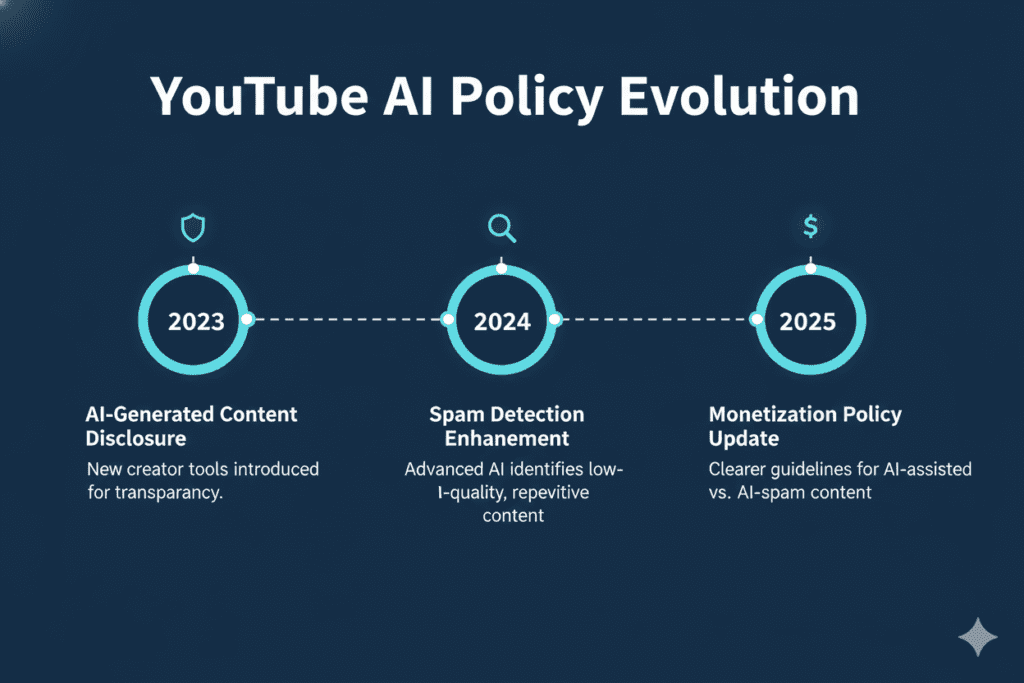
15. Reading Your Analytics Like a Pro
Applying YouTube Shorts algorithm hacks is only half the equation. The other half is learning from your results and iterating intelligently.
Here’s a quick, actionable guide to reading your Shorts analytics in YouTube Studio:
The Weekly Analytics Routine (15 Minutes Per Week)
Check these metrics for every Short published in the past 7 days:
- Viewed vs. Swiped Away — Is it above 70%? If not, your hook needs work on your next similar Short.
- Average Percentage Viewed — Is it above 80%? If not, identify the exact timestamp where viewers are dropping off. That’s your content’s weak point.
- Impressions vs. Views — A large gap between these two means viewers are scrolling past even after the algorithm serves your Short. Hook issue.
- Traffic Sources — If “Shorts feed” isn’t your dominant traffic source, your content isn’t being distributed in the feed. Check your seed audience performance metrics.
- Subscribers Gained — Which Shorts are actually converting viewers into subscribers? Double down on those content types and formats.
The “Autopsy” Method
When a Short performs significantly below your average, do a quick post-mortem:
- Was the hook weak? (Low Viewed vs. Swiped Away)
- Was the content too long? (High early drop-off in APV graph)
- Was it posted at the wrong time? (Low initial velocity in first 3 hours)
- Was the metadata too vague? (Low impression count from Shorts feed)
Diagnose the problem. Fix it in your next upload. This data-driven iteration cycle is what separates creators who grow from those who plateau indefinitely.
16. Common Algorithm Mistakes Killing Your Reach
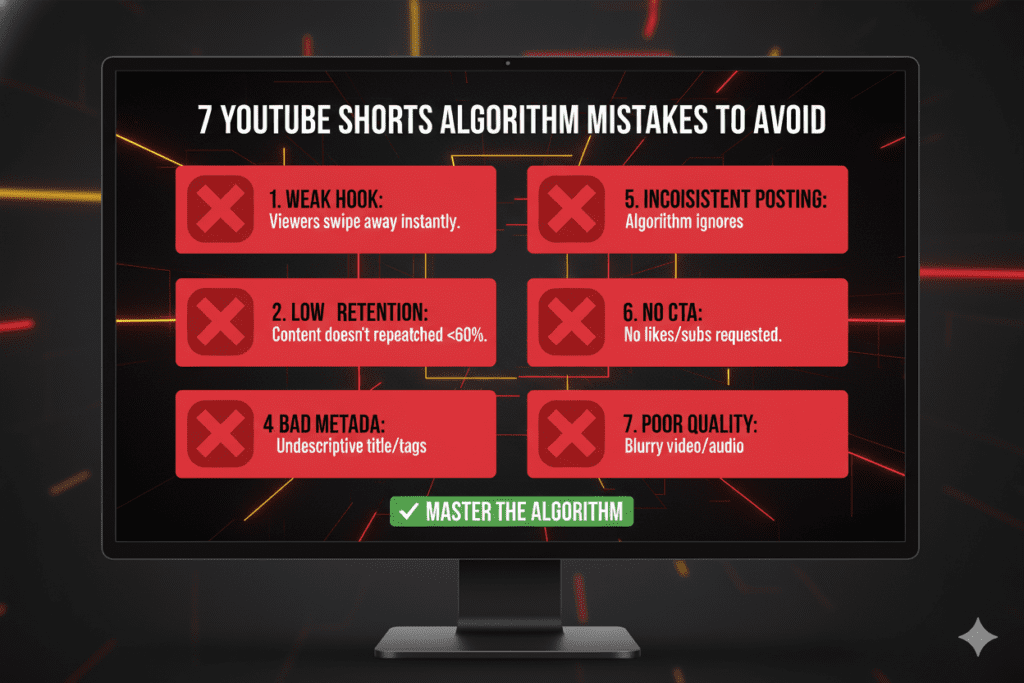
Even creators who study YouTube Shorts algorithm hacks fall into these traps. Audit yourself honestly against this list.
❌ Mistake 1: Weak Opening Frame
Your first frame is your most important asset. If it doesn’t immediately signal value, curiosity, or entertainment — you’ve lost the viewer before your hook even loads. Always start with your most visually compelling moment.
❌ Mistake 2: Long, Slow Intros
“Hey everyone, welcome back to my channel. Today I’m going to show you how to…”
That phrase has killed more Shorts than any other. The audience is gone by “welcome back.” Start in the middle of the value. Context can come after you’ve earned the watch.
❌ Mistake 3: Inconsistent Niche
Jumping between unrelated topics confuses the algorithm’s audience-matching process. Consistency within a niche helps because the algorithm can reliably match your content to interested viewers. Pick your lane. Stay in it. Build topical authority over time.
❌ Mistake 4: Posting Without Reviewing Analytics
Posting blind — without studying your previous performance data — means you’re repeating mistakes you could have fixed weeks ago. The analytics tell you exactly what worked and what didn’t. Read them. Act on them. Every week.
❌ Mistake 5: Ignoring Metadata Entirely
Uploading a carefully crafted Short with a generic title and random hashtags is like building a masterpiece and hiding it in a back alley. The algorithm needs metadata signals to categorize and distribute your content accurately to the right viewers.
❌ Mistake 6: Quitting Before the Breakthrough
Some creators find it takes up to 200 Shorts uploads before seeing a consistent view increase. Most people quit long before that point — which means the creators who keep going face dramatically less competition past the threshold. The breakthrough is real. Most people just don’t reach it.
❌ Mistake 7: Chasing Views Instead of Signals
Views are a lagging indicator. Retention, Viewed vs. Swiped Away ratio, and engagement rate are leading indicators. Optimize for the signals — and the views will follow automatically.
17. FAQ: YouTube Shorts Algorithm Hacks
Q1: What are the most effective YouTube Shorts algorithm hacks in 2026?
The most impactful YouTube Shorts algorithm hacks in 2026 are: engineering a strong hook in the first 1–3 seconds to maximize your Viewed vs. Swiped Away ratio; designing your Short to loop naturally for higher Average Percentage Viewed; posting at peak audience activity times to optimize your seed audience performance; using a 3-tier hashtag strategy for accurate algorithm categorization; and building series-based content to trigger binge-watching and subscriber conversion. Used together, these hacks stack compound improvements across every algorithm signal that drives distribution.
Q2: How does the YouTube Shorts algorithm decide which videos to push?
The YouTube Shorts algorithm uses a two-phase system: an “explore” phase where your Short is tested with a small seed audience, followed by an “exploit” phase where high-performing content is pushed to progressively larger audiences.
The key signals it measures are the Viewed vs. Swiped Away ratio (hook strength), Average Percentage Viewed (retention quality), replays and loops (re-watch value), engagement (likes, comments, shares), and content relevance to viewer interest profiles. The algorithm doesn’t rank by recency or channel size — it ranks purely by viewer satisfaction signals.
Q3: What is a good Viewed vs. Swiped Away ratio on YouTube Shorts?
A strong Viewed vs. Swiped Away ratio for YouTube Shorts is between 70–90%. This means 7–9 out of every 10 viewers who see your Short in the feed choose to watch it rather than swipe past it. A ratio below 60% indicates a weak hook that needs immediate attention. Consistently hitting 75–80% signals strong hook performance to the algorithm and significantly increases the likelihood of broader viral distribution.
Q4: Does posting time affect YouTube Shorts algorithm performance?
Yes — posting time matters for Shorts more than for long-form YouTube videos. This is because Shorts receive an algorithmic “test” in the first hours after publishing. If your audience is inactive when you post, your seed audience performance suffers — which can prevent the algorithm from pushing your Short into the exploit phase. Use YouTube Studio Analytics to find when your specific audience is most active, then post 15–30 minutes before your peak window begins.
Q5: How can ytZolo help me apply YouTube Shorts algorithm hacks?
ytZolo is an all-in-one AI YouTube growth platform that handles the metadata and strategy side of every YouTube Shorts algorithm hack — so you can focus entirely on creating great content. It generates viral-optimized titles, hook scripts, keyword-rich descriptions, full hashtag sets, and thumbnail concepts in seconds.
Instead of spending hours on manual optimization per Short, ytZolo delivers your full content package in under 5 minutes — giving every Short the strongest possible algorithmic foundation before it even goes live.
18. Conclusion: The Algorithm Is Not Your Enemy
Here’s the mindset shift that changes everything.
Most creators treat the YouTube Shorts algorithm like an obstacle — a mysterious gatekeeper deciding, seemingly at random, which creators succeed and which get buried.
But after everything we’ve covered in this guide, you now understand the truth: the algorithm is not your enemy. It’s your distribution partner. It wants to push great content to the right audiences. That’s its entire purpose — because viewer satisfaction is YouTube’s business model.
Your job isn’t to fight the YouTube Shorts algorithm. Your job is to give it the clearest possible signals that your content is worth distributing.
Apply the YouTube Shorts algorithm hacks in this guide with consistency:
- Engineer hooks that stop the scroll in 1–3 seconds
- Design loops that trigger replays without viewers noticing
- Match your length to your content’s natural rhythm
- Ride trends within the first 48-hour window
- Post during peak audience activity times
- Optimize every piece of metadata with precision
- Trigger meaningful engagement with strategic CTAs
- Build series that convert casual viewers into loyal subscribers
And then — critically — use the right tools to apply these YouTube Shorts algorithm hacks at scale.
ytZolo is the AI platform that makes consistent execution possible. While competitors spend 3 hours manually optimizing one Short, ytZolo users are publishing fully optimized content in minutes — then spending the remaining time making their actual videos better.
The creators winning on YouTube Shorts in 2026 aren’t the ones who work the hardest. They’re the ones who combine smart strategy with smart tools — and show up consistently, day after day.
The algorithm will reward you for it. It always does.
🚀 Stop Guessing. Start Growing.
Start creating smarter, faster, and more viral YouTube content with ytZolo today.
Your next viral Short is one fully optimized upload away. Visit ytzolo.com and let AI handle the strategy while you focus on the creativity.
For a constant stream of free, in-depth YouTube growth guides — bookmark the ytZolo blog. New creator strategies, algorithm breakdowns, and optimization tutorials published regularly.
External Resources Referenced:
- YouTube Creator Blog — Official YouTube guidance on Shorts strategy and creator best practices
- Hootsuite YouTube Algorithm Guide — Data-backed breakdown of how YouTube’s recommendation system works
- Ahrefs YouTube SEO Guide — Keyword research and SEO optimization strategies for YouTube creators


Pingback: YouTube Title Maker: Best AI Tools to Boost CTR (2026)
Pingback: Best YouTube AI Thumbnail Creator to Boost Your CTR 2026
Pingback: 5 Best Script Writer for YouTube in 2026 | Free & Powerful No Flop
Pingback: ytZolo vs TubeMagic: Best AI YouTube Tool in 2026?