

Introduction: The Creator Who Almost Quit YouTube
Marcus uploaded 47 videos in one year.
He spent hours scripting, filming, and editing. He did everything the YouTube gurus told him to do. And yet, his videos were barely getting 50 views each.
Then one day, he discovered the real secret behind YouTube growth — YouTube video SEO keywords.
Not just any keywords. The right keywords, placed in the right spots, at the right time.
Within 90 days, his channel crossed 10,000 subscribers. His videos were ranking on the first page. Brands started reaching out.
What changed? Marcus stopped guessing. He started using YouTube video SEO keywords strategically — and he used an AI tool called ytZolo to do the heavy lifting for him.
If you’re tired of uploading into the void, this guide is for you. You’re about to learn exactly how YouTube video SEO keywords work, why most creators get them wrong, and how you can fix it today.
Table of Contents
What Are YouTube Video SEO Keywords?
YouTube video SEO keywords are the specific words and phrases people type into YouTube’s search bar when looking for content.
They’re the bridge between your video and your audience. Without the right YouTube video SEO keywords, your content is invisible — no matter how good it is.
Think of YouTube as the world’s second-largest search engine. Over 2.5 billion users visit it every month. Every single day, millions of people search for things like “how to lose belly fat,” “best budget smartphones,” or “beginner guitar lessons.”
If your video isn’t optimized with the right YouTube SEO keywords, it simply won’t show up. And if it doesn’t show up, it doesn’t get watched.
That’s the brutal truth of YouTube in 2026.
Why YouTube Video SEO Keywords Matter More Than Ever in 2026
Here’s something that might surprise you.
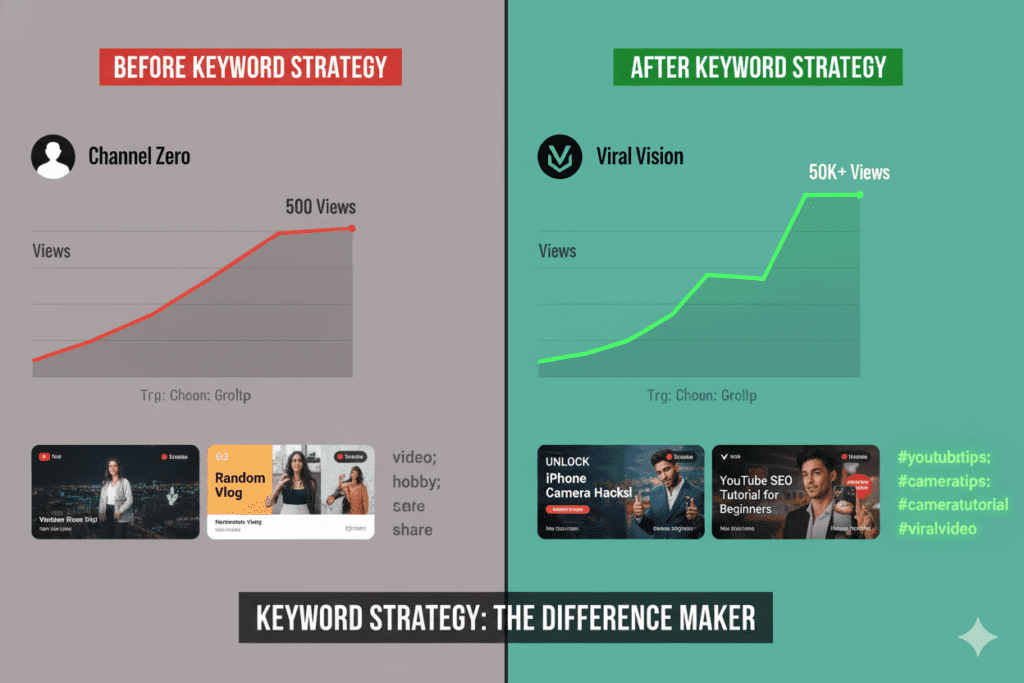
According to research, only about 30% of YouTube views come from subscribers or external sources. The other 70% come directly from YouTube’s algorithm — search results, suggested videos, and the home feed.
That 70% is almost entirely controlled by your YouTube video SEO keyword strategy.
Paid ads stop the moment your budget runs out. But a well-optimized video with the right keywords keeps pulling in views 24/7 — for free, for years.
Channels that consistently use smart YouTube video SEO keywords see 2x to 3x higher organic view growth than channels that don’t. That’s not a small edge. That’s the difference between a hobby channel and a monetized business.
And here’s the kicker: most creators still aren’t doing this right. That’s a massive opportunity for you.
How YouTube’s Algorithm Uses Keywords to Rank Videos
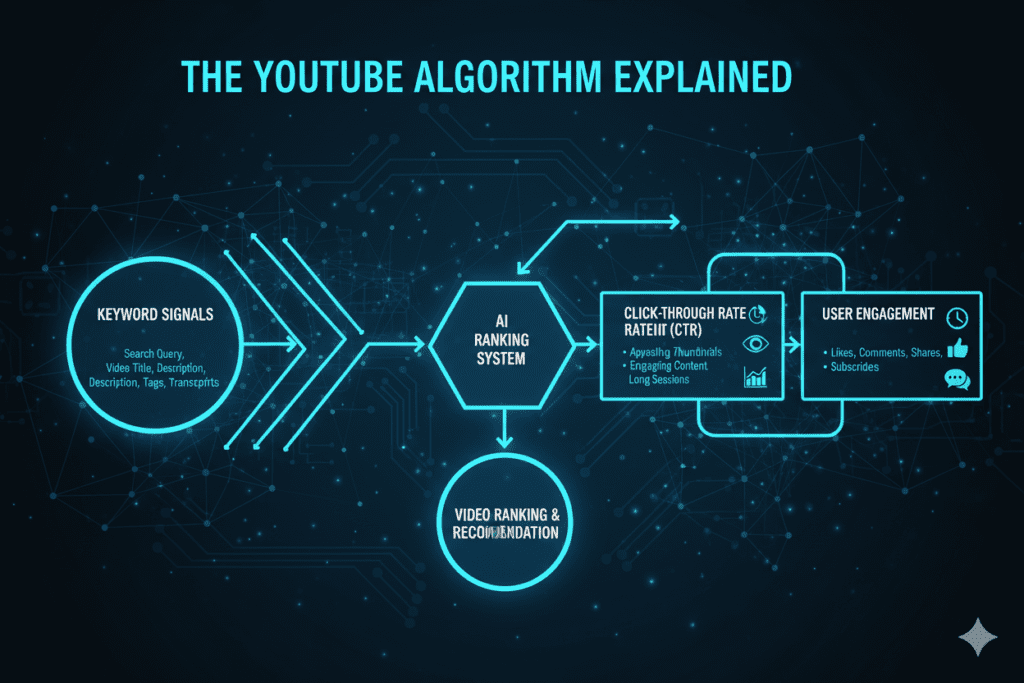
YouTube’s algorithm has evolved dramatically. It’s no longer just scanning your title and tags.
In 2026, the algorithm analyzes:
- Title keywords — especially the first 40–60 characters
- Description keywords — particularly the first 150 characters
- Video tags — supporting context signals
- Spoken keywords — YouTube’s AI transcribes your audio and reads every word you say
- Chapter titles — extra keyword signals that also improve user navigation
- Engagement signals — watch time, CTR, likes, comments, and shares
The most important insight? The algorithm now prioritizes viewer behavior over keyword placement alone.
You can have perfect YouTube video SEO keywords in your metadata. But if people click and leave in 10 seconds, your rankings will suffer.
This means great keyword research AND great content go hand-in-hand. One without the other won’t work.
Types of YouTube Video SEO Keywords You Need to Know
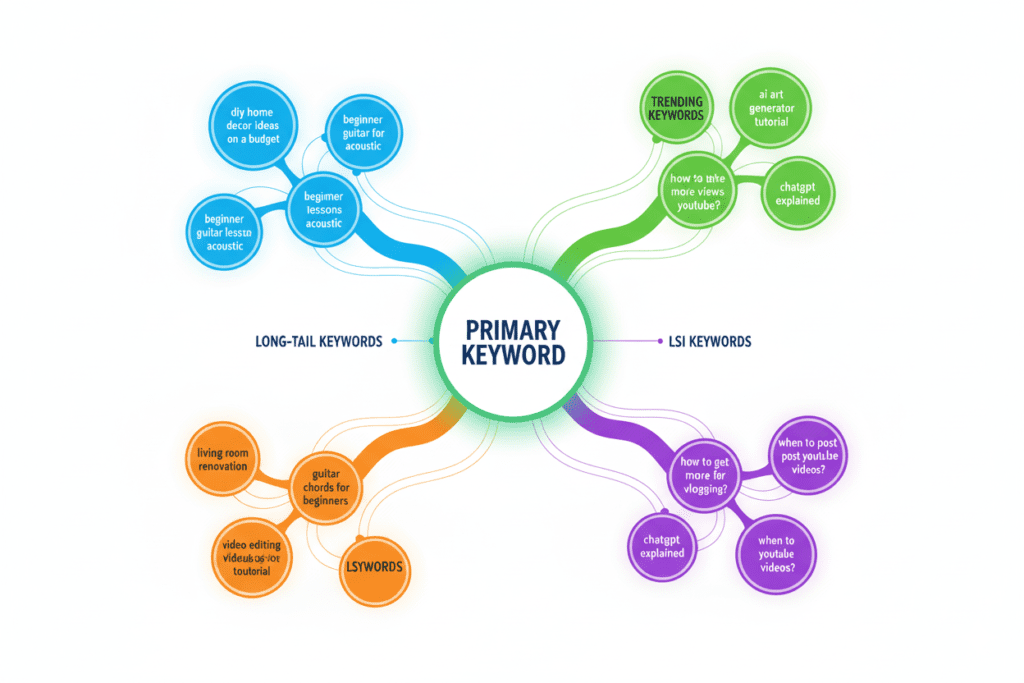
Not all YouTube video SEO keywords are created equal. Here’s a breakdown of the main types:
Primary Keywords
These are your main target phrases. High search volume, high competition. Examples: “YouTube SEO,” “how to grow on YouTube,” “video editing tips.”
Use these in your title, first sentence of description, and opening chapter.
Long-Tail Keywords
Longer, more specific phrases. Lower competition but highly targeted. Examples: “YouTube video SEO keywords for beginners 2026,” “how to find low competition YouTube keywords.”
These are gold for newer channels. Easier to rank, and the viewers are exactly who you want.
LSI Keywords (Latent Semantic Index)
Related terms and synonyms that give YouTube more context. If your primary keyword is “YouTube video SEO keywords,” your LSI keywords might include:
- Video keyword research
- YouTube ranking factors
- Channel growth strategy
- YouTube search optimization
- Video tags best practices
- YouTube algorithm tips
- Keyword density for YouTube
Sprinkle these naturally throughout your description and script.
Question-Based Keywords
Phrases people actually ask: “How do I find keywords for YouTube videos?” or “What are the best keywords for YouTube?”
These are perfect for featured snippet rankings in both YouTube and Google search.
Trending Keywords
Time-sensitive keywords tied to current events or viral topics in your niche. Use these for short-term traffic spikes and to ride waves of discovery.
How to Find Winning YouTube Video SEO Keywords (Step-by-Step)
This is where most creators get stuck. They either pick keywords that are way too competitive, or they target keywords nobody searches for.
Here’s a proven process that works in 2026:
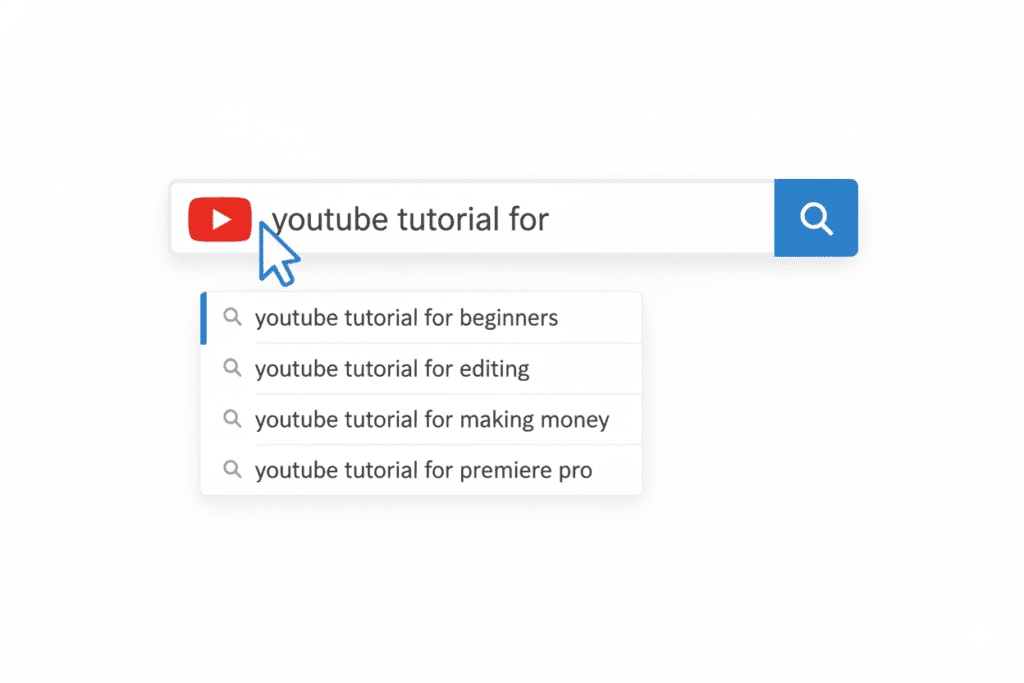
Step 1: Start with YouTube’s Autocomplete
Go to YouTube. Type your topic into the search bar but don’t hit enter. Watch what YouTube suggests.
Those suggestions are real searches from real people. They’re already validated by search volume. Write them all down.
Step 2: Study the Competition
Search your keyword and look at the top-ranking videos. Check:
- How many views did they get?
- How recent is the video?
- How big is the channel?
If small channels are ranking, that’s a low-competition keyword. If only massive channels dominate, it’s time to find a long-tail variation.
Step 3: Use Keyword Research Tools
Manual research only goes so far. To get real data on search volume, competition scores, and keyword difficulty, you need a dedicated tool.
This is exactly where ytZolo comes in. More on that in a moment.
Step 4: Check Google Search
Many YouTube videos also rank on Google. Search your keyword on Google and see if video results appear. If they do, ranking for that keyword means you get traffic from two search engines.
Step 5: Analyze Your Own Analytics
YouTube Studio shows you which search terms are already bringing people to your videos. These are powerful keywords — your audience is literally telling you what they search for.
Step 6: Build a Keyword List and Cluster Topics
Don’t target just one keyword per video. Build a cluster of related YouTube video SEO keywords — one primary keyword, 2–3 secondary keywords, and a handful of LSI terms.
This signals topical authority to YouTube’s algorithm and helps your video appear in multiple search results.

Where to Place YouTube Video SEO Keywords for Maximum Ranking Power
Finding the right YouTube video SEO keywords is step one. Knowing exactly where to put them is what separates the creators who rank from those who don’t.
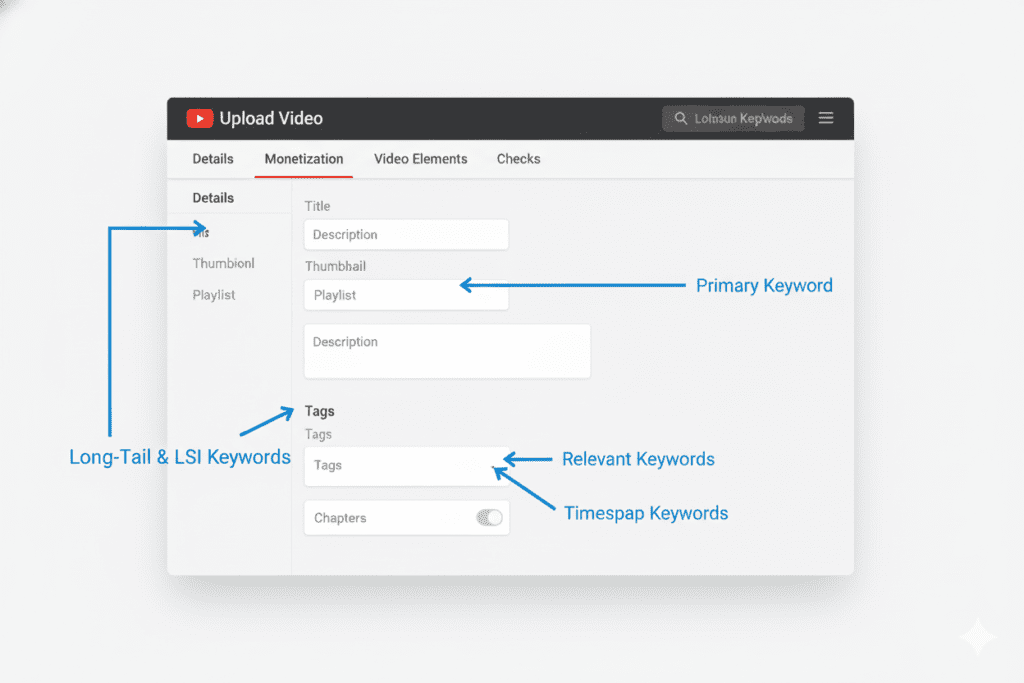
In Your Video Title
Your title is the single most critical piece of metadata. YouTube’s algorithm weights the first 40 characters most heavily.
Put your primary YouTube video SEO keyword as early in the title as possible. But don’t sacrifice human appeal — your title also needs to make people want to click.
Good example: “YouTube Video SEO Keywords: The 2026 Strategy That Actually Works”
Avoid: “How To Do Good Keywords For YouTube Videos 2026”
In Your Video Description
The first 150 characters of your description appear in search results without expanding. That’s prime real estate.
Use your primary YouTube SEO keyword in the first sentence. Then naturally weave secondary keywords and LSI terms throughout a 200–300 word description.
Include timestamps (chapters), links to related content, and a call to action.
In Your Video Tags
Tags are still useful, but they’re a supporting signal, not the main event. Follow this structure:
- First tag: your exact primary keyword
- Next 3–5 tags: variations of your keyword
- Remaining tags: related topics your video covers
Don’t overthink tags. They’re the last thing YouTube checks, not the first.
In Your Spoken Content
This is the hidden power move that most creators ignore.
YouTube automatically transcribes every word you speak. That means the YouTube video SEO keywords you say out loud are indexed by the algorithm.
Mention your primary keyword naturally in the first 30 seconds of your video. Sprinkle related terms throughout your script. This isn’t about stuffing — it’s about speaking like your audience searches.
In Your Chapter Titles
Adding chapters to your video does two things. It improves the viewer experience (higher watch time) and gives YouTube additional keyword signals.
Make each chapter title descriptive and keyword-rich. This also helps your video appear in Google’s “key moments” feature in search results.
In Your File Name
Before you upload, rename your video file. Instead of “video_2024_final_v3.mp4,” name it something like “youtube-video-seo-keywords-guide.mp4.”
This is a small signal, but every signal counts.

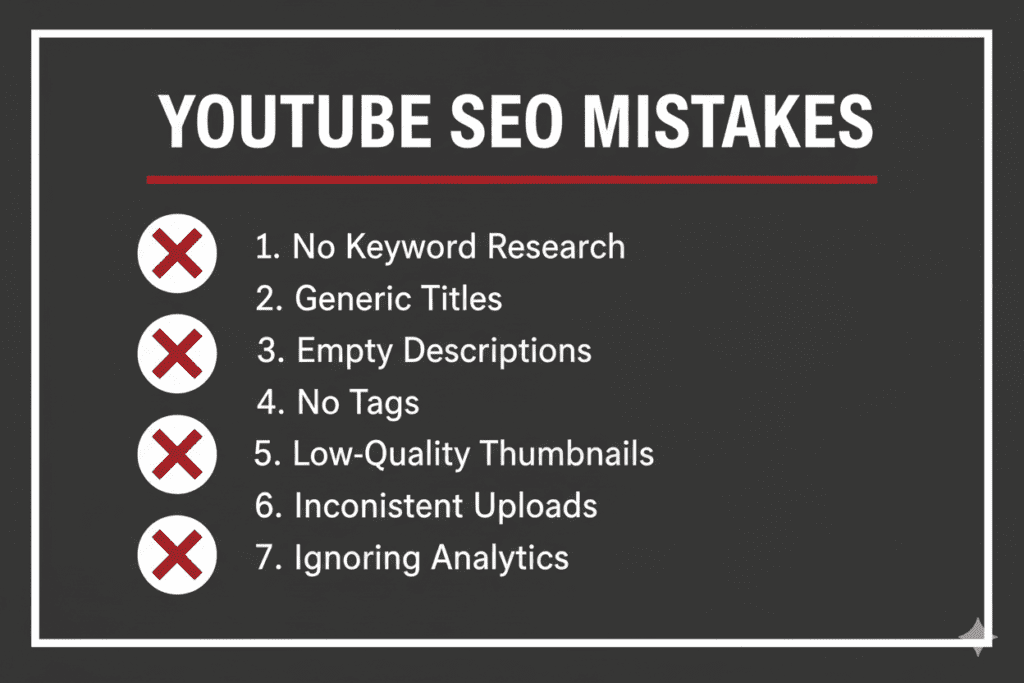
Common Mistakes Creators Make with YouTube Video SEO Keywords
Knowing what not to do is just as powerful as knowing what to do.
Here are the biggest mistakes that are silently killing your rankings:
- Keyword stuffing — Repeating your keyword unnaturally in descriptions or tags. YouTube’s algorithm detects this and can penalize your video.
- Targeting only high-competition keywords — New channels trying to rank for “fitness” or “cooking” will get buried. Go long-tail first.
- Ignoring spoken content — If you’re not naturally using your target keywords in your script, you’re leaving ranking power on the table.
- Mismatching keyword and content — If your keyword promises one thing but your video delivers another, viewers leave fast. High bounce rate = lower rankings.
- Skipping keyword research entirely — Uploading without research is like driving with your eyes closed. You might get lucky once or twice, but it’s not a strategy.
- Never updating old videos — YouTube’s algorithm favors fresh content. Revisiting older videos to update keywords and descriptions can revive dead videos.
- Using the same strategy for Shorts and long-form — YouTube SEO for Shorts requires different, trend-focused YouTube video SEO keywords compared to long-form content.
Why ytZolo Is Better Than Other Tools for YouTube SEO Keywords
Let’s talk about tools. Because at some point, doing all of this manually becomes unsustainable.
Most creators rely on a patchwork of tools — one for keyword research, one for titles, one for thumbnails, one for descriptions. It’s slow, expensive, and exhausting.
ytZolo was built to solve all of that in one place.
Here’s how ytZolo stacks up against the competition:
| Feature | TubeBuddy | vidIQ | ytZolo |
|---|---|---|---|
| AI-Generated Titles | ❌ | Limited | ✅ Full AI |
| AI Script Writing | ❌ | ❌ | ✅ Yes |
| Keyword Research | ✅ | ✅ | ✅ Advanced |
| Thumbnail Optimization | Limited | Limited | ✅ AI-Powered |
| AI Description Writer | ❌ | Limited | ✅ Yes |
| All-in-One Dashboard | ❌ | ❌ | ✅ Yes |
| Built for Viral Content | ❌ | ❌ | ✅ Yes |
TubeBuddy and vidIQ are solid tools — but they were built for the old way of doing YouTube SEO. They give you data. They don’t create for you.
ytZolo is different. It’s an AI-powered YouTube growth platform that researches your YouTube video SEO keywords and helps you turn those keywords into viral titles, scripts, descriptions, tags, and thumbnails — all from one dashboard.
Instead of spending 3 hours on keyword research and content planning, ytZolo cuts that down to minutes.
It’s not just a research tool. It’s a full creative partner for YouTube growth.
How ytZolo Helps You Dominate YouTube Video SEO Keywords
Here’s the problem with manual YouTube video SEO keyword research:
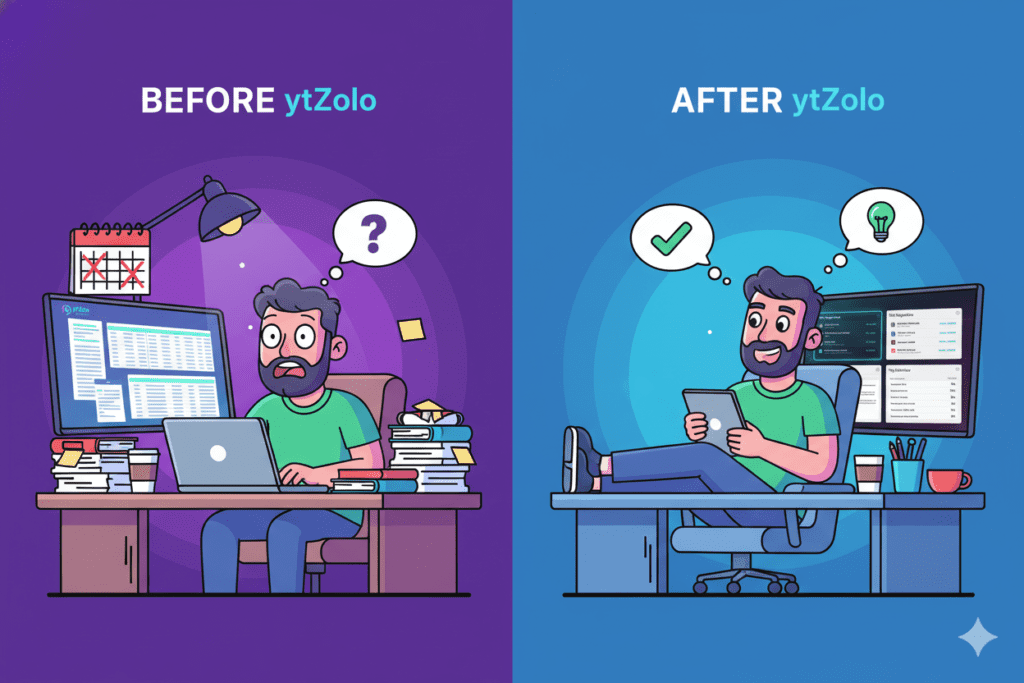
It’s slow. It’s inconsistent. And most creators don’t know enough about keyword strategy to do it well on their own.
You spend an hour researching keywords. Another hour writing the title. Another hour on the description. By the time you’re done, your motivation is gone — and you still haven’t filmed the video.
ytZolo eliminates that friction.
Here’s what happens when you use ytZolo for your next video:
- Enter your video topic — ytZolo’s AI instantly analyzes search trends and surfaces the best YouTube video SEO keywords for your niche.
- Get AI-generated titles — Multiple high-CTR title options, already optimized with your target keywords built in.
- Generate a full script — The AI writes an engaging, keyword-aware script that naturally includes your primary and secondary keywords in the right places.
- Create an SEO description — ytZolo writes a complete YouTube description with your keywords placed strategically for maximum ranking power.
- Build your tag list — The AI generates a perfectly structured tag list, from exact-match primary keywords to supporting long-tail variations.
- Design scroll-stopping thumbnails — ytZolo’s thumbnail AI creates click-worthy visuals that drive the CTR boost your rankings need.
Every step is guided by data. Every output is optimized for YouTube video SEO keywords that actually have search demand.
This is why creators who switch to ytZolo consistently report faster growth, more views, and less time spent on the exhausting behind-the-scenes work.
You can explore more tips and strategies on the ytZolo blog to keep learning as you grow.
YouTube Video SEO Keywords + Thumbnails + Titles = The Winning Formula
Here’s something the gurus don’t always tell you.
YouTube video SEO keywords get your video found. But they don’t get your video watched.
That’s where thumbnails and titles come in.
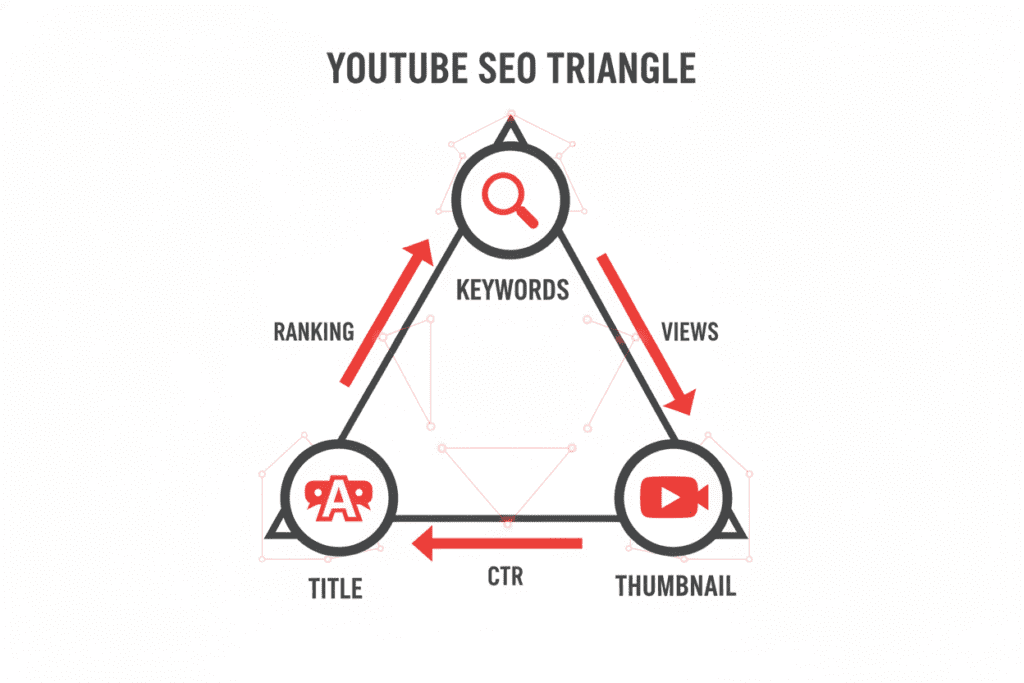
Think of it as a three-part system:
Keywords → Get discovered in search and suggested feeds Title → Make viewers curious enough to click Thumbnail → Seal the deal and get the click
All three have to work together. Here’s how:
Keyword-Title Alignment
Your title must include your target YouTube video SEO keyword AND create emotional pull. Use power words like “secret,” “ultimate,” “proven,” “shocking,” or question-based formats like “Why Your Videos Get No Views (And How to Fix It).”
The first 60 characters of your title are the most important — that’s what displays in most search results before truncation.
Thumbnail-Title Synergy
Your thumbnail and title should tell a complete story together. If your title asks a question, your thumbnail should visually represent the tension or curiosity. The best thumbnails use:
- High-contrast colors
- 3–5 words of text maximum
- An expressive human face (when relevant)
- Visual intrigue or a “pattern interrupt”
The CTR-Ranking Loop
When more people click your video from search results, YouTube interprets that as a quality signal. Higher CTR leads to more recommendations, which leads to more views, which reinforces your keyword rankings.
This is why CTR is one of the most powerful YouTube SEO ranking factors in 2026. And it’s why optimizing for keywords without thinking about CTR is leaving growth on the table.
ytZolo is the only tool that helps you optimize all three elements — keywords, titles, and thumbnails — from a single dashboard. That’s the unfair advantage it gives creators.
FAQ: YouTube Video SEO Keywords
What are YouTube video SEO keywords?
YouTube video SEO keywords are the words and phrases people type into YouTube’s search bar to find content. When you optimize your video’s title, description, tags, and script with these keywords, YouTube can match your video to the right searches — helping you get more organic views without paying for ads.
How do I find the best YouTube video SEO keywords for my channel?
Start with YouTube’s autocomplete feature — type your topic and see what phrases YouTube suggests. Then use a keyword research tool like ytZolo to get data on search volume, competition, and keyword difficulty. Focus on long-tail keywords if your channel is new, as they have lower competition and higher intent.
How many YouTube video SEO keywords should I use per video?
Aim for one primary keyword, two to three secondary keywords, and five to ten LSI (related) keywords per video. Place your primary keyword in the title, first 150 characters of the description, your first video tag, and naturally within your spoken script. Avoid stuffing — quality and relevance beat quantity every time.
Do spoken keywords affect YouTube video SEO ranking?
Yes, absolutely. YouTube uses AI to automatically transcribe your video’s audio. The words you speak are indexed by the algorithm, just like text in your description. Mentioning your primary YouTube video SEO keyword naturally in the first 30 seconds — and using related terms throughout your script — gives your video a significant ranking boost.
Can AI tools help with YouTube video SEO keywords?
Yes — and they can save you hours of work every week. AI tools like ytZolo automate the entire keyword research process, generate SEO-optimized titles and descriptions, suggest the best tags, and even write full scripts that naturally incorporate your target keywords. For creators who want to grow faster without working harder, AI-powered YouTube SEO tools are no longer optional — they’re essential.
Conclusion: Stop Uploading Without a Strategy
Here’s the truth that most creators learn the hard way.
Great content without YouTube video SEO keywords is invisible. And invisible videos don’t grow channels.
The creators winning on YouTube in 2026 aren’t necessarily the most talented or the most creative. They’re the ones who understand how the algorithm works — and they use the right tools to work with it, not against it.
YouTube video SEO keywords are the foundation of every successful video strategy. They’re how you get discovered, how you build authority, and how you turn your channel into a genuine asset that pays off long after you hit publish.
You’ve now learned:
- What YouTube video SEO keywords are and why they matter
- How YouTube’s algorithm actually uses keywords to rank videos
- The different types of keywords and how to use each one
- A proven step-by-step process for finding winning keywords
- Exactly where to place keywords for maximum ranking power
- The common mistakes that sabotage your rankings
- Why ytZolo outperforms every other tool on the market
- The powerful formula combining keywords, titles, and thumbnails
Now it’s time to put this into action.
Stop guessing. Stop uploading in the dark. Start making every video work harder for you — with the right YouTube video SEO keywords and the AI tools to bring them to life.
🚀 Ready to Grow Faster?
Start creating smarter, faster, and more viral YouTube content with ytZolo today.
ytZolo is the all-in-one AI YouTube growth platform that handles your keyword research, title generation, script writing, descriptions, tags, and thumbnails — so you can focus on what you love: making great content.
👉 Visit ytZolo.com and start your free trial
📚 Want more tips? Check out the ytZolo blog for the latest strategies on YouTube growth, SEO, and content creation.
External Resources:
- YouTube Creator Academy — Video SEO Best Practices
- Backlinko — How to Rank YouTube Videos
- Ahrefs — YouTube SEO: How to Rank Your Videos
This article was written to help YouTubers and content creators understand and implement effective YouTube video SEO keyword strategies. For more guides like this, visit ytzolo.com/blog.

