

Introduction: The Video That Should Have Gone Viral (But Didn’t)
You spent 12 hours on that video.
The script was tight. The edit was clean. The thumbnail? Chef’s kiss.
You hit publish and waited. And waited. And then… nothing. A trickle of views. A handful of likes. Maybe a comment from your mom.
Sound familiar?
Here’s what nobody tells you when you start a YouTube channel: timing is a silent killer of great content.
You could have the best video in your niche and still get buried — just because you posted it at the wrong time. With over 2 million videos uploaded to YouTube every single day, the window for early momentum is razor-thin.
That’s exactly why searching for the best time to post on YouTube calculator has become one of the most popular things creators look up. Because creators are finally waking up to the truth: posting time is a strategy, not an afterthought.
In this guide, you’ll get the data, the tools, and the exact framework to figure out your perfect upload schedule — plus why smart creators are using ytZolo to automate the guesswork entirely.
Let’s get into it.
Table of Contents
Why Posting Time Actually Matters on YouTube
Let’s clear something up first. Does posting time really matter?
Yes — especially in the first few hours.
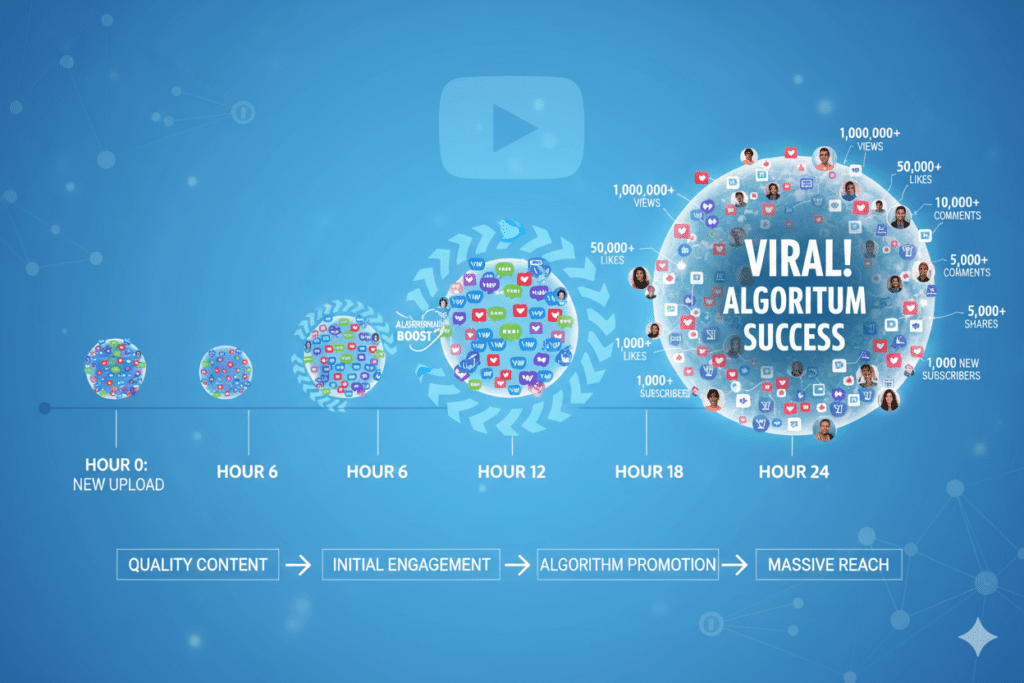
When you post a video, YouTube’s algorithm watches it closely. It tracks how quickly people click, watch, like, and comment. Strong early engagement signals tell the algorithm: “This content is worth promoting.”
If your video launches while your audience is asleep or at work, those critical first hours are wasted. Your video collects dust instead of views.
Think of it like opening a restaurant. If you unlock the doors at 3 AM, nobody walks in — no matter how good the food is.
Early views create a snowball effect. More views lead to more signals. More signals lead to more recommendations. That’s how videos go viral, and it starts with showing up at the right time.
According to research by Sprout Social, which analyzed nearly 2.7 billion engagements across hundreds of thousands of social profiles, timing directly impacts how quickly your content gains traction after posting.

The Best Time to Post on YouTube: What the Data Says
Multiple studies have analyzed millions of YouTube videos using a best time to post on YouTube calculator to find the optimal posting times. Here’s a summary of what the research consistently shows:
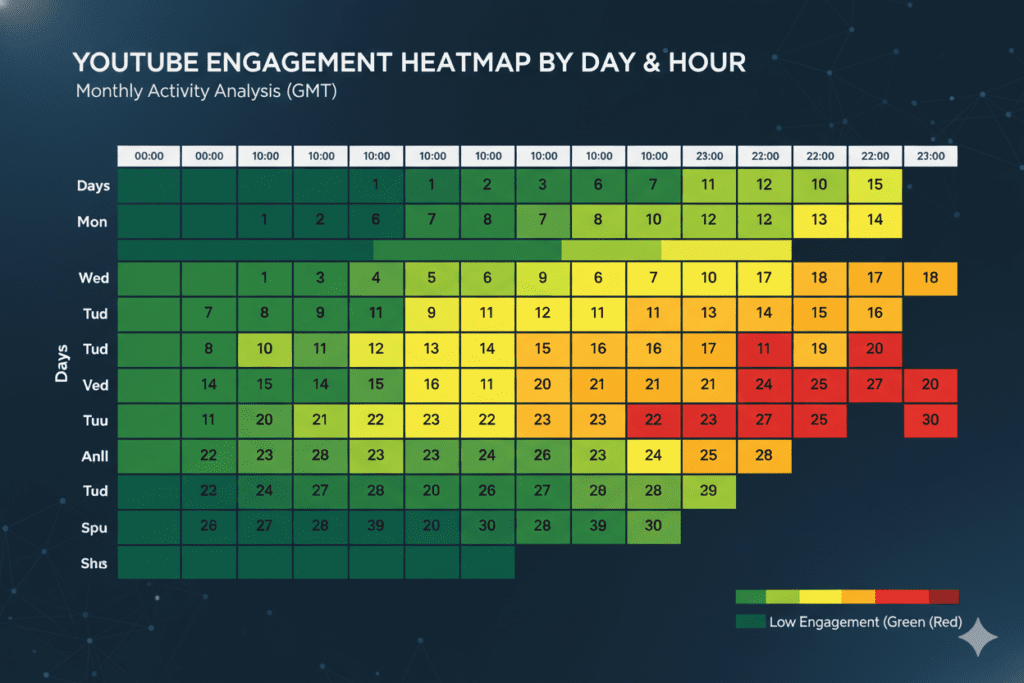
The global sweet spots for posting:
- Best overall time: Wednesday at 4 PM (Buffer, analysis of 1M+ videos)
- Peak engagement windows: 3–6 PM and 6–9 PM on weekdays
- Weekend peak: 9 AM–12 PM Saturday; 12 PM–4 PM Sunday
- Worst times: Between 3 AM and 5 AM (any day)
- Worst day overall: Sunday (followed by Saturday for long-form content)
<br>
Why does afternoon and evening work so well?
Most YouTube users are working-age adults between 25 and 44. After work, they unwind — and YouTube is one of the first places they go. That 3–9 PM window is when scrolling spikes dramatically, especially on mobile.
Posting 2–3 hours before peak activity gives your video time to index and gather initial traction. By the time your audience arrives, your video is already showing momentum.
That’s the real power of using a best time to post on YouTube calculator — it reverse-engineers your audience’s habits so your content lands right when they’re ready to watch.
Best Time to Post on YouTube by Day of the Week
Here’s a quick reference breakdown based on aggregated research data:
| Day | Best Time to Post |
|---|---|
| Monday | 12 PM and 3–8 PM |
| Tuesday | 2–4 PM and 6 PM |
| Wednesday | 4 PM (highest overall) |
| Thursday | 3–6 PM |
| Friday | 3–4 PM |
| Saturday | 9 AM–12 PM |
| Sunday | 6 PM (limited window) |
Keep in mind: these are global averages. Your audience may behave differently. A best time to post on YouTube calculator that uses your actual data will always outperform generic benchmarks.
More on that in a moment.
How a Best Time to Post on YouTube Calculator Works
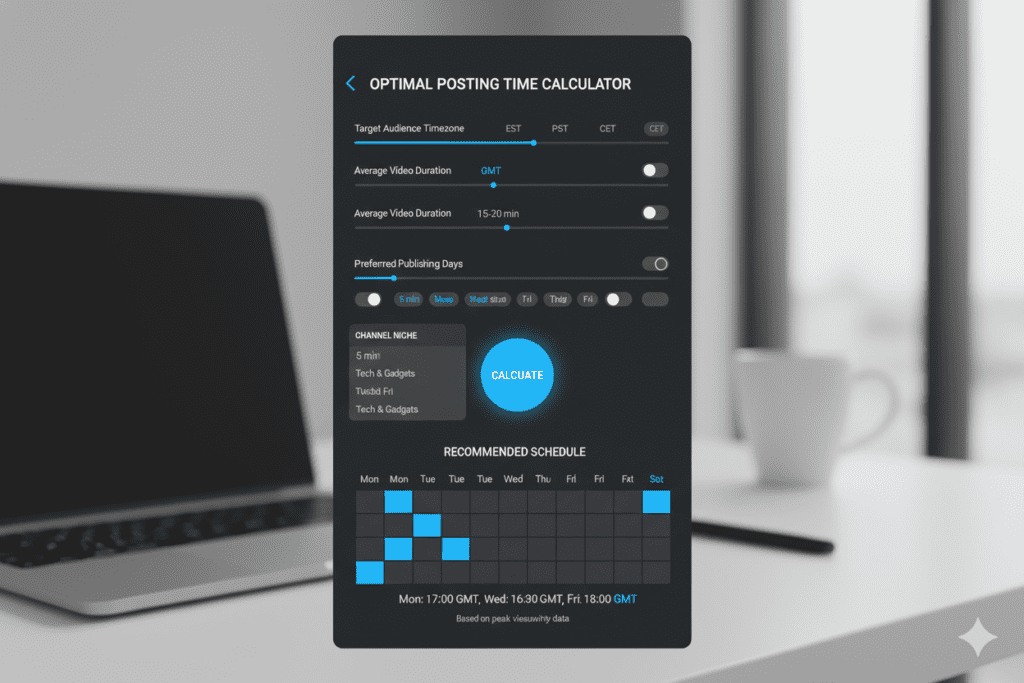
A best time to post on YouTube calculator isn’t magic — it’s math applied to behavior data.
Here’s the basic logic behind how these tools work:
Step 1: Pull your audience activity data The calculator connects to (or manually takes inputs from) your YouTube Analytics. It looks at when your subscribers and viewers are most active on the platform.
Step 2: Factor in your time zone vs. audience time zone If you’re in Mumbai but your core audience is in New York, you need to post at a totally different clock time. A good calculator accounts for this automatically.
Step 3: Analyze historical video performance It looks at which of your past videos got the most early views, and cross-references those with their posting times.
Step 4: Output a personalized schedule Instead of generic advice, it tells you: “Post on Tuesday at 5 PM EST for your audience.”
Basic calculators give you generic recommendations. Advanced AI tools like ytZolo go much further — analyzing your entire channel’s performance profile to give hyper-specific, channel-level recommendations.
How to Find YOUR Best Time Using YouTube Analytics
Before you use any tool, you can start manually inside YouTube Studio. Here’s how:
Step-by-step guide:
- Go to YouTube Studio → click Analytics in the left menu
- Navigate to the Audience tab
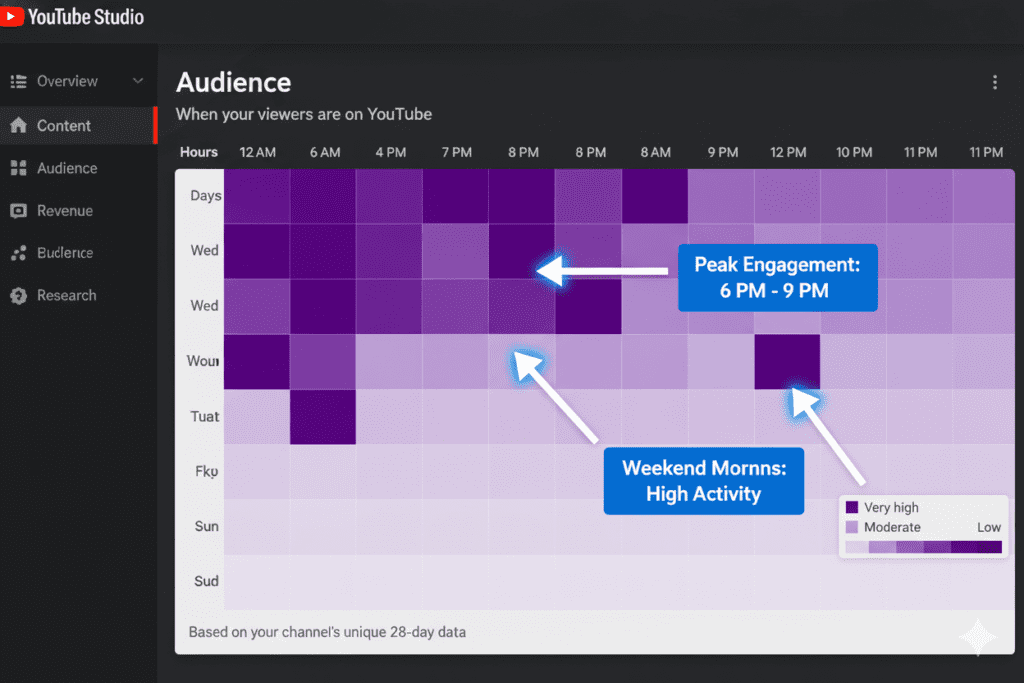
- Scroll down to “When your viewers are on YouTube”
- You’ll see a heatmap — darker cells = more activity
- Note the top 3–5 time windows where your audience is most active
- Schedule your next video to go live 1–2 hours before the peak window
Pro tips:
- Check this data weekly — it shifts over time
- Look at the last 28 days for the most accurate snapshot
- If your channel is new (under 100 subscribers), use the general benchmarks above until you build enough data
The manual method works. But it’s time-consuming, easy to overlook, and doesn’t factor in dozens of other variables that affect video performance.
That’s exactly where AI tools like ytZolo fill the gap — by doing this analysis automatically, every time you prepare to post.
Why Manual Timing Methods Are Outdated
Let’s be honest. Manually checking your analytics once a week — then trying to remember to schedule your video at the right time — is a recipe for inconsistency.
Here’s why creators struggle without AI:
- YouTube Analytics only shows activity data, not optimal posting windows
- Most creators forget to check or post at inconsistent times
- Time zones make scheduling complex for international audiences
- You’re ignoring dozens of performance signals that affect your ranking
The math doesn’t lie:
Studies consistently show that videos posted during peak engagement windows—determined using a best time to post on YouTube calculator—outperform randomly scheduled content by a significant margin in the first 24–48 hours. Those early hours define whether your video gets pushed by the algorithm or ignored.
Manually hunting for the best time to post on YouTube takes hours every month. Hours you could spend creating better content.
AI tools have made manual methods obsolete. The smart move in 2025 is to automate your timing strategy — and layer it with everything else that makes content perform: better titles, stronger thumbnails, smarter tags, and SEO-optimized descriptions.

Why ytZolo Is Better Than Other Tools
There are plenty of scheduling and analytics tools out there. So why is ytZolo the one creators are switching to?
Here’s the honest breakdown:
Generic Schedulers vs. ytZolo
Most scheduling tools (Buffer, Hootsuite, Later) were built for social media broadly — not YouTube specifically. They’ll tell you when to post, but a best time to post on YouTube calculator won’t help you figure out what to post, how to title it, or why it’ll perform well.
ytZolo is built exclusively for YouTube creators. It’s not a general social media tool with YouTube as an afterthought.
YouTube Studio Analytics vs. ytZolo
YouTube Studio gives you raw data. It’s incredibly valuable — but it requires interpretation. You have to manually connect the dots between your audience activity, your niche, your content type, and your posting schedule.
ytZolo connects those dots for you automatically using AI trained on YouTube growth data.
Tubebuddy/VidIQ vs. ytZolo
These tools focus heavily on keyword research and SEO tags. They’re solid in that lane. But they don’t give you an end-to-end AI system for creating, optimizing, and scheduling content.
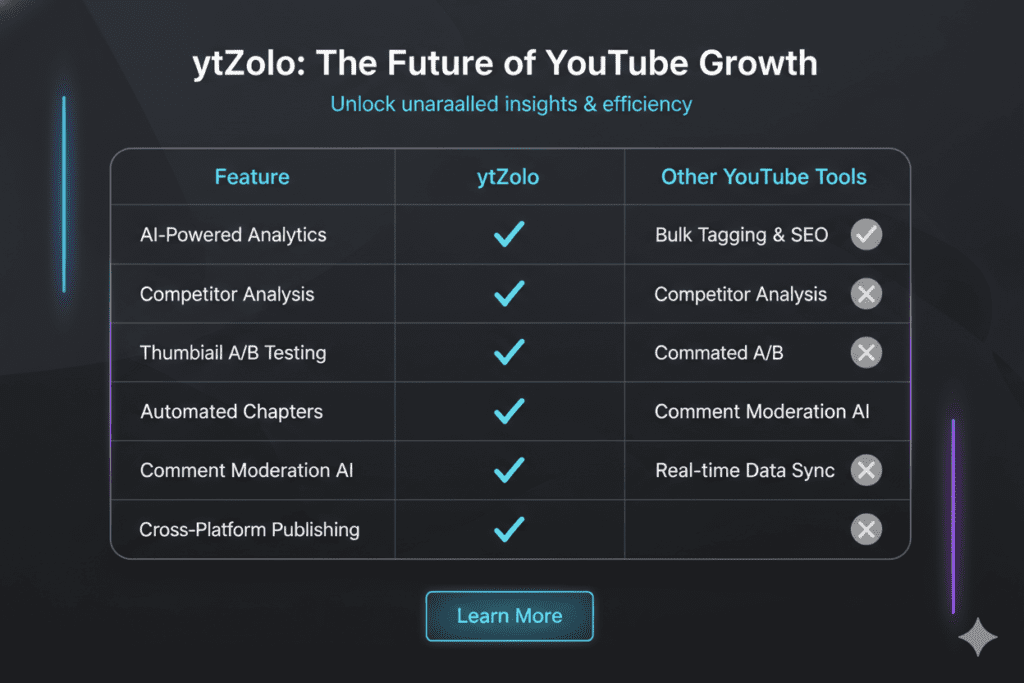
ytZolo is the all-in-one solution — combining:
- ✅ AI-powered best time to post on YouTube calculator
- ✅ Viral title generator
- ✅ Script writer
- ✅ Thumbnail concept creator
- ✅ Description and tag optimizer
- ✅ Channel growth analytics
No other tool combines all of these into a single, creator-focused platform.
ytZolo doesn’t just tell you when to post — it helps you create content that’s worth posting in the first place.
Check out the ytZolo blog for real creator case studies and growth strategies.
How ytZolo Helps You Master the Best Time to Post on YouTube
Here’s where ytZolo really shines.
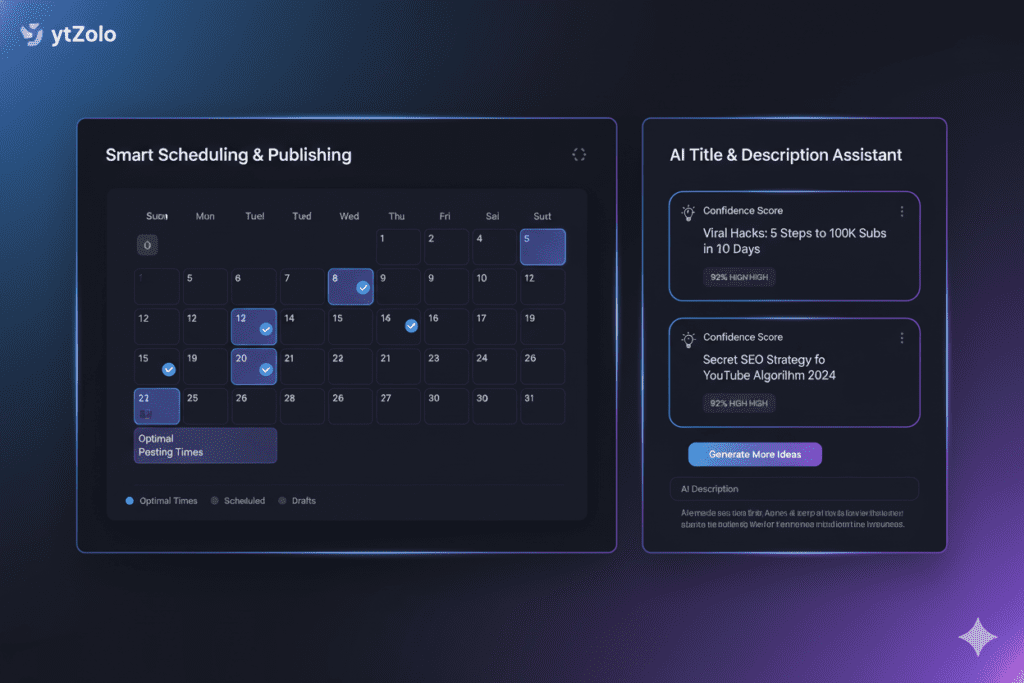
When you connect your YouTube channel to ytZolo, it doesn’t just give you a generic “post on Wednesday at 4 PM” recommendation. It builds a personalized posting calendar based on:
- Your specific audience demographics and locations
- Your channel’s historical engagement patterns
- Your content niche and audience behavior
- Seasonal and trending content cycles
In plain English: ytZolo figures out your best time to post on YouTube — not someone else’s.
But timing is only one piece of the puzzle. Even if you post at the perfect moment, a weak title or a boring thumbnail will kill your click-through rate before your video gets a chance.
That’s why ytZolo wraps timing intelligence—powered by a best time to post on YouTube calculator—into a full content optimization suite. You’ll know when to post and you’ll have an AI-crafted title, thumbnail direction, and description ready to go.
For creators who post 2–4 times per week, ytZolo can save 5–10 hours every single week — hours that go back into what matters: making great videos.
Want to see it in action? Visit ytzolo.com and try it free.
Best Time to Post YouTube Shorts vs. Long-Form Videos
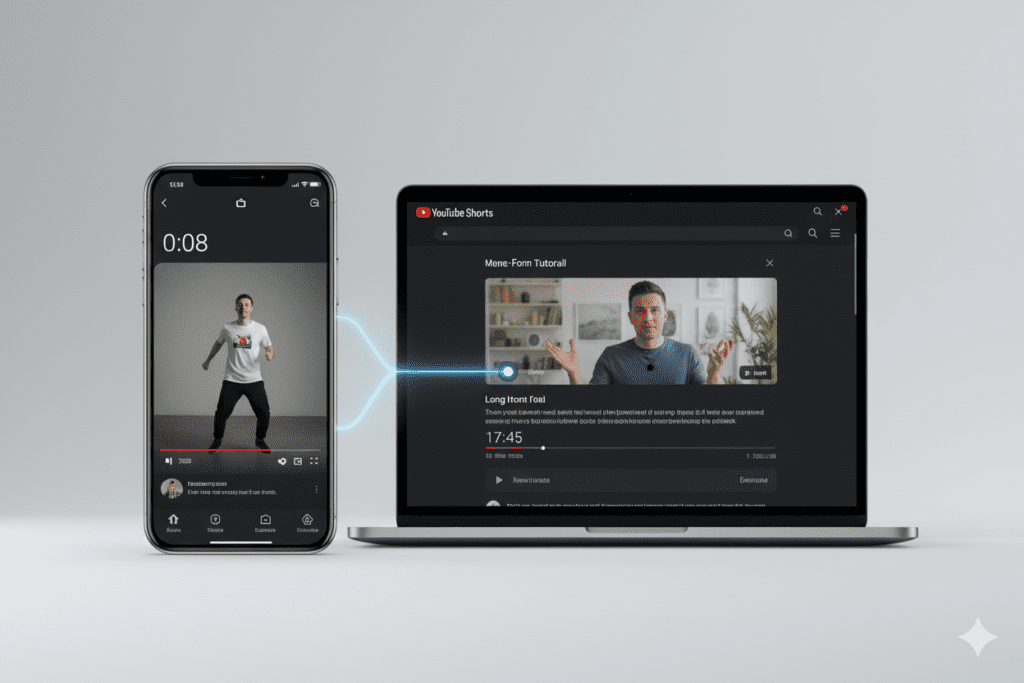
One question creators always ask: does the best time to post on YouTube differ for Shorts?
Mostly no — with a few nuances.
YouTube Shorts still benefit from the same general engagement windows (afternoon and evening peaks). However, Shorts have some unique behaviors:
For YouTube Shorts:
- Viewing spikes during micro-breaks: 12–1 PM and 7–9 PM
- Mobile-first consumption — evening scrolling hours are critical
- Wednesday 4 PM still performs well, mirroring long-form benchmarks
For Long-Form Videos:
- Audiences tend to watch when they have dedicated leisure time
- Weekday evenings (6–9 PM) and weekend afternoons perform strongest
- Consistency matters more — viewers expect videos at a predictable schedule
For both formats, posting 1–2 hours before your peak window—identified using a best time to post on YouTube calculator—gives the algorithm time to index and begin pushing your content.
The ytZolo platform handles both Shorts and long-form optimization — so you never have to manage two separate posting strategies manually.
Actionable Steps to Build Your Perfect Upload Schedule
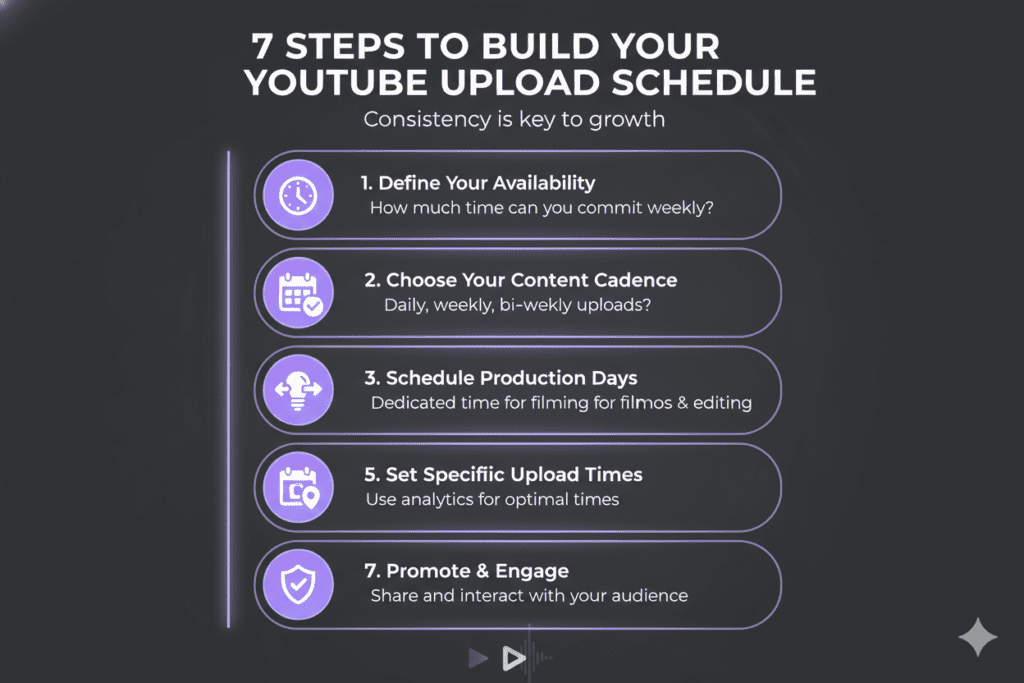
Ready to stop guessing and start growing? Follow these steps:
Step 1: Audit your last 10 videos Check YouTube Analytics for each — note the posting time and first 48-hour view count. Use a best time to post on YouTube calculator to look for patterns.
Step 2: Find your audience activity window Go to YouTube Studio → Analytics → Audience → “When your viewers are on YouTube.” Identify your top 3 peak time slots.
Step 3: Choose your posting windows Pick 2–3 consistent time slots per week that fall 1–2 hours before your audience peaks. Consistency builds viewer habits.
Step 4: Use AI to refine and automate Sign up for ytZolo to automate timing recommendations, generate optimized titles, descriptions, and thumbnails — and free yourself up to focus on creating.
Step 5: Test and iterate Run a 4-week experiment with your new schedule. Compare average first-48-hour views to your baseline. Adjust based on data.
Step 6: Stay consistent The algorithm rewards channels that post predictably. Sporadic uploads confuse both the algorithm and your audience. Pick a schedule and stick with it.
Step 7: Layer in seasonal trends Engagement patterns shift around holidays, back-to-school season, and major cultural events. A best time to post on YouTube calculator like ytZolo tracks these shifts and adjusts recommendations automatically.
Browse more creator growth strategies on the ytZolo blog.
FAQ: Best Time to Post on YouTube Calculator
1. What is the best time to post on YouTube for maximum views?
The best time to post on YouTube for maximum views is generally between 3 PM and 6 PM on weekdays, with Wednesday at 4 PM being the top-performing slot across multiple large-scale studies. For weekends, Saturday morning (9–11 AM) and Sunday evening (6 PM) tend to perform well.
However, your actual best time depends on your specific audience’s location and habits — use YouTube Analytics or a tool like ytZolo to find your channel’s personalized optimal window.
2. How does a best time to post on YouTube calculator work?
A best time to post on YouTube calculator analyzes your audience activity data — typically pulled from YouTube Analytics — and cross-references it with historical performance data to recommend the time slots where your videos are most likely to get strong early engagement.
Advanced AI tools like ytZolo go further, factoring in your niche, audience demographics, content type, and trending patterns to give you highly personalized recommendations.
3. Does posting time really affect YouTube views?
Yes, especially in the first 24–48 hours. YouTube’s algorithm uses early engagement signals (views, watch time, likes, comments) to decide whether to promote a video more broadly. Posting when your audience is most active increases the chance of strong early signals, which triggers the algorithm to push your content to more people.
The impact on long-term performance is smaller, but early momentum significantly boosts a video’s ceiling.
4. What is the worst time to post on YouTube?
The worst times to post on YouTube are between 3 AM and 5 AM (any day), as most viewers are asleep. Early mornings in general (before 9 AM on weekdays) tend to underperform. Using a best time to post on YouTube calculator helps identify these low-activity periods. Sunday has historically been the lowest-engagement day for long-form content, though Sunday evening (around 6 PM) can still be effective. Avoiding these windows is a free, easy win for your channel.
5. Can ytZolo automatically find the best time to post on YouTube for my channel?
Yes. ytZolo is an AI-powered YouTube growth tool that analyzes your channel’s specific performance data to recommend personalized upload schedules — not just generic benchmarks. Beyond timing, ytZolo also generates AI-optimized titles, descriptions, tags, and thumbnail concepts, making it the most comprehensive tool available for creators who want to grow smarter and faster.
Conclusion: Stop Posting Blind — Start Growing Smart
Here’s the hard truth: talent alone doesn’t build a YouTube channel.
The creator who posts mediocre content consistently at the right time will almost always outperform the creator who posts brilliant content randomly and inconsistently.
Timing is one of the most underrated levers in your YouTube strategy. The best time to post on YouTube calculator concept exists for a reason — because data-driven scheduling gives your content a fighting chance in an algorithm that rewards momentum.
You’ve now got the research. You’ve got the framework. And you’ve got the step-by-step system to find your optimal posting window.
But if you want to skip the manual grind and let AI do the heavy lifting, ytZolo is the tool built for exactly that.
It finds your best time to post on YouTube, writes your titles, scripts your ideas, optimizes your descriptions and tags, and guides your thumbnail creative — all in one place. No more guessing. No more wasted uploads.
Every hour you spend posting at the wrong time is a missed opportunity. Every video without an optimized title is a click that never happened.
The creators who will dominate YouTube in 2025 aren’t just making better videos. They’re making smarter decisions — backed by AI.
👉 Start creating smarter, faster, and more viral YouTube content with ytZolo today.
Related Reading:

