
Introduction
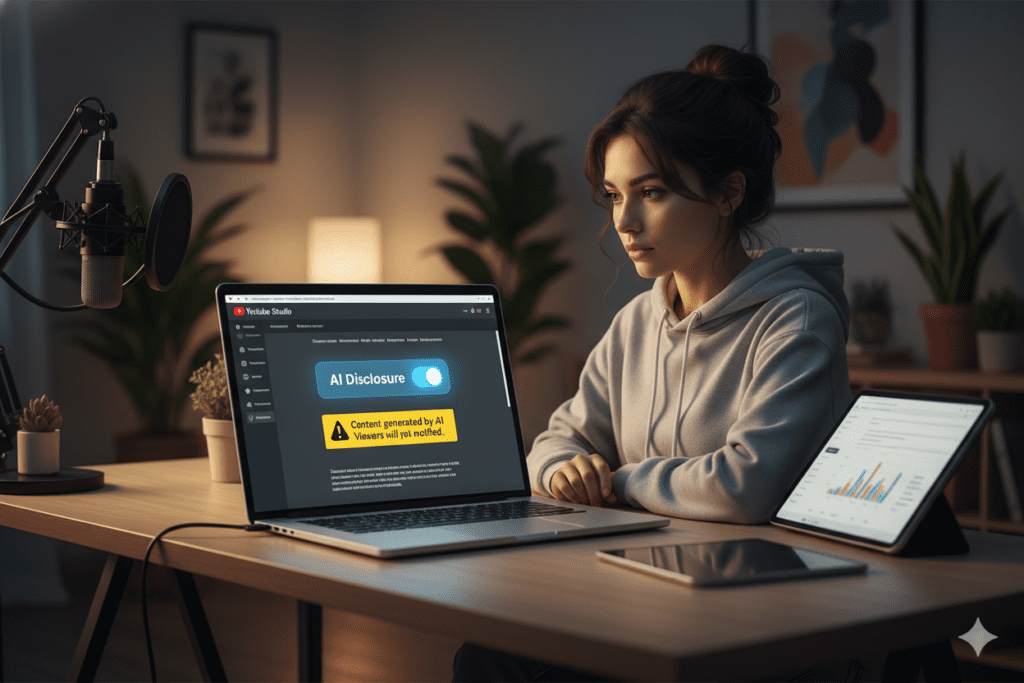
Imagine waking up to find your best-performing video flagged, labeled, and stripped of monetization — not because the content was bad, but because you didn’t check one box during upload.
That’s exactly what’s happening to creators across the platform right now.
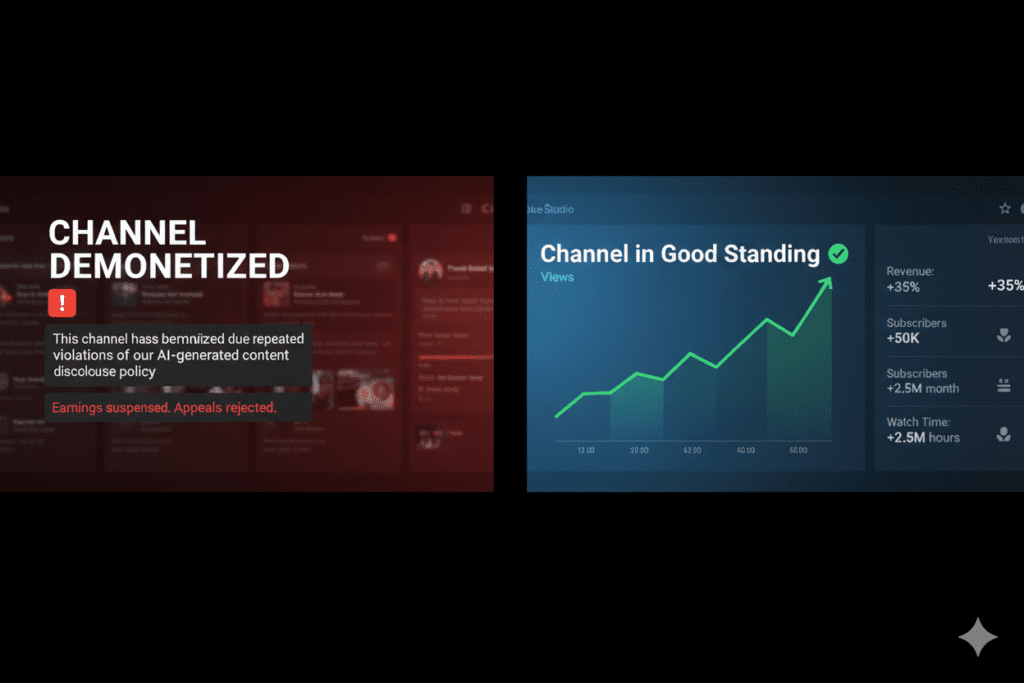
The YouTube policy on AI generated content disclosure 2026 has entered full enforcement mode. Thousands of channels have already been hit — demonetized, labeled without permission, or suspended from the YouTube Partner Program — simply because they didn’t understand the rules.
And here’s the painful part: most of those creators thought they were doing everything right.
The truth is, YouTube’s AI disclosure requirements are more nuanced than a simple “did you use AI?” checkbox. There’s a whole framework behind it — and if you’re a creator using any AI tool in your workflow right now, you need to understand it before your next upload.
In this guide, you’ll get the complete breakdown of the YouTube policy on AI generated content disclosure 2026: what triggers disclosure, what doesn’t, how to add the label properly, and how smart creators are using tools like ytZolo to stay compliant, create responsibly, and still grow faster than ever.
Let’s break it all down.
Table of Contents
Why YouTube’s AI Disclosure Policy Is a Big Deal in 2026
Here’s a number that should wake you up.
Over 6 million users now regularly watch auto-dubbed and AI-enhanced content on YouTube monthly under YouTube AI content disclosure rules 2026. The platform isn’t fighting AI — it’s integrating it at scale. But with that integration comes a hard demand for transparency.
YouTube’s enforcement of its AI generated content disclosure policy hit a major turning point in early 2026. The platform launched an AI detection system capable of identifying synthetic voices, deepfake footage, and AI-created scenes — even when creators didn’t label them.
This isn’t a future policy. It’s live. It’s enforced. And it’s affecting real channels right now.
Creators who built channels on faceless AI videos, synthetic narration, or realistic AI-generated visuals without disclosing them are already feeling the consequences. The YouTube policy on AI generated content disclosure 2026 isn’t a gentle nudge — it’s a hard requirement with escalating penalties.
The good news? Complying is straightforward once you understand the rules. And if you’re using AI responsibly — the way tools like ytZolo are designed to support — you have nothing to fear and everything to gain.
What Exactly Is The YouTube Policy on AI Generated Content Disclosure 2026?
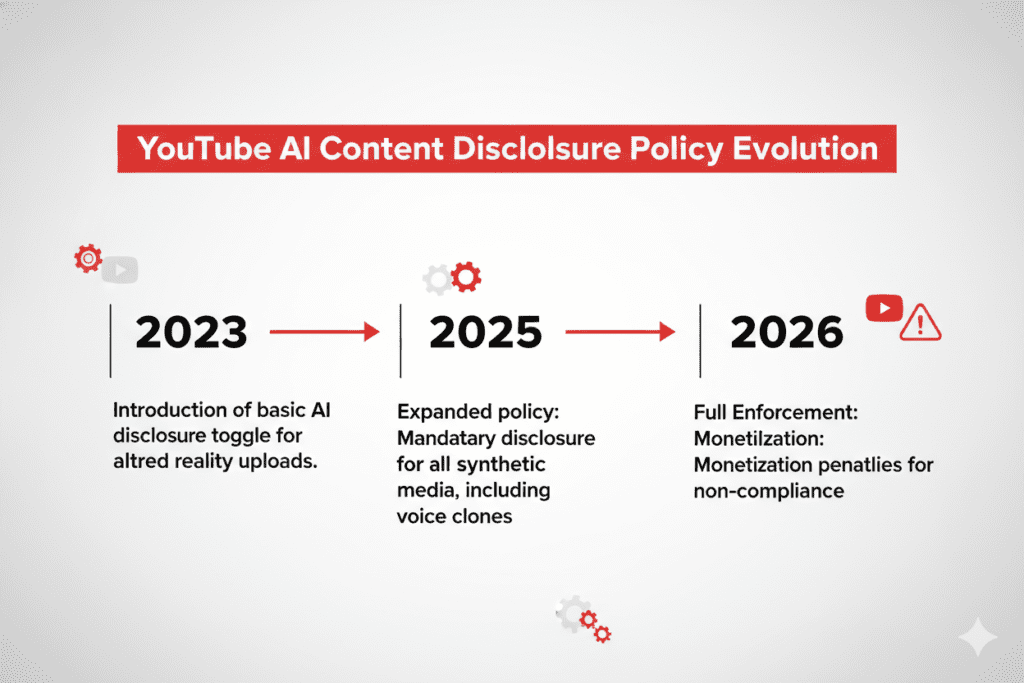
YouTube’s policy on AI generated content disclosure was first introduced in November 2023, expanded significantly in May 2025, and reached full enforcement strength entering 2026.
The core principle is simple: viewers have the right to know when realistic content has been artificially created or altered.
YouTube requires creators to disclose content that is “meaningfully altered or synthetically generated” when it appears realistic — meaning a viewer could reasonably mistake it for real footage of a real person, place, or event.
The policy covers:
- Content fully or partially created using AI audio, video, or image tools
- Any synthetic media that realistically depicts real people, real events, or real places
- Alterations that change what actually happened — not just minor edits
This requirement sits alongside YouTube’s broader Community Guidelines. Violating the YouTube AI content transparency policy doesn’t just flag your video — it can put your entire channel and monetization at risk.
The key distinction is realism and misleading potential under YouTube AI content disclosure rules 2026. YouTube is not trying to ban AI creativity. It’s trying to prevent AI from being used to mislead viewers — especially on sensitive topics like health, elections, finance, and breaking news.
What You MUST Disclose: The Complete List
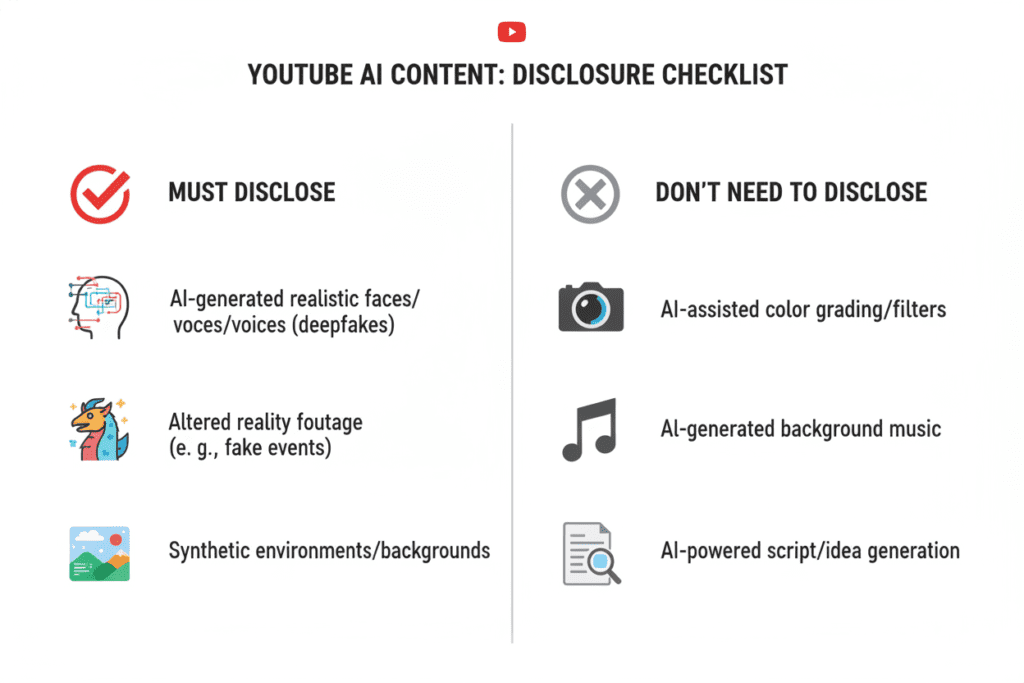
Understanding the YouTube policy on AI generated content disclosure 2026 starts here. These are the content types that require disclosure — no exceptions.
You must disclose when your content:
- Makes a real person appear to say or do something they didn’t do. This includes deepfakes, AI voice cloning of another person, and synthetic face replacements — even for entertainment purposes.
- Alters footage of a real event or place in a way that changes what actually happened. For example: using AI to make it look like a building is on fire when it wasn’t, or modifying real protest footage.
- Generates a realistic-looking scene that never actually occurred.A photorealistic AI-generated video of a tornado hitting a real city, or a synthetic match between two real athletes — both require disclosure under YouTube AI content disclosure rules 2026.
- Clones someone else’s voice to create voiceovers or dubbing that sounds like a real, identifiable person.
- Uses AI to digitally alter audio to make it sound like a real person said something they didn’t — including making a singer appear to miss a note in a live performance.
- Synthetically generates extra “realistic” footage of a real place for a promotional context, like a travel video that fabricates coastal scenery.
The rule of thumb is simple: if an average viewer could reasonably mistake it for real — disclose it.
What You DON’T Need to Disclose (The Safe Zone)
Here’s the part most creators are relieved to hear.
YouTube has been very clear under YouTube AI content disclosure rules 2026: using AI for production assistance does not require disclosure. This means the majority of how most creators use AI day-to-day is completely fine — no labels needed.
You do NOT need to disclose when you use AI for:
- Writing scripts, outlines, or content ideas
- Generating video titles and descriptions
- Creating thumbnails (unless they deceptively show a fake real-world event as genuine)
- Auto-captions or subtitle generation
- Minor aesthetic edits like color correction, beauty filters, or background blur
- Clearly unrealistic content — animations, fantasy visuals, stylized VFX
- Cloning your own voice for voiceovers (with appropriate transparency)
- Licensed AI voices not designed to mimic real, identifiable people
This is a massive green light for creators who use AI tools for workflow efficiency — like using ytZolo to generate viral titles, SEO-optimized descriptions, content scripts, and thumbnail concepts. None of that triggers the disclosure requirement.
YouTube’s official blog confirms it plainly: “We won’t require creators to disclose if generative AI was used for productivity, like generating scripts, content ideas, or automatic captions.”
So if your AI use is about working smarter, not fabricating reality — you’re in the clear.

How to Add the AI Disclosure Label in YouTube Studio (Step-by-Step)
When your content does require the AI generated content disclosure, here’s exactly how to add it. It takes less than 30 seconds.
On Desktop (YouTube Studio):
- Go to YouTube Studio at studio.youtube.com
- Start your upload or open an existing video for editing
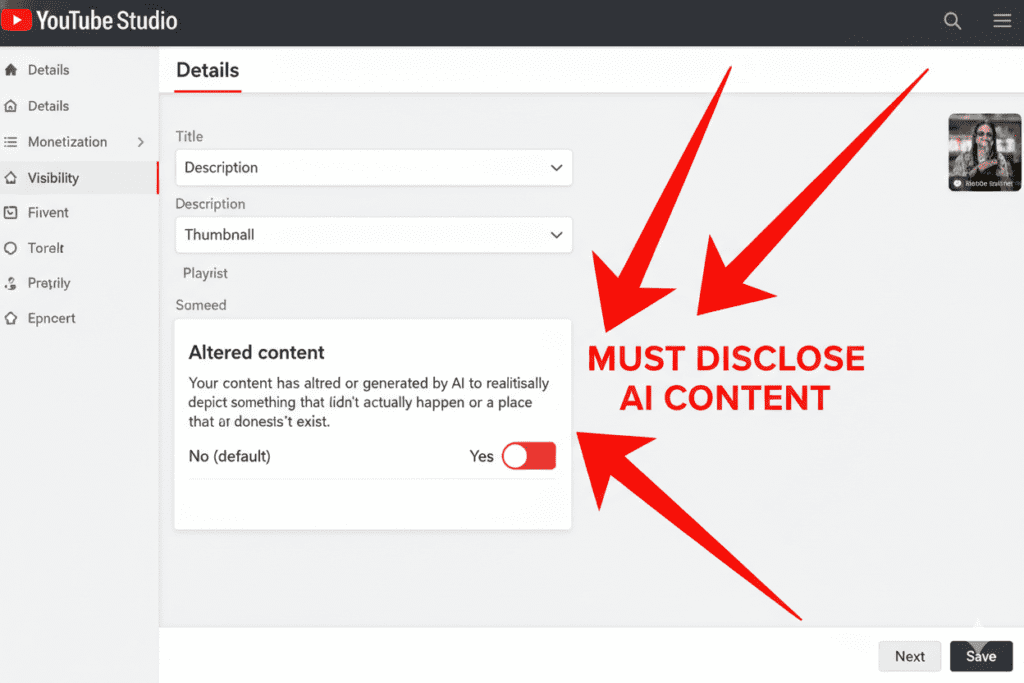
- In the “Details” section, scroll down to find “Altered content”
- Select “Yes” if your content meets the disclosure criteria
- Continue with the rest of your video details and publish
That’s it. YouTube will automatically generate a “Modified or Synthetic” label that appears in your video’s expanded description.
On Mobile (YouTube Studio App):
- Open the YouTube Studio app
- Follow the steps to upload your content
- Under “Add details”, tap “Altered Content”
- Select “Yes” if disclosure is needed
- Tap the back icon and continue with your upload
Important Notes:
- For sensitive topics — elections, health, finance, major news events — YouTube may apply a more prominent label directly on the video player, not just in the description.
- If you’re using YouTube’s own built-in AI tools (like Dream Screen or Dream Track for Shorts), the platform automatically handles disclosure for you. No extra steps needed.
- YouTube can also proactively add the label on your behalf if it detects AI content in your title, description, or the video itself — so being proactive is always the better move.
Penalties for Not Disclosing: What Happens If You Skip It?
Let’s get real about the consequences. Because a lot of creators are still gambling with this — and losing.
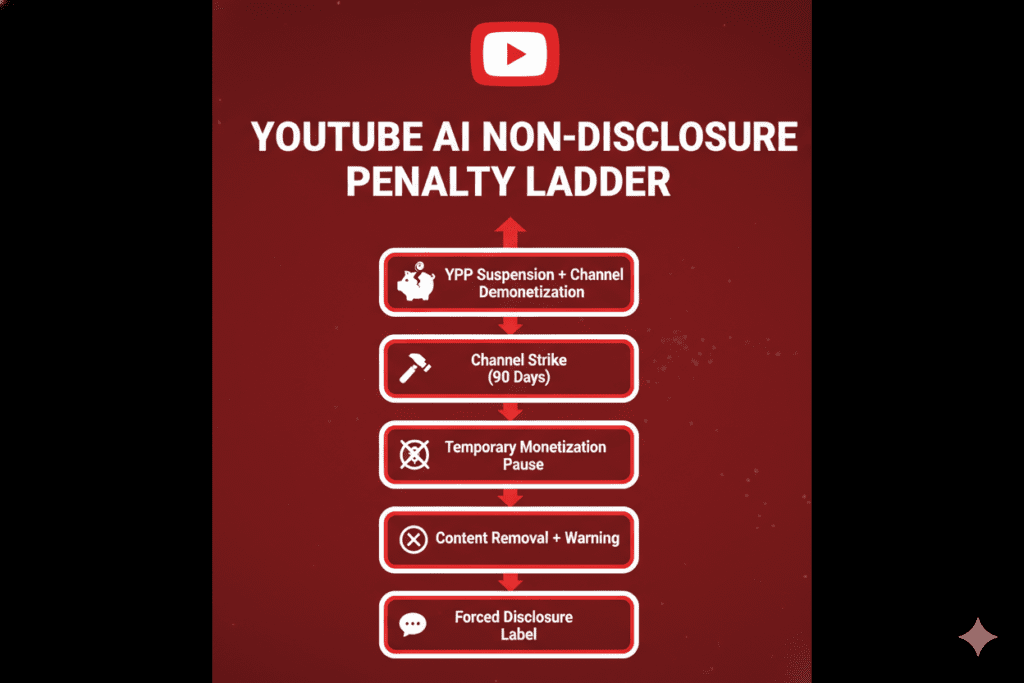
Here is YouTube’s escalating enforcement ladder for non-disclosure:
Level 1 — Forced Labeling: YouTube detects undisclosed synthetic content under YouTube AI content disclosure rules 2026 and applies the label itself. Crucially, creators cannot remove this label once YouTube adds it. You lose control of your own video’s presentation.
Level 2 — Policy Notification: YouTube sends a formal policy warning through Creator Studio. This is a strike signal — a warning that you’re on the platform’s radar.
Level 3 — Content Removal: Videos found to be in violation of the AI generated content disclosure policy can be removed entirely. No warning, no grace period for serious violations.
Level 4 — YPP Suspension: Creators who consistently fail to disclose required AI content face suspension from the YouTube Partner Program. That means losing all ad revenue — on every video, not just the flagged one.
Level 5 — Privacy Requests: If your undisclosed content simulates a real, identifiable person’s face or voice, that individual can now submit a privacy removal request to YouTube. This is a completely separate penalty track — and it can result in immediate content takedown.
The stakes are real. The good news, as YouTube has confirmed, is that properly disclosed AI content faces zero impact on distribution or monetization. The label is a transparency signal for viewers — not a ranking penalty.
Disclosure doesn’t hurt you. Hiding does.
The “AI Slop” Crackdown: Why 2026 Is Different
There’s a second wave of enforcement happening in 2026 — and it goes beyond just disclosure labels.
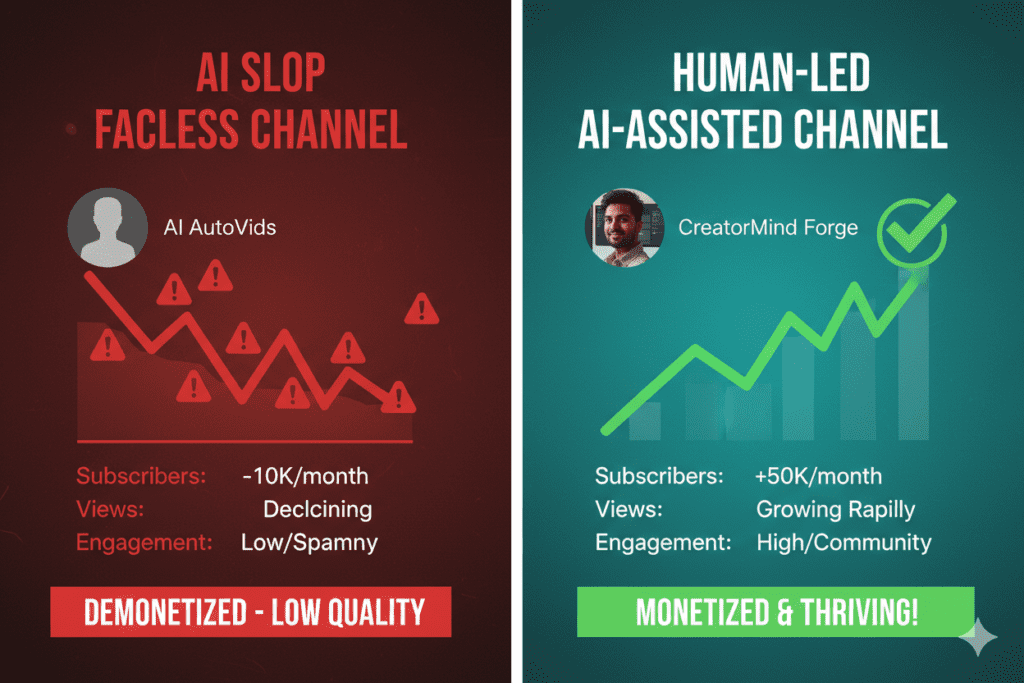
YouTube has declared war under YouTube AI content disclosure rules 2026 on what it calls “AI slop”: low-effort, mass-produced, templated content that uses AI to generate volume without any real human creativity or value.
The platform’s new AI detection systems now evaluate entire channels — not just individual videos. They look for patterns like:
- Identical upload formats repeated across dozens of videos
- Synthetic narration with no human editorial fingerprint
- Stock visuals paired with Wikipedia-style scripts
- Upload frequency that no human editorial process could realistically support
- Lack of unique commentary, insight, or perspective
If your channel looks like it was assembled by a bot — YouTube increasingly treats it like one. The YouTube inauthentic content policy is now applied at scale, and it’s catching channels that never technically violated any specific rule, but whose overall output feels machine-made.
This is the critical insight of 2026: YouTube is not anti-AI. It is anti-lazy.
The platform actively welcomes AI as a creative amplifier. Over 20 million users used YouTube’s own AI-powered features in a single month in late 2025. The message is clear: use AI to enhance your human creativity — not to replace it. For deeper insights on how creators are doing this effectively, see this guide on AI YouTube content strategy.
Channels that combine genuine human judgment, original perspectives, and smart AI assistance under YouTube AI content disclosure rules 2026 are thriving. Channels that rely on AI to do everything — scripting, voicing, editing, publishing — without any human creative layer are being filtered out.
This is exactly why the smartest creators are turning to tools like ytZolo — not to automate everything, but to amplify what makes their content uniquely theirs.
How ytZolo Helps You Stay Compliant and Grow Faster
Here’s where most creators get tangled up.
They hear “AI disclosure rules” and assume they need to either stop using AI — or spend hours manually auditing every upload for compliance. Neither is true. What you need is a smarter AI workflow.
That’s exactly what ytZolo is built for.
ytZolo is an all-in-one AI YouTube growth tool designed specifically for creators who want to grow faster without burning out — and without risking their channel in the process.
Here’s why ytZolo is the safest, smartest AI tool for the YouTube policy on AI generated content disclosure 2026 era:
ytZolo is built for “production assistance” — the safe zone.
Everything ytZolo does falls squarely within the category YouTube has confirmed does not require disclosure:
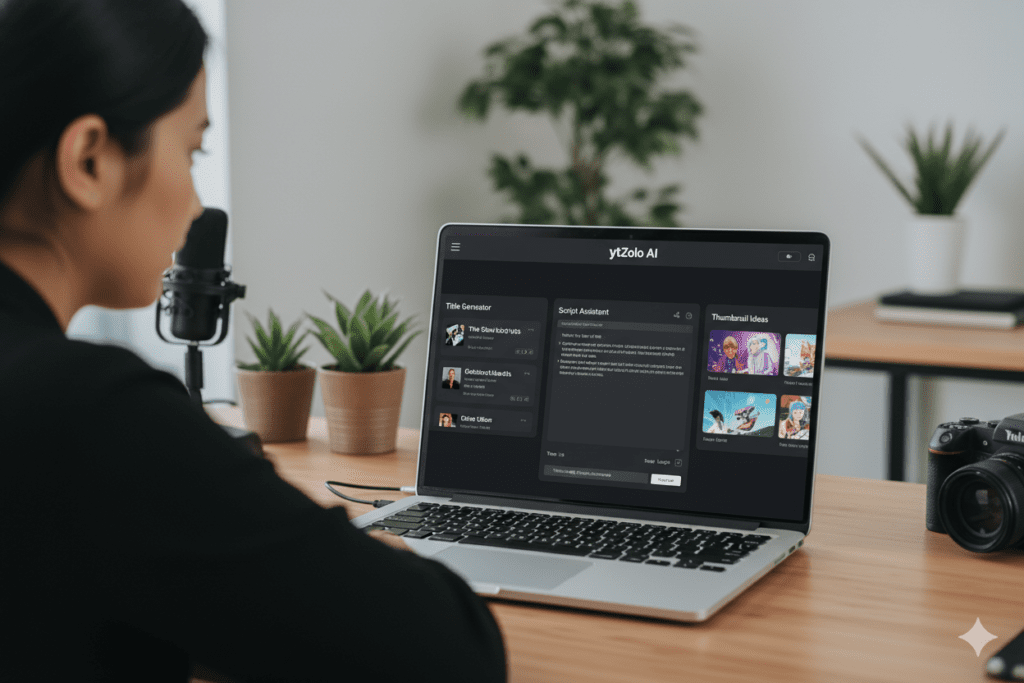
- AI-powered title generation — crafts viral, SEO-optimized titles in seconds
- Script writing assistance — helps you build compelling scripts you then make your own
- Thumbnail concept generation — creates thumbnail ideas that match your brand
- SEO-optimized descriptions and tags — maximizes discoverability without keyword stuffing
- Content ideation and planning — spots trending topics before they peak
None of these outputs are “realistic synthetic media.” They’re production tools — the same way a spell checker or a teleprompter is a production tool. No disclosure required.
ytZolo keeps the human in the driver’s seat.
This matters enormously in 2026 under YouTube AI content disclosure rules 2026. YouTube rewards channels where the creator’s decisions are visible. ytZolo generates options, ideas, and frameworks — but you make the editorial call. That’s the difference between AI-assisted content and AI-produced content.
Before ytZolo, creators struggled to keep up with policy changes, optimize every video for SEO, write compelling titles, and produce consistently without burning out. ytZolo eliminates that friction — so you spend less time on mechanics and more time on the creative work that makes your channel irreplaceable.
Check out the ytZolo blog for real creator stories, growth case studies, and the latest on staying ahead of YouTube’s evolving AI policies.
Why ytZolo Is Better Than Other Tools
There are plenty of AI tools out there claiming to help YouTube creators. So what makes ytZolo the right choice in the 2026 compliance landscape?
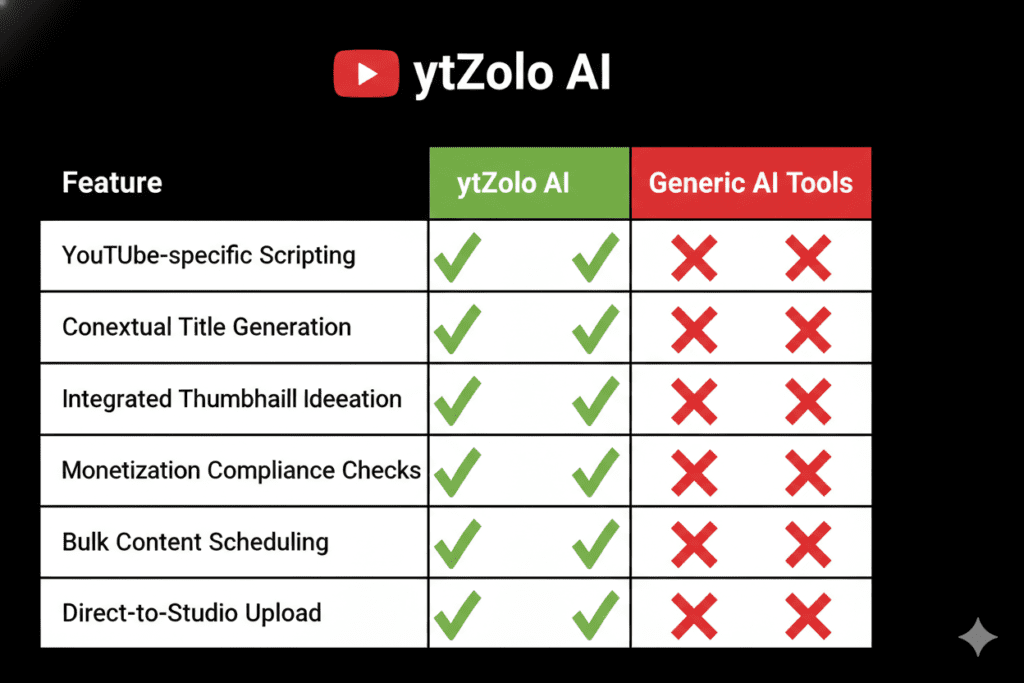
Here’s an honest comparison:
| Feature | ytZolo | Generic AI Tools |
|---|---|---|
| Purpose-built for YouTube creators | ✅ Yes | ❌ General purpose |
| AI Title + Script + Description + Tags in one place | ✅ All-in-one | ❌ Separate tools |
| Outputs fall in YouTube’s “safe zone” (no disclosure required) | ✅ Yes | ⚠️ Varies |
| Thumbnail concept generation | ✅ Yes | ❌ Rarely |
| Built for viral content creation | ✅ Yes | ❌ No |
| Keeps human creativity at the center | ✅ By design | ⚠️ Not always |
| Time from idea to publish-ready content | ⚡ Minutes | ⏳ Hours |
| Channel growth strategy built-in | ✅ Yes | ❌ No |
Most AI tools are built for general content — blog posts, social media, marketing copy. They weren’t designed with YouTube’s specific algorithm, disclosure rules, or creator workflows in mind.
ytZolo was built from the ground up exclusively for YouTube creators under YouTube AI content disclosure rules 2026. Every feature serves one goal: helping you make better videos that grow your channel — within the rules, sustainably, and at scale.
Other tools give you a hammer. ytZolo gives you a complete creative studio.
And in 2026 — where the line between compliant growth and demonetization is razor-thin — having the right tool isn’t optional. It’s the whole game.
Actionable Compliance Checklist for Every Upload
Use this checklist before you hit publish on every video going forward. It takes two minutes and protects your channel.
Pre-Upload AI Disclosure Checklist:
- [ ] Does my video include realistic depictions of a real person saying or doing something they didn’t actually do? → If yes, disclosure required.
- [ ] Does my video use AI to alter or fabricate footage of a real place or event? → If yes, disclosure required.
- [ ] Did I clone someone else’s voice for narration? → If yes, disclosure required.
- [ ] Does my video generate a realistic scene that never actually occurred (not clearly fictional)? → If yes, disclosure required.
- [ ] Did I use AI only for scripts, titles, descriptions, thumbnails, or editing assistance? → No disclosure needed.
- [ ] Is all AI-generated content clearly unrealistic, animated, or obviously stylized? → No disclosure needed.
If disclosure is required:
- Go to YouTube Studio → Video Details
- Scroll to “Altered content” → Select “Yes”
- Add a brief explanation in your video description (example below)
- Publish with confidence
Recommended disclosure language for your description:
“This video contains AI-generated [voiceover / visuals / scenes]. All AI content is clearly marked and used for [educational / entertainment / creative] purposes only.”
Pro tip: Being proactive with disclosure — even when you’re unsure — is always better than having YouTube add the label for you. Over-disclosure builds trust. Under-disclosure builds risk.
FAQ: YouTube Policy on AI Generated Content Disclosure 2026
Q1: Does using AI to write my YouTube script require disclosure?
No. YouTube explicitly exempts “production assistance” uses of AI from disclosure requirements under YouTube generative AI policy guidelines 2026. Using AI to generate scripts, content ideas, video outlines, titles, descriptions, or captions does not trigger the disclosure requirement. Only the final video content — specifically realistic synthetic or altered media — matters for disclosure purposes.
Q2: What exactly happens if I forget to disclose required AI content?
YouTube can apply a forced disclosure label to your video that you cannot remove under YouTube generative AI policy guidelines 2026. For repeated non-disclosure, consequences escalate to content removal and suspension from the YouTube Partner Program.
YouTube has also confirmed that when content is undisclosed, the platform may apply a label proactively, especially when sensitive topics like health, elections, or finance are involved.
Q3: Will the AI disclosure label hurt my video’s views or ad revenue?
No. YouTube has confirmed under YouTube generative AI policy guidelines 2026 that the disclosure label does not affect algorithmic distribution or monetization eligibility. Properly disclosed AI content receives normal recommendations and can be fully monetized through the YouTube Partner Program.
The label is a transparency signal for viewers — not a ranking or revenue penalty.
Q4: Do I need to disclose if I use YouTube’s own AI tools like Dream Screen?
No. If you create content using YouTube’s native AI tools — like Dream Screen or Dream Track for Shorts — the platform automatically handles the disclosure on your behalf under YouTube AI content disclosure rules 2026. No additional steps are required. This automatic disclosure only applies to YouTube’s own built-in tools, not third-party AI tools, as explained in the broader concept of generative artificial intelligence.
Q5: What is “AI slop” and why is YouTube cracking down on it in 2026?
“AI slop” refers to low-effort, mass-produced content generated almost entirely by AI with little to no human creative input. This includes channels that upload high volumes of templated videos using synthetic narration, stock visuals, and copy-paste script formats.
In 2026, YouTube’s detection systems evaluate whole channels — not just individual videos — and flag content that looks machine-made, repetitive, and devoid of original human judgment. This is separate from the disclosure requirement: a video can be properly disclosed and still be penalized under the inauthentic content policy if it lacks human creativity.
Conclusion
The message from YouTube in 2026 is crystal clear.
AI is welcome. Deception is not. And creators who understand the difference between the two are the ones who are growing — fast.
The YouTube policy on AI generated content disclosure 2026 isn’t a barrier to using AI. It’s a framework for using it responsibly. Know what to disclose, know what’s in the safe zone, and apply the label when required. It takes 30 seconds and protects everything you’ve built.
But staying compliant is just the starting line. The bigger opportunity is using AI strategically — the way the best creators already do — to produce more compelling content, rank higher in search, and grow an audience that actually cares about what you make.
That’s the gap ytZolo is designed to close.
From AI-powered title generation to scripts, thumbnail concepts, SEO descriptions, and tags under YouTube generative AI policy guidelines 2026 — ytZolo gives you the full creative stack to work smarter and grow faster, while keeping human creativity where it belongs: at the center of everything.
The creators who thrive in 2026 won’t be the ones who avoid AI. They’ll be the ones who master it — responsibly, strategically, and with the right tools in their corner.
Don’t get left behind.
🚀 Start creating smarter, faster, and more viral YouTube content with ytZolo today.
Want to stay ahead of every YouTube policy update? Bookmark the ytZolo blog — your go-to resource for the latest on the YouTube policy on AI generated content disclosure 2026 and every major platform update that follows.
External References:


Pingback: YouTube Monetization AI Disclosure Requirements 2026 Exposed
Pingback: YouTube Altered or Synthetic Content Disclosure Policy Official 2026
Pingback: 7 Proven YouTube AI Generated Content Disclosure Requirements