

Introduction: The Hard Truth About YouTube Growth in 2026
Imagine spending 12 hours editing a video, nailing the lighting, getting the audio perfect — then uploading it on YouTube and watching it get 47 views in a week. That’s exactly why learning YouTube SEO tips for 2026 is crucial if you want your videos to reach the right audience and grow faster. 🚀
That’s not a hypothetical. That’s the reality for thousands of creators right now.
Here’s the painful part: the problem isn’t your content. It’s how your content is optimized. YouTube in 2026 is the second-largest search engine on the planet — which is why understanding YouTube SEO tips for 2026 is essential if you want your videos to actually get discovered. 🚀
And just like Google, it has rules. Master those rules, and your videos find the right people on YouTube. Ignore them, and your best work disappears into the void — which is why learning YouTube SEO tips for 2026 can make all the difference for your channel’s growth. 🚀
That’s exactly why YouTube SEO tips for 2026 are not just useful — they’re survival skills for creators who want to grow on YouTube. 🚀
In this guide, you’ll learn every strategy that actually moves the needle right now: keyword research, title optimization, thumbnails, watch time, and how AI tools like ytZolo are changing the game for creators at every level.
Let’s get into it.
Table of Contents
What Is YouTube SEO and Why Does It Matter in 2026?
YouTube SEO is the process of optimizing your videos so they rank higher in YouTube’s search results, show up in suggested feeds, and get pushed to the right audience — which is why learning YouTube SEO tips for 2026 is essential for creators who want consistent growth. 🚀
It covers everything: your title, description, tags, captions, thumbnails, watch time, and engagement on YouTube. Miss any one of these, and you’re handing rankings to your competitors — which is why following YouTube SEO tips for 2026 is so important for creators who want their videos to be discovered. 🚀
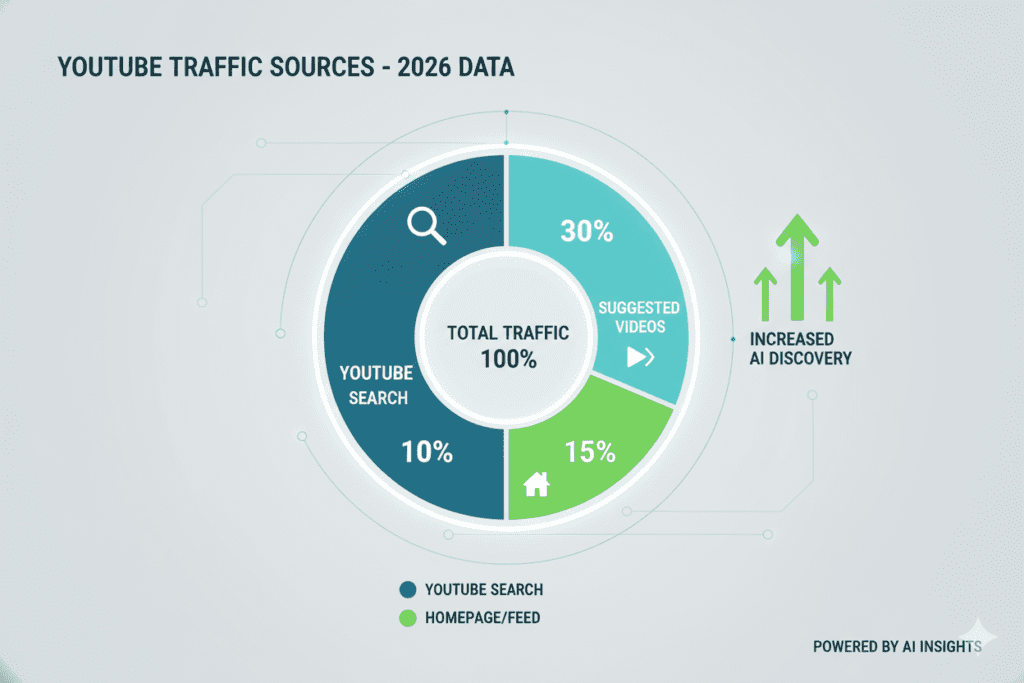
Here’s the opportunity nobody talks about enough. Nearly 70% of total watch time on YouTube now comes from the recommendation engine — not direct search. That’s why understanding YouTube SEO tips for 2026 is crucial if you want your videos to get recommended and reach a much wider audience. 🚀
That means a well-optimized video doesn’t just rank in search. It gets pushed across the entire platform.
In 2026, YouTube SEO tips for 2026 aren’t optional for serious creators on YouTube. They’re the difference between a channel that grows and one that stalls. 🚀
How the YouTube Algorithm Works in 2026
YouTube’s algorithm in 2026 is less of a ranking system and more of a prediction engine. Its job is to figure out what a viewer will watch next — and for how long.
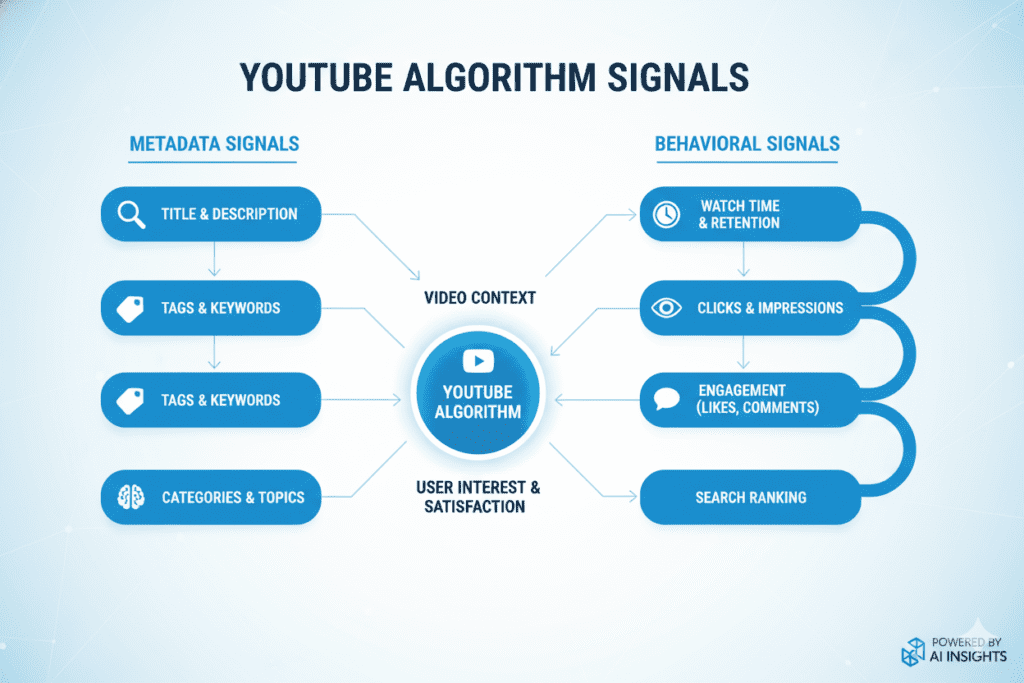
It evaluates two major categories of signals:
Metadata signals (what you tell it):
- Title, description, tags, captions
- Categories and chapters
- Closed captions and spoken words
Behavioral signals (what viewers tell it):
- Watch time and average percentage viewed
- Click-through rate (CTR)
- Likes, comments, shares, and saves
- Whether viewers subscribe after watching
The algorithm on YouTube doesn’t just rank your video. It decides how far to push it — across search, homepage, suggested videos, and Shorts feeds — which is why applying the right YouTube SEO tips for 2026 can dramatically increase your reach. 🚀
Get the behavioral signals right and YouTube becomes your best marketing team. Get them wrong, and even a beautifully produced video goes nowhere — which is why following the right YouTube SEO tips for 2026 can make a huge difference in how far your videos reach. 🚀
YouTube Keyword Research: The Foundation of YouTube SEO Tips for 2026
Every strong YouTube SEO strategy starts with keyword research. But YouTube keyword research is different from Google keyword research.
People searching on YouTube type differently. They use phrases like “how to,” “best way to,” “tips for beginners,” and “step-by-step tutorial.” You’re not just looking for volume — you’re looking for intent, which is a key principle behind effective YouTube SEO tips for 2026. 🚀
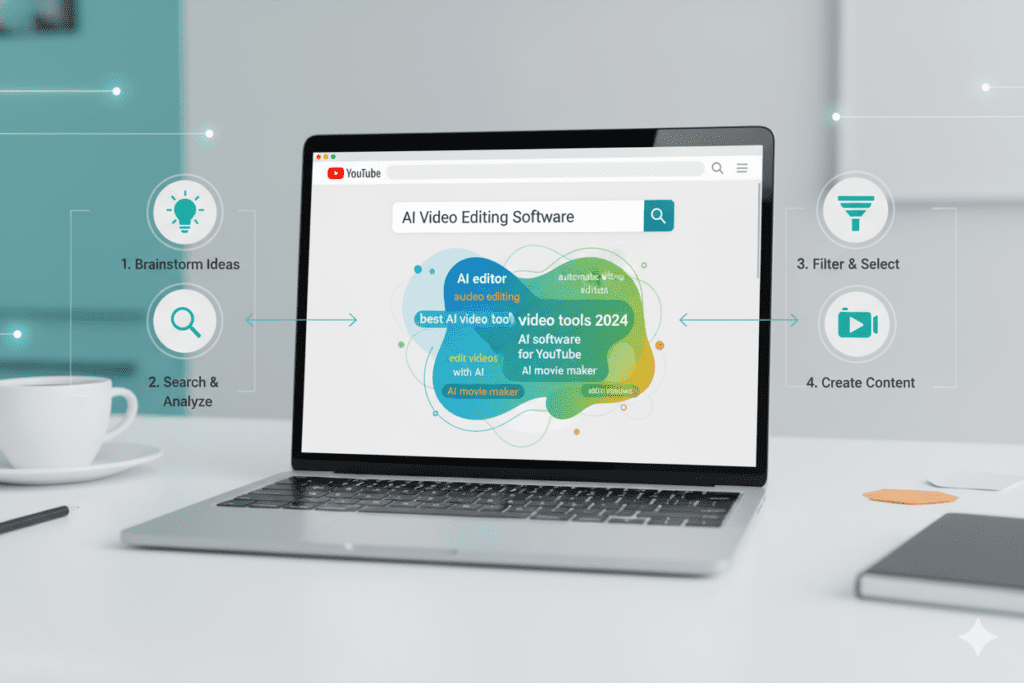
Here’s a proven YouTube keyword research process for 2026:
- Use YouTube Autocomplete. Type your topic into the YouTube search bar and see what it suggests. Those autocomplete results are real queries from real users.
- Target long-tail keywords. Instead of “YouTube SEO,” try “YouTube SEO tips for beginners 2026.” Less competition, more intent.
- Check competitor videos. Look at top-ranking videos in your niche. What words appear in their titles, descriptions, and tags?
- Find keyword gaps. Target search terms with decent volume but fewer than 100,000 results. That’s where new channels can compete and win.
- Optimize for Google too. Some YouTube videos rank on Google’s first page. Target “how-to” keywords and tutorial queries — Google loves surfacing video results for these.
Tools like ytZolo automate this entire process. Instead of manually digging through search bars and competitor pages, ytZolo’s AI engine analyzes the keyword landscape for your topic in seconds. It maps semantic relationships, identifies high-volume search terms, and gives you a full optimized tag and keyword set ready to copy.
For creators publishing multiple times a week, that time savings is enormous.
Title Optimization: The First Thing YouTube and Viewers See
Your title has two jobs: tell the algorithm what your video is about and convince a human to click.
Most creators fail at one or the other. Here’s how to nail both.
Rules for YouTube SEO-optimized titles in 2026:
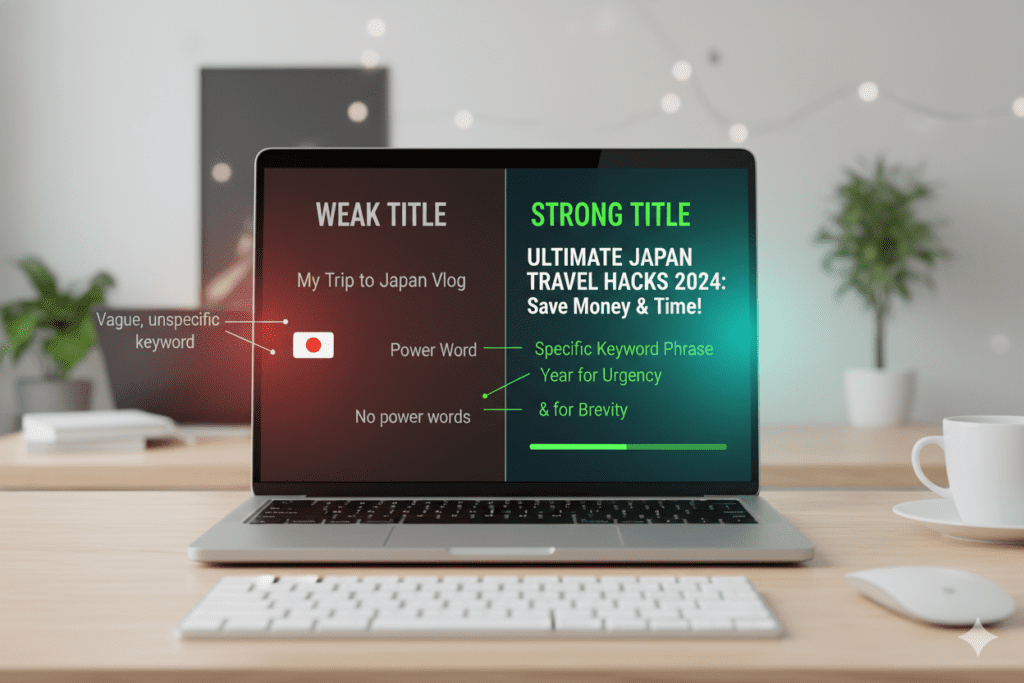
- Put your primary keyword in the first 40 characters. YouTube’s algorithm weighs early words more heavily, and mobile titles cut off after about 40–50 characters.
- Keep titles between 50–60 characters total. Long enough to be descriptive, short enough to display fully.
- Use power words. Words like “secret,” “proven,” “finally,” “warning,” and “biggest” trigger emotional responses that drive clicks.
- Add the year (2026) for freshness signals. YouTube and Google both reward content that feels current.
- Avoid keyword stuffing. A title like “YouTube SEO YouTube tips YouTube ranking 2026” screams spam and kills CTR.
Strong title example: “YouTube SEO Tips for 2026: Rank #1 Without Paying for Ads”
Weak title example: “My YouTube SEO tips and tricks for getting more views in 2026”
The difference? The strong title front-loads the keyword, uses a clear value proposition, and creates curiosity.
ytZolo’s AI title generator produces multiple optimized title options for every video topic. It’s trained on high-performing content across niches — so every suggestion is backed by data, not guesswork.
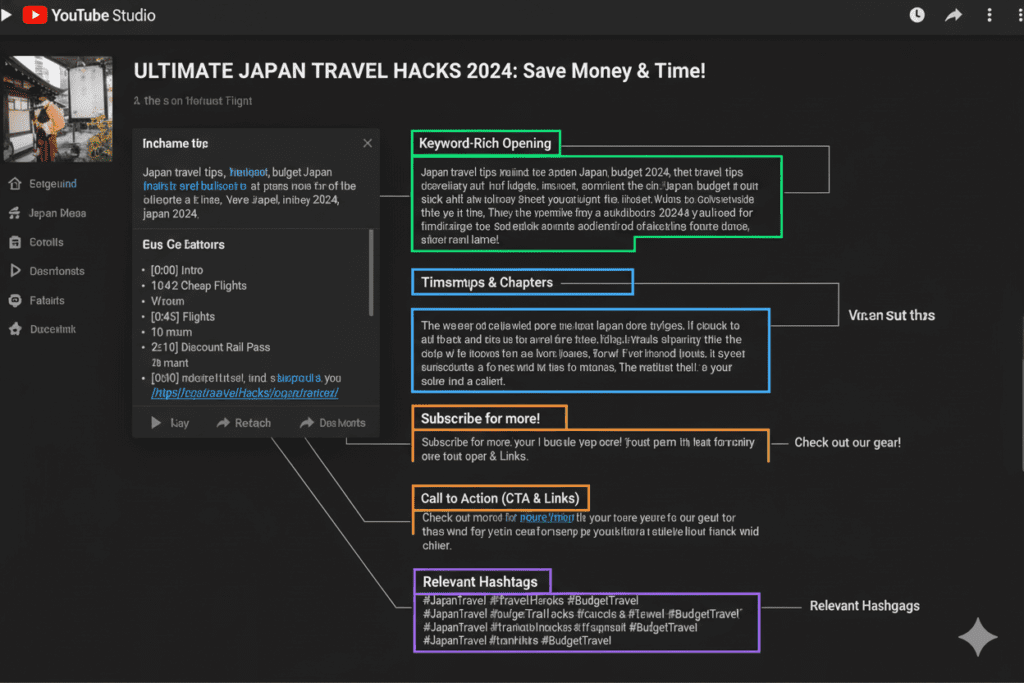
Writing Descriptions That Actually Rank
Your YouTube description is prime real estate. Most creators waste it.
A well-written description helps YouTube understand your video, improves your ranking for related searches, and gives viewers a reason to keep watching.
Best practices for YouTube video descriptions in 2026:
- Put your primary keyword in the first 150 characters. This text shows in search previews before the “show more” cutoff.
- Write naturally. Aim for 200–400 words and include 3–5 related keywords without forcing them. Phrases like “YouTube optimization,” “video ranking strategy,” and “YouTube algorithm tips” can all appear naturally in a well-written description.
- Add timestamps. Chapters improve user experience, extend watch time, and help YouTube understand your video’s structure.
- Include a clear call-to-action. Ask viewers to subscribe, comment, or watch another video.
- Link smartly. Add your social profiles, website, and related videos. This builds authority and keeps viewers on your channel longer.
YouTube’s AI now indexes your spoken audio — so what you say in the video also contributes to your ranking. If your description and spoken words align with your target keywords, that’s a double signal to the algorithm.
Tags, Hashtags & Categories — Still Worth Your Time?
Yes — but their role has shifted in 2026.
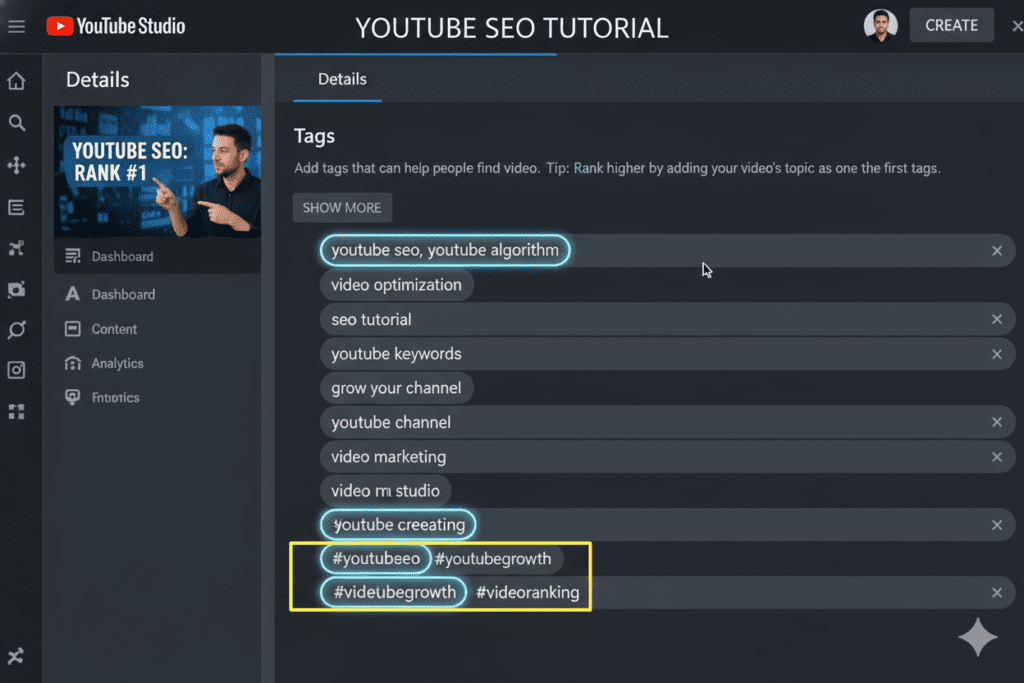
Tags are no longer a primary ranking factor. But they still help YouTube categorize your video, especially for newer or smaller channels trying to establish topical relevance.
YouTube SEO tag strategy for 2026:
- Use your primary keyword as the first tag.
- Mix broad and specific tags. Include both “YouTube SEO” and “YouTube SEO tips for beginners 2026.”
- Add 10–15 tags total. Quality over quantity.
- Use competitor tags as inspiration. Look at top-ranking videos in your niche.
Hashtags are different. YouTube displays hashtags above the title in search results. Use 3–5 relevant hashtags in your description. Overloading with hashtags (15+) can actually penalize your video.
Categories also matter for discovery. Choose the category that most accurately reflects your content. This affects where your video shows up in browse features and suggested videos.
Thumbnails: The Fastest Way to Double Your Views
Here’s a fact that should change how you think about YouTube SEO: 90% of the best-performing videos on YouTube use custom thumbnails.
Your thumbnail is the first impression. Before anyone reads your title, their eye hits your thumbnail. If it doesn’t grab attention in under a second, they scroll.
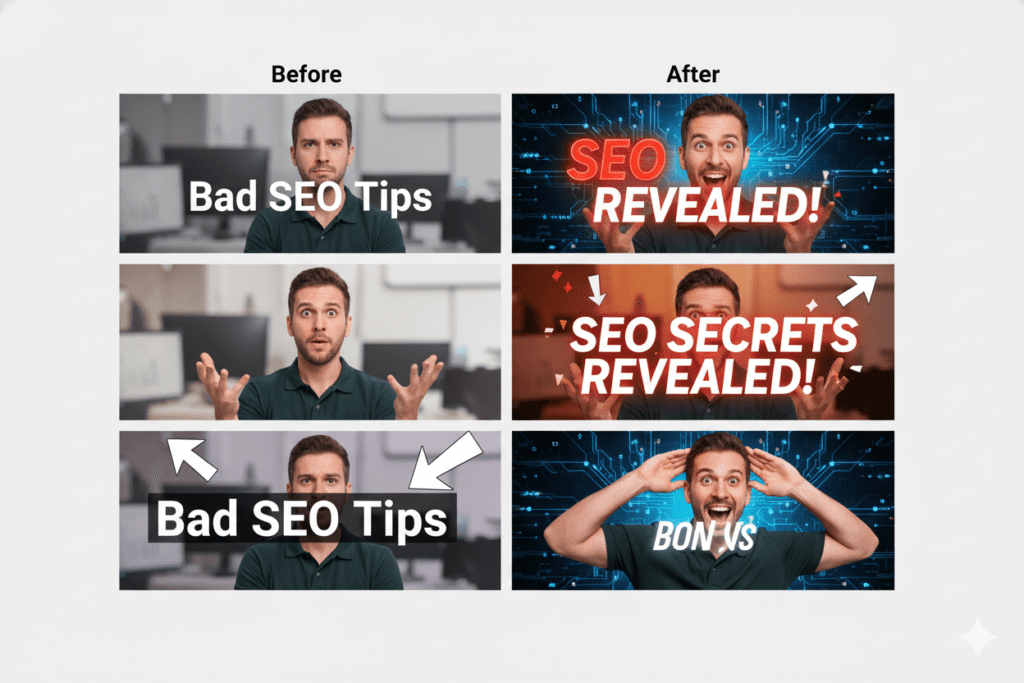
What high-converting YouTube thumbnails have in common in 2026:
- High contrast colors. Bright yellows, oranges, and electric blues pop in a crowded feed. High-contrast designs can boost CTR by 20–30%.
- Expressive human faces. Thumbnails with strong emotional expressions (surprise, excitement, shock) significantly outperform face-free thumbnails.
- Minimal text. 3–5 words maximum. Use power words. Make it readable at 150 pixels wide (mobile size).
- Brand consistency. A consistent visual style across thumbnails helps viewers recognize your content in their feed.
- A/B testing. YouTube Studio’s built-in Test & Compare feature lets you test two or three thumbnail versions simultaneously. Use it every single time.
Creating great thumbnails used to require design skills, expensive software, and hours of work. Not anymore.
ytZolo generates AI-powered YouTube thumbnails that are trained on millions of high-performing videos. The AI understands color psychology, text placement, emotional triggers, and niche-specific visual trends. You get multiple thumbnail variations in seconds — optimized for CTR, not just aesthetics.
For any creator serious about YouTube SEO in 2026, this is a game-changer.
Watch Time & Audience Retention: The #1 Ranking Signal
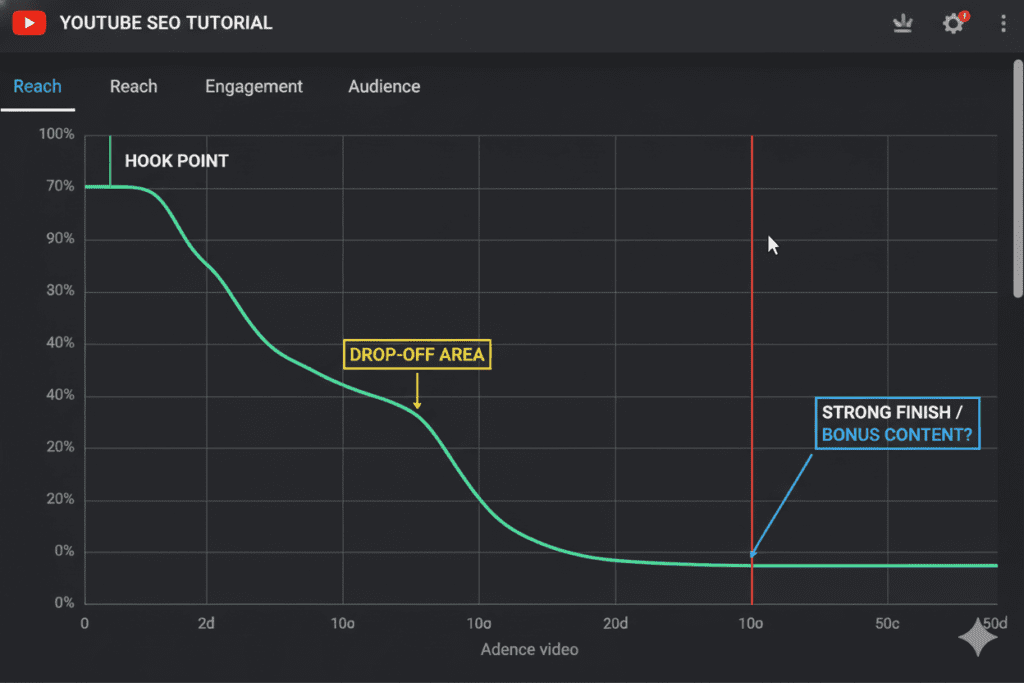
You can optimize every single piece of metadata perfectly. But if viewers click and immediately leave, your video tanks.
Watch time and audience retention are the most important ranking signals on YouTube in 2026. High retention tells the algorithm your content is valuable. Low retention sends it the opposite message — and impressions slow down fast.
How to build retention-first content:
- Hook in the first 5–10 seconds. Don’t start with an intro or your logo animation. Start with the value. State the problem, tease the solution, create immediate curiosity.
- Structure your content clearly. Preview what’s coming. Use pattern breaks — b-roll, text overlays, sound effects — to keep the brain engaged.
- Use storytelling. Stories hold attention better than talking-head explanations. Use real examples, relatable scenarios, and tangible results.
- End strong. Don’t trail off. Give a clear conclusion and a reason to watch another video immediately.
One widely-used creator tip: write your video outline before you script it. The first 30 seconds are your single highest-leverage investment. Spend 20% of your scripting time on just those first few seconds.
ytZolo’s AI script writing tool is built specifically for YouTube retention. It understands video pacing, hook structures, and what keeps viewers watching until the end — something generic AI writing tools simply can’t replicate.
Engagement Signals That Feed the Algorithm
YouTube doesn’t just reward watch time. It rewards community.
Likes, comments, shares, and saves are all signals that tell the algorithm your video generated real emotional engagement — not just passive viewing.
Proven engagement strategies for YouTube SEO in 2026:
- Ask a specific question at the end of your video. Not “let me know in the comments!” but something like “What’s your biggest challenge with YouTube SEO right now?” Specific questions get specific answers.
- Reply to every comment in the first 48 hours. YouTube rewards comment velocity in the early post period. Your replies trigger notifications that bring viewers back.
- Pin a thoughtful comment. A pinned question or bonus tip generates 40–60% more replies than an unpinned comment.
- Use polls and community posts. These extend your content between uploads and signal channel activity to the algorithm.
- Encourage saves and shares. A viewer sharing your video or saving it to watch later is one of the strongest possible quality signals.
Engagement is both an SEO strategy and a community-building practice. The best YouTube channels treat them as the same thing.
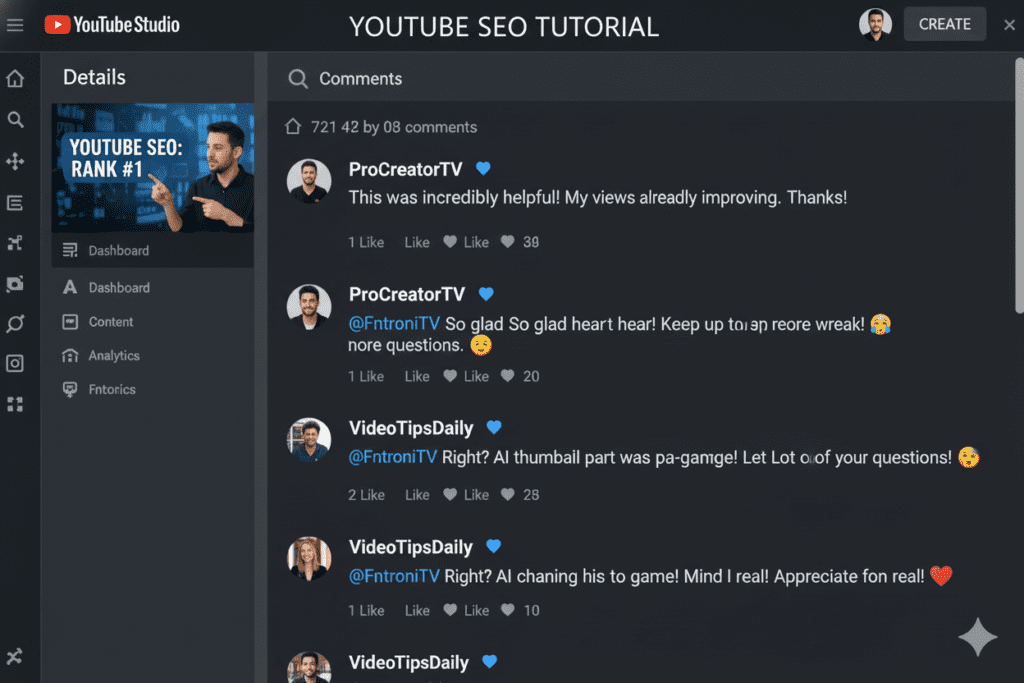
Playlists, Cards & End Screens
These are the most underused YouTube SEO tips for 2026 — and they’re completely free.
Playlists improve watch time by keeping viewers on your channel for multiple videos. The more videos someone watches in one session, the more the algorithm sees your content as valuable. Create playlists with SEO-friendly titles — not “My Videos” but “YouTube SEO Tutorials for Beginners 2026.”
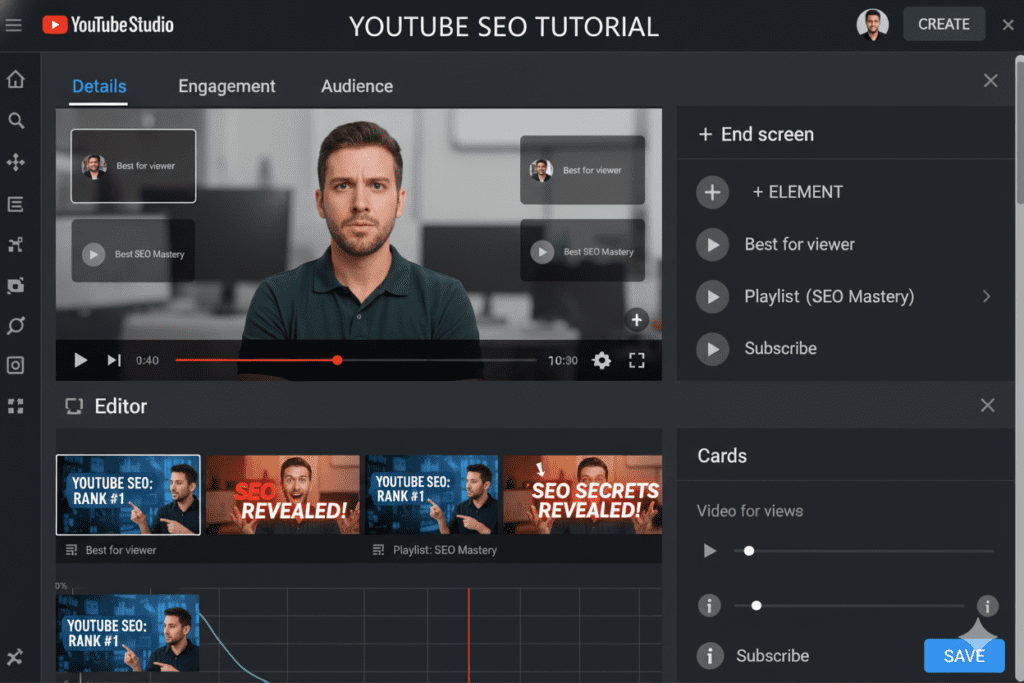
End screens should always include at least two elements: your best-performing video (“best video” option) and a subscribe button. End screens can drive 30–70% more watch time per session when used consistently.
Cards let you link to other relevant videos mid-watch. Use 3–5 cards per video, pointing to your most relevant content. This reduces drop-off by giving viewers an immediate next step before they leave.
These three features cost you nothing but a few minutes of setup. The compound effect on channel watch time — and therefore ranking — is significant.
Why ytZolo Is Better Than Other YouTube Tools
Let’s be real. There are a lot of YouTube tools out there. TubeBuddy, VidIQ, Canva, ChatGPT, Jasper — the list goes on. So why are serious creators choosing ytZolo in 2026?
The answer is simple: other tools give you data. ytZolo takes action.
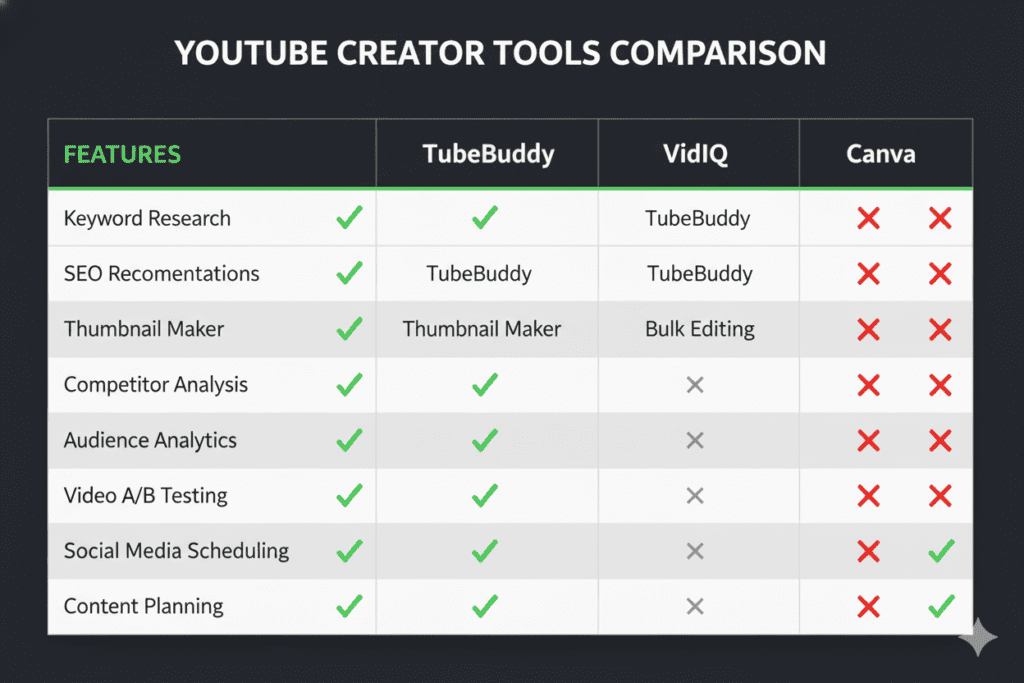
Here’s an honest side-by-side comparison:
| Feature | TubeBuddy | VidIQ | Canva | ChatGPT | ytZolo |
|---|---|---|---|---|---|
| AI Title Generator | Partial | Partial | ✗ | Generic | ✅ YouTube-native |
| AI Script Writer | ✗ | ✗ | ✗ | Generic | ✅ Retention-focused |
| AI Thumbnail Generator | ✗ | Partial | Manual | ✗ | ✅ CTR-optimized |
| AI Description & Tags | Partial | Partial | ✗ | Generic | ✅ Full SEO suite |
| All-in-One Platform | ✗ | ✗ | ✗ | ✗ | ✅ Complete workflow |
| YouTube-native AI | ✗ | Partial | ✗ | ✗ | ✅ Built for YouTube |
TubeBuddy and VidIQ are analytics-first platforms. They help you understand your channel. But they don’t build your content for you.
Canva is a great design tool — but it’s a blank canvas. It doesn’t know your niche, doesn’t understand YouTube’s algorithm, and can’t tell you which thumbnail will get more clicks.
ChatGPT is powerful for writing — but it wasn’t built for YouTube. It doesn’t understand watch time, retention drops, or what makes a script watchable vs. just readable.
ytZolo is built from the ground up as a growth-first AI YouTube platform. Your title, script, thumbnail, description, and tags are all generated together — aligned around the same video concept. That’s not just convenient. It’s a competitive edge most creators never even consider.
How ytZolo Helps You Master YouTube SEO Tips for 2026
Here’s the truth that most YouTube growth guides won’t tell you: manual YouTube SEO is a full-time job.
You need to research keywords, write keyword-rich titles, craft optimized descriptions, generate tags, design thumbnails, write retention-focused scripts — and do all of this before you even hit record. For creators publishing two or three videos a week, that’s 6–10 hours of pre-production work just for optimization.
That’s why creators who don’t use AI are falling behind fast. The gap between AI-powered creators and manual creators is widening every single month.
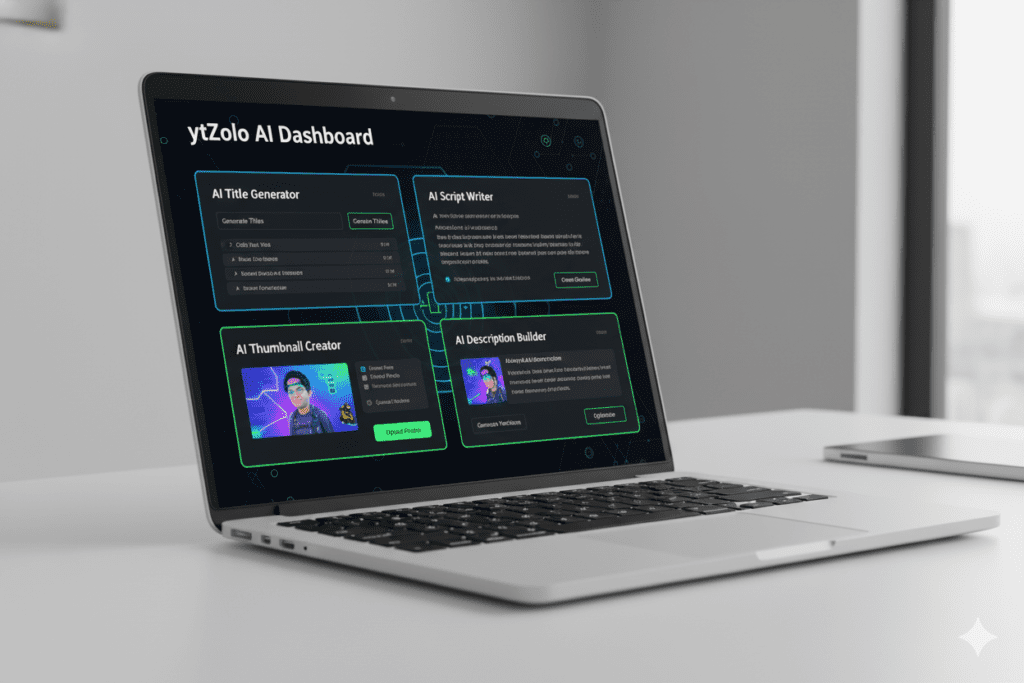
ytZolo compresses all of that work into minutes. Here’s exactly how it works for YouTube SEO in 2026:
- Enter your video topic or title idea — ytZolo’s AI engine immediately starts analyzing keyword landscapes, competitor performance, and trending search terms in your niche.
- Get AI-generated titles — Multiple click-optimized, keyword-rich title options, front-loaded with your primary keyword.
- Generate a retention-focused script — Built specifically for YouTube pacing, with a strong hook, clear structure, and an engaging close.
- Create CTR-optimized thumbnails — AI-trained on millions of high-performing thumbnails, adapted to your niche and audience.
- Get a full SEO package — Keyword-rich descriptions, optimized tags, and hashtag sets ready to paste directly into YouTube Studio.
Everything works together. Because on YouTube, a great thumbnail won’t help a video nobody can find — and an optimized title won’t save a script that loses viewers in 60 seconds.
ytZolo puts your entire YouTube SEO strategy into one platform. Whether you’re a beginner just starting out or an established creator looking to scale, it’s the smartest workflow upgrade you can make in 2026.
For more creator tips and growth strategies, explore the ytZolo blog — packed with actionable insights top creators are using right now.
Common YouTube SEO Mistakes to Avoid in 2026
Even experienced creators make these. Watch out for all of them.
Mistake #1: Keyword stuffing your title Titles like “YouTube SEO tips, YouTube optimization, how to rank on YouTube 2026” look like spam to both YouTube and viewers. Keep it natural and compelling.
Mistake #2: Ignoring the first 5 seconds Your hook is the most important part of your video. If you open with a logo animation or a slow intro, you’ve already lost half your potential audience.
Mistake #3: Auto-captions only Relying solely on YouTube’s auto-generated captions means the AI may misinterpret your words. Always clean up your captions — they’re indexed content that affects search ranking.
Mistake #4: Publishing and forgetting YouTube SEO is ongoing. Revisit your best-performing videos, update descriptions with fresh keywords, and add chapters to older content. Refreshed videos often get a second push from the algorithm.
Mistake #5: Ignoring analytics Check your YouTube Studio weekly. Monitor impressions, CTR, and retention graphs. Find the drop-off points. One insight per week, applied consistently, can drive 20–50% growth per month.
Mistake #6: Not using AI In 2026, manual optimization for every single video simply isn’t sustainable. Creators who skip AI tools are spending 3–5x more time on optimization than their competitors — and often getting worse results.

FAQ: YouTube SEO Tips for 2026
Q1: What are the most important YouTube SEO tips for 2026?
The most important YouTube SEO tips for 2026 are: use your primary keyword in the first 40 characters of your title, write a description with keywords in the first 150 characters, create a custom high-contrast thumbnail, build a strong hook in the first 5–10 seconds, and prioritize audience retention above everything else. The algorithm rewards videos that viewers actually watch — so great SEO combined with great content is the winning formula.
Q2: Does YouTube SEO still matter in 2026 with the algorithm so advanced?
Yes — more than ever. While the YouTube algorithm in 2026 is highly sophisticated, it still relies on metadata (titles, descriptions, tags) to understand what your video is about before it has any behavioral data. YouTube SEO tells the algorithm where to surface your video first. Without it, even great content struggles to get initial traction.
Q3: How many tags should I use for YouTube SEO in 2026?
Use 10–15 tags per video. Start with your exact primary keyword, then add closely related terms and a few broader category tags. Avoid using 30+ tags — it signals spam and can actually reduce relevance. Quality and relevance beat volume every time.
Q4: Can AI tools like ytZolo really improve my YouTube rankings?
Yes. AI tools like ytZolo improve rankings by generating keyword-optimized titles, descriptions, and tags that align with what YouTube’s algorithm looks for. They also produce CTR-optimized thumbnails and retention-focused scripts — which improve the behavioral signals (watch time, CTR, engagement) that are the actual ranking drivers. Creators using AI tools consistently outperform those doing everything manually.
Q5: How long does YouTube SEO take to work?
Most creators see initial movement within 2–4 weeks of proper optimization. Significant, sustained growth typically takes 3–6 months of consistent publishing with strong YouTube SEO practices. The creators who grow fastest are those who apply YouTube SEO tips for 2026 to every single video — not just occasionally.
Conclusion: Your YouTube Growth Starts With the Right Strategy
YouTube SEO tips for 2026 aren’t complicated. But they are layered.
You need strong keyword research, compelling titles, optimized descriptions, high-CTR thumbnails, retention-focused scripts, and consistent engagement. Every piece matters. And every piece compounds.
The creators winning on YouTube right now aren’t just making better videos. They’re making smarter decisions before they even hit record.
The difference between a channel that grows and one that stalls isn’t talent. It’s strategy. It’s showing up with optimized content consistently — and using every tool available to do it faster and better.
That’s exactly what ytZolo was built for. It’s not just an AI tool. It’s an all-in-one YouTube growth platform that handles your titles, scripts, thumbnails, descriptions, and tags — so you can focus on the thing that actually matters: creating content you love.
The creators who embrace AI-powered YouTube SEO in 2026 will have an enormous advantage. The window to act is right now.
Start creating smarter, faster, and more viral YouTube content with ytZolo today.
Related resources:

