

It happened on a Tuesday.
A creator with 180,000 subscribers woke up to an email from YouTube. Their best-performing video, the one with 400,000 views, had been labeled. Then a second email. YPP suspension, pending review.
They hadn’t faked anything. They hadn’t scammed anyone. They’d just used an AI voice for their intro and forgot to check one box during upload.
That’s how fast youtube monetization ai disclosure requirements 2026 can catch you. One missed toggle. Thousands of dollars in paused ad revenue.
This guide covers everything you need to know. What triggers the disclosure requirement, what doesn’t, how to add the label correctly in YouTube Studio, and how tools like ytZolo help you build a compliant, fast-growing channel without the guesswork.
Table of Contents
What actually changed with YouTube’s AI disclosure policy in 2026
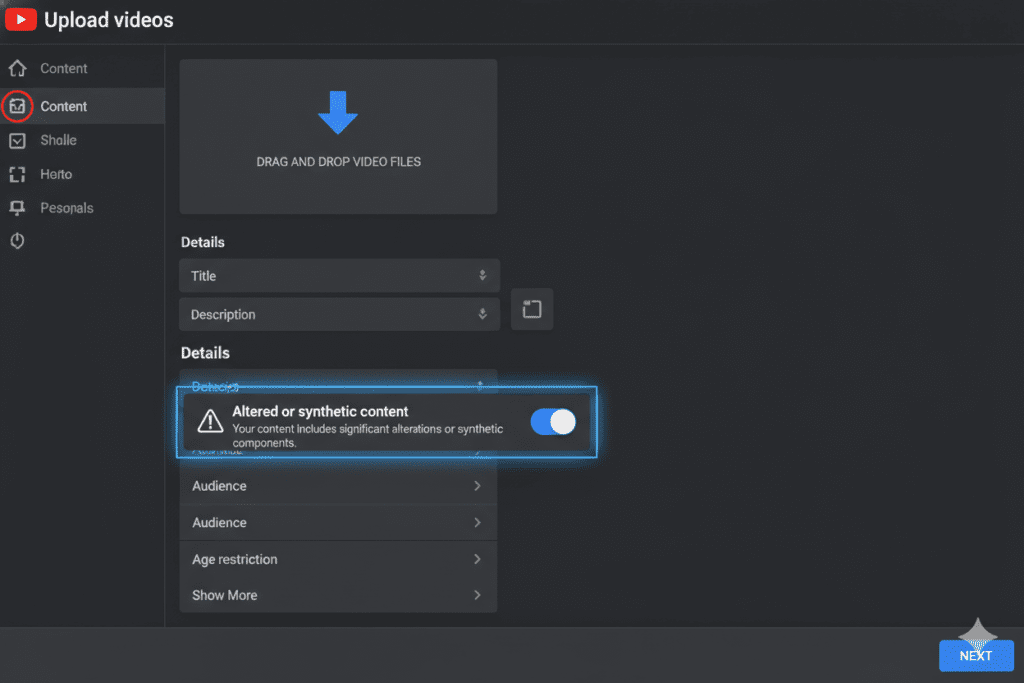
YouTube’s synthetic content disclosure policy went platform-wide on May 21, 2025. By January 2026, enforcement hit full force.
That month, 16 channels with a combined 4.7 billion views and 35 million subscribers were permanently terminated. Gone. All content deleted. No recovery option.
These weren’t small channels experimenting with AI. They were channels that had been operating for years. The pattern YouTube cited: AI-generated narration over repurposed footage, synthetic voiceovers, templated scripts, zero genuine human editorial input.
YouTube also renamed its “repetitious content” policy to “inauthentic content.” That’s not a semantic change. It’s a direct signal that the platform is targeting low-effort AI factories specifically. And it’s actively enforcing.
These updates are closely tied to YouTube AI generated content disclosure rules, which now require creators to clearly label synthetic or altered media to maintain transparency and avoid penalties under strict monetization policies in 2026.
The key thing to understand about youtube monetization ai disclosure requirements 2026: YouTube’s problem isn’t with AI. It’s with AI used to mislead viewers or flood the platform with low-value content. That distinction matters a lot for how you build your channel.
What content requires AI disclosure (and what doesn’t)
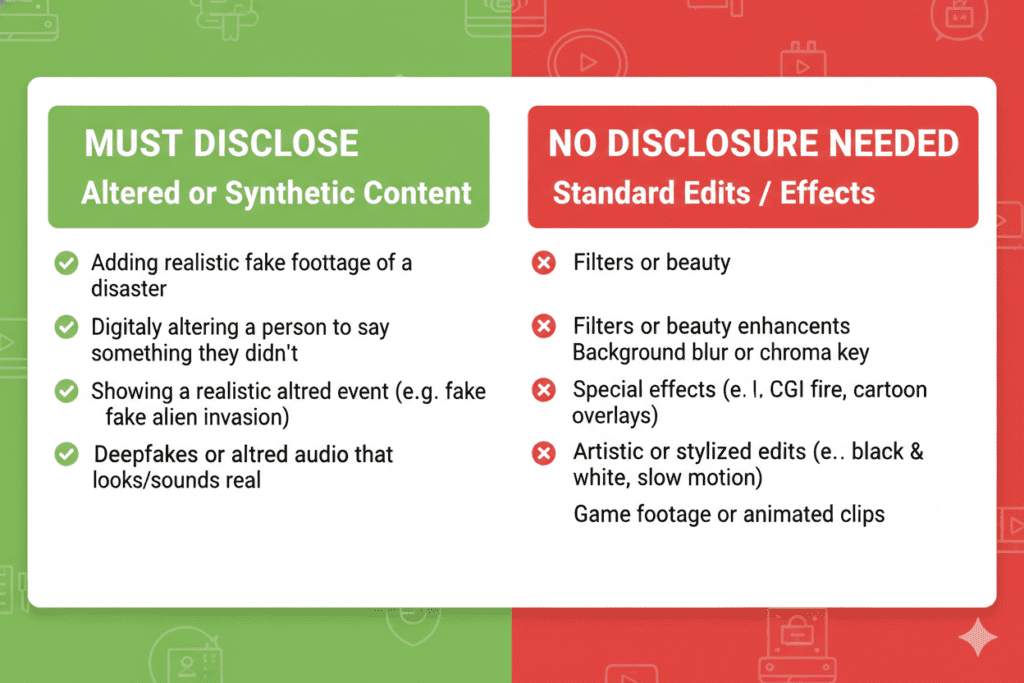
Content that requires disclosure
You must check the “AI use” toggle in YouTube Studio if your video contains any of the following:
- Realistic deepfake faces. A video that makes a real person appear to say or do something they didn’t.
- Synthetic voices of real people. AI-cloned audio of a public figure, celebrity, or anyone else.
- Fabricated news footage. Making it look like a real event happened that didn’t.
- AI-altered real environments. Showing a real building on fire when it wasn’t, or changing a real cityscape.
- Photorealistic scenes of fictional events. A realistic-looking tornado heading toward an actual town.
The test is simple: could an average viewer mistake this for real? If yes, you disclose.
Content that does NOT require disclosure
This is where most creators panic unnecessarily. According to YouTube’s own blog, you don’t need to disclose when AI is used for:
- Writing scripts, content ideas, or outlines
- Generating titles or descriptions
- Auto-captions or subtitles
- Color correction, background blur, or aesthetic filters
- Clearly animated or stylized visuals (not photorealistic)
- Thumbnail creation and design
Using AI tools to help plan, write, and package your content is classified as production assistance. It’s fully exempt. So if you’re using ytZolo to generate titles, scripts, thumbnails, and descriptions, none of that triggers the disclosure requirement.
The 4 levels of YouTube’s enforcement, ranked by severity
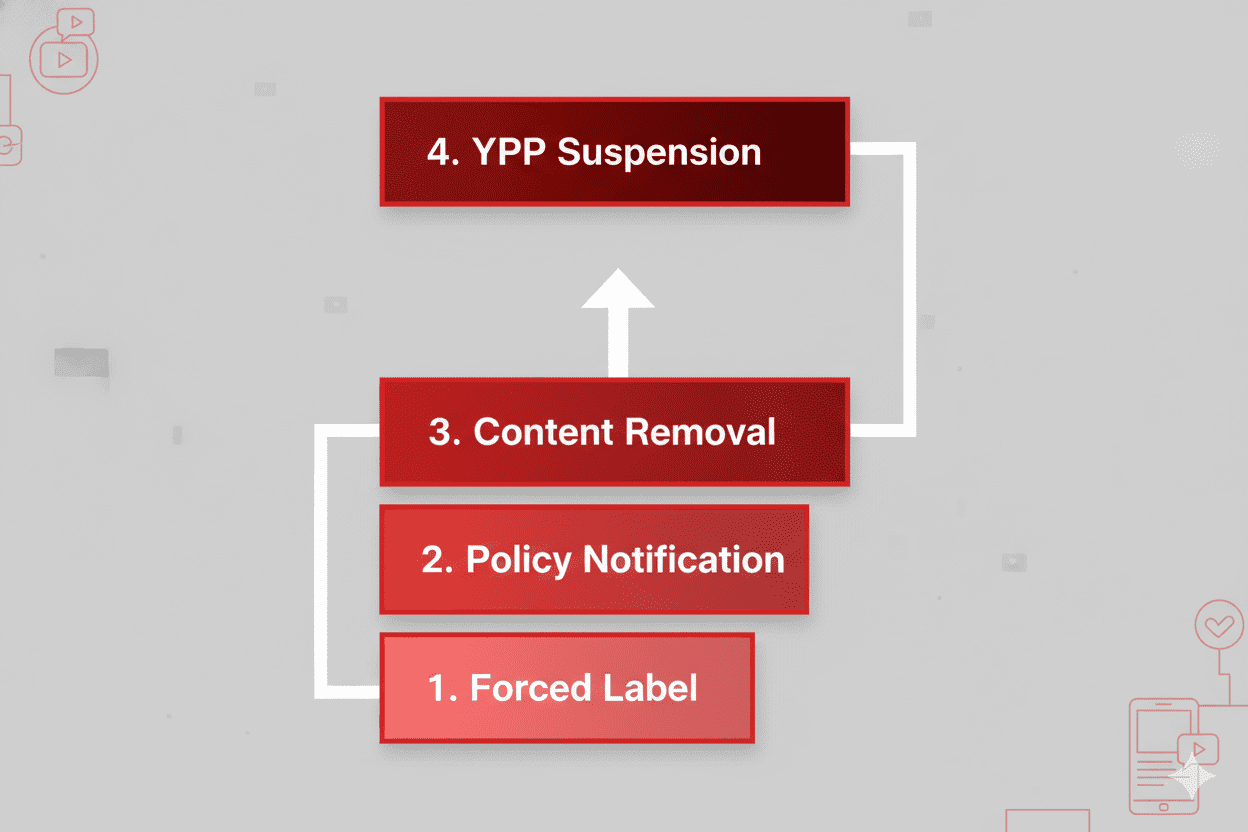
If you miss the disclosure and YouTube catches it, here’s exactly what happens:
Level 1 — Forced labeling. YouTube detects the undisclosed synthetic content and applies the “Altered or synthetic content” label itself. Once they add it, you cannot remove it. You lose control of how your own video is presented.
Level 2 — Policy notification. YouTube sends a formal warning through Creator Studio. This is a strike signal. You’re on the platform’s radar.
Level 3 — Content removal. Videos in serious violation get pulled entirely. No warning, no grace period for repeat offenders.
Level 4 — YPP suspension. Consistent failure to disclose required AI content means losing YouTube Partner Program status. All ad revenue stops. To reapply, you have to demonstrate a clear shift toward original, human-driven content. The standard waiting period is 30 days; severe violations push that to 90.
The good news: properly disclosed content faces zero impact on distribution or monetization. The label is a transparency signal for viewers, not a ranking penalty.
How to add the AI disclosure label in YouTube Studio: step-by-step
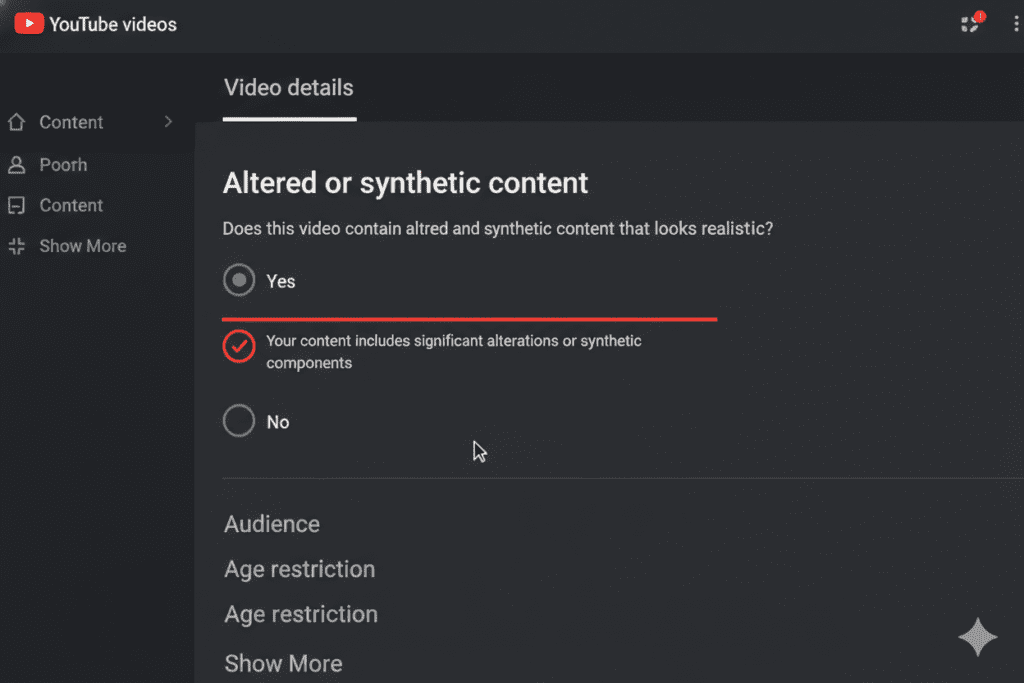
This is the part most guides skip. Here’s exactly how to do it, per YouTube’s official support documentation:
On desktop:
- Go to YouTube Studio at studio.youtube.com
- Click “Create” and upload your video (or open an existing video from Content)
- In the Details section, scroll down and click “Show more”
- Find the “Altered content” section
- Select “Yes” if your video contains realistic synthetic or altered content
- Continue with your normal upload flow and publish
On mobile (YouTube Studio app):
- Open the YouTube Studio app
- Tap the upload icon and follow the steps
- In the Attributes section, look for “AI use”
- Tap “Yes” if your content qualifies
- Complete the upload as normal
Once you select Yes, YouTube automatically adds the “Altered or synthetic content” label to your video’s expanded description. For sensitive topics like health, elections, finance, or ongoing news, YouTube may also add a more prominent label directly on the video player.
One shortcut: if you use YouTube’s own native generative AI tools to create a Short, disclosure is automatic. No extra steps needed.
How youtube monetization ai disclosure requirements 2026 affect your ad revenue
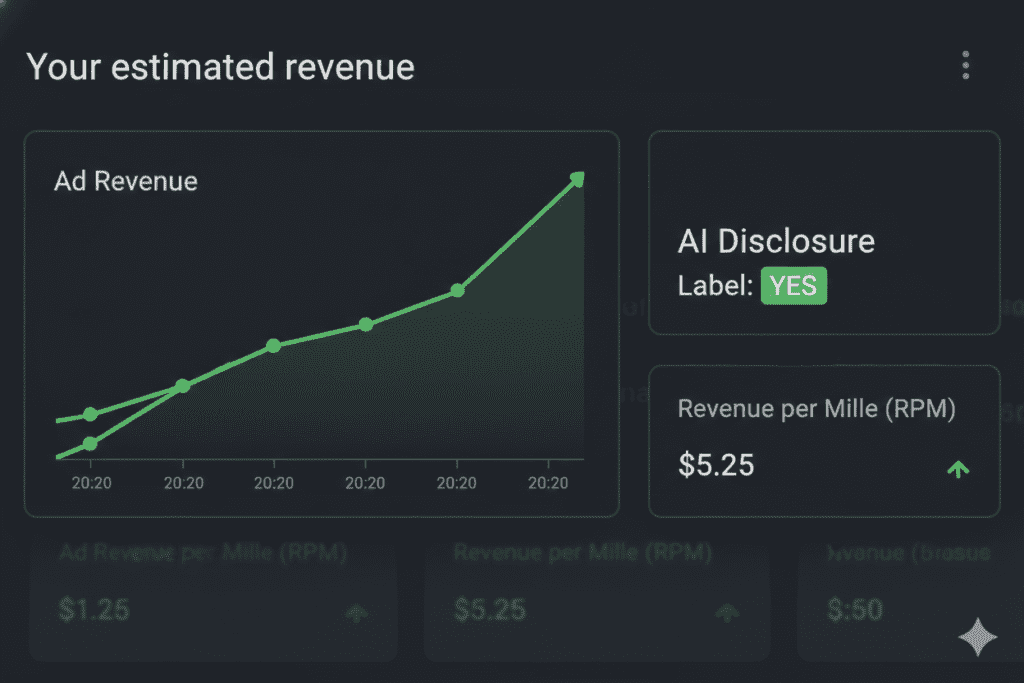
Here’s the answer creators actually want: disclosure itself does not hurt your money.
YouTube explicitly states that disclosing AI content won’t limit a video’s audience or impact its eligibility to earn money. Properly labeled AI content can be fully monetized through YPP with no RPM penalty.
What does hurt your money:
- Failing to disclose when disclosure is required (forces automatic labeling or content removal)
- Mass-produced, templated content with no genuine human input (triggers the inauthentic content policy)
- AI content in sensitive categories — health, finance, elections, public officials — which may get restricted monetization regardless of disclosure
AI-generated content is fully eligible for monetization through YPP when you meet the standard requirements: 1,000 subscribers, 4,000 watch hours or 10 million Shorts views, proper disclosure where required, and original content that adds real value.
The channels getting demonetized in 2026 aren’t the ones using AI thoughtfully. They’re the ones uploading 10+ near-identical videos per day with no human voice or perspective behind them.
This aligns with YouTube AI content monetization policy 2026, which focuses on limiting mass-produced, low-effort uploads and ensuring creators provide original commentary, value, and proper disclosure when using synthetic media.
Channels that fail to meet these standards risk limited reach, demonetization, or removal from the YouTube Partner Program entirely system.
Does AI content hurt your YouTube algorithm rankings?
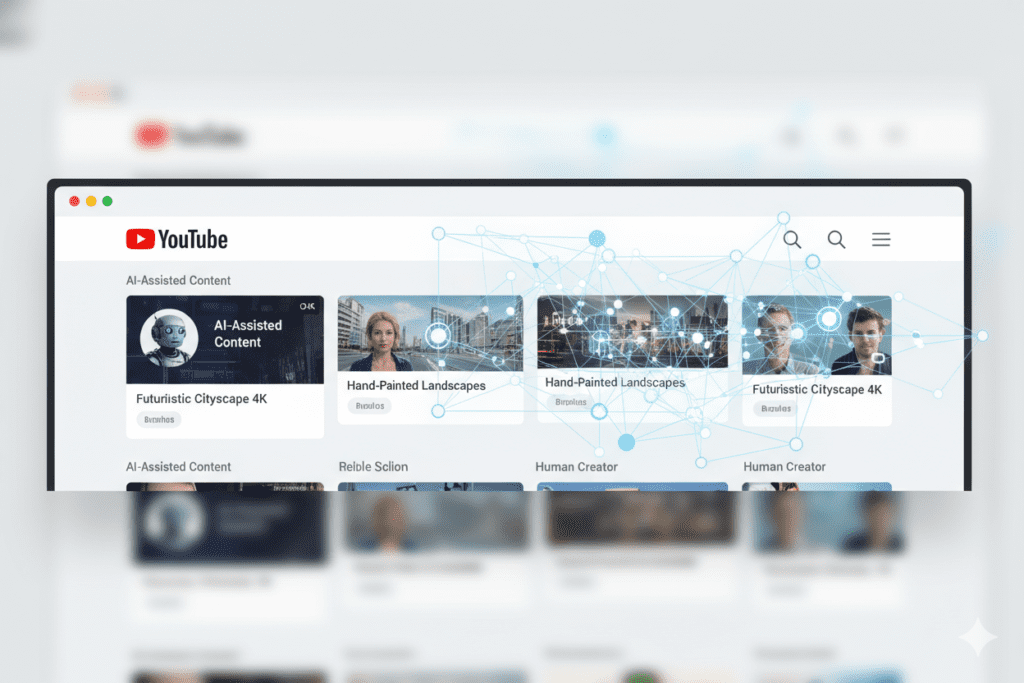
Short answer: no, if done right.
YouTube’s algorithm ranks content based on CTR, watch time, and viewer satisfaction. None of those metrics care whether you used AI to write your script. What the algorithm does punish is content that viewers abandon quickly, skip past, or report.
Mass-produced AI content fails on watch time and satisfaction because it has no genuine voice. Every video sounds the same. Viewers sense it, even if they can’t name it, and they leave.
This is exactly what YouTube AI content monetization policy 2026 is designed to detect and penalize, prioritizing authentic storytelling, audience retention, and meaningful human-driven value over repetitive, low-effort AI uploads.
Content made with AI assistance but driven by real human perspective, a creator’s actual opinion, specific knowledge, a recognizable voice, performs exactly the same as fully human-created content. Sometimes better, because the production quality is higher.
The youtube monetization ai disclosure requirements 2026 framework reinforces this: YouTube wants transparency and quality, not a ban on AI tools. The creators thriving right now are the ones using AI to move faster and create better, not to replace themselves entirely.
Why ytZolo is better than other tools for staying compliant and growing fast
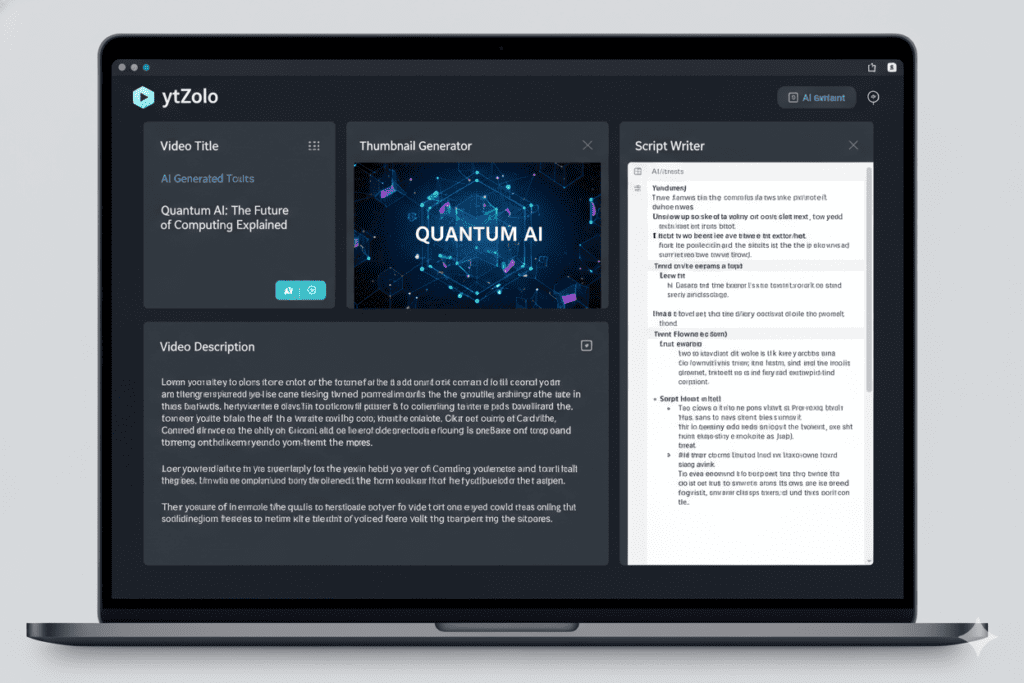
Most creators cobbling together an AI workflow use 4-6 different tools: one for scripts, one for thumbnails, one for titles, something else for descriptions. Every switch costs time. Every tool has a different learning curve. And none of them talk to each other.
ytZolo handles the entire YouTube content package in one place.
| Feature | ytZolo | ChatGPT | Canva | VidIQ |
|---|---|---|---|---|
| AI title generation | ✅ | ✅ | ❌ | ✅ |
| AI thumbnail creation | ✅ | ❌ | Template only | ✅ |
| AI script writing | ✅ | ✅ | ❌ | ❌ |
| SEO descriptions + tags | ✅ | Manual | ❌ | ✅ |
| All-in-one workflow | ✅ | ❌ | ❌ | Partial |
| Built for YouTube growth | ✅ | ❌ | ❌ | ✅ |
Here’s what matters most for the youtube monetization ai disclosure requirements 2026 context: everything ytZolo generates (titles, scripts, thumbnails, descriptions, tags) falls under YouTube’s production assistance exemption.
None of it requires disclosure. You get the full speed advantage of AI without triggering any compliance risk.
Manual title research takes 30-45 minutes per video. Manual thumbnail design, another hour. Writing a description from scratch, another 20. ytZolo cuts that to under 10 minutes total under YouTube AI content monetization policy 2026.
Creators who publish frequently need that speed. And they need the output to be good enough that viewers actually watch. That’s what separates ytZolo from generic AI tools: it’s trained on what works on YouTube specifically, not just what sounds decent.
It is designed around YouTube AI tools for content creators free, helping creators optimize scripts, thumbnails, and titles for real platform performance, higher CTR, and stronger audience retention rather than just generating generic AI content that looks good but fails to perform.
Check out the ytZolo blog for deeper guides on building a compliant, high-growth channel with AI in 2026.
What a safe, monetization-ready AI content workflow looks like in 2026
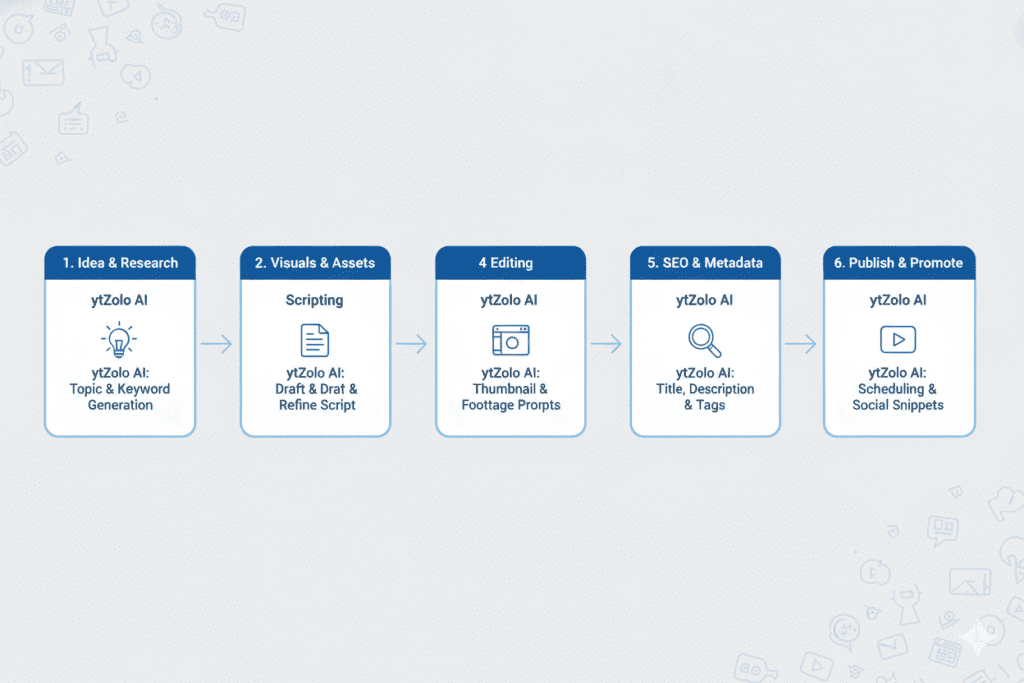
Here’s a practical workflow that keeps you compliant and competitive:
Step 1: Generate your content package with ytZolo
Enter your video topic. ytZolo generates optimized title options, a full script outline, thumbnail concepts, a keyword-rich description, and tags. All of this is production assistance. Zero disclosure required.
Step 2: Add your real voice
The script is a starting point, not a finished product. Record your own delivery, add your perspective, your examples, your opinion.
This is what separates compliant, monetizable content from the factories getting terminated under YouTube AI content monetization policy 2026, where originality, human input, and authentic commentary are key to maintaining monetization and long-term channel safety.
Step 3: Check your visuals against the disclosure trigger
Before you export your final video, ask: does this contain a realistic synthetic person saying or doing something? A fabricated real event? A realistic AI voice pretending to be someone real? If any answer is yes, you’re disclosing. If no, you’re clear.
Step 4: Upload to YouTube Studio and set the Altered Content toggle
If disclosure applies, select Yes in the Details section before publishing. If it doesn’t, select No. This takes 5 seconds and protects your entire channel.
Step 5: Monitor your channel health
Check YouTube Studio’s channel dashboard weekly. Look for policy notifications. If YouTube flags something, address it within the 21-day appeal window (that’s the rough window for contesting actions before they become harder to reverse) under YouTube AI content monetization policy 2026.
Step 6: Log your content pattern
YouTube enforces channel-wide. One bad video isn’t just one bad video; reviewers look at your whole catalog. Keep a simple log of what AI tools you used on each video and what category the content falls into. It takes 2 minutes per upload and it’s the best insurance you have.
FAQ
Do I need to disclose AI if I used it to write my YouTube script?
No. Using AI for scripts, outlines, titles, descriptions, captions, or any other planning and writing task is classified as production assistance by YouTube. Disclosure is only required when your final video contains realistic synthetic or altered visual or audio content that could mislead viewers about real people or events.
Will adding the AI disclosure label hurt my video’s performance or ad revenue?
No. YouTube explicitly states that disclosing AI content has no impact on a video’s audience reach, algorithm distribution, or monetization eligibility under YouTube AI content monetization policy 2026. The label is purely a transparency signal for viewers. What hurts performance is failing to disclose when you should have.
What counts as “realistic” AI content that needs disclosure?
Content that the average viewer could reasonably mistake for real. This includes deepfake faces of real people, AI-cloned voices of real individuals, fabricated news footage of real events, and photorealistic scenes depicting things that never happened. Clearly animated content, stylized visuals, and minor aesthetic edits don’t qualify.
This distinction is central to YouTube AI generated content disclosure rules, which focus on transparency for realistic synthetic media while allowing creators to freely use AI for non-deceptive editing, design, and production support.
Can AI-generated content be monetized on YouTube in 2026?
Yes, fully, as long as it meets standard YPP requirements (1,000 subscribers, 4,000 watch hours or 10M Shorts views), follows disclosure rules where applicable, and demonstrates genuine original value. The channels being demonetized are the ones using AI for mass production with no human creative input, not creators using AI as a production tool.
What are the penalties for not disclosing AI content on YouTube?
YouTube escalates in 4 stages under YouTube AI content monetization policy 2026: forced labeling (which you can’t remove), a formal policy notification, content removal, and YPP suspension. Channels that consistently fail to disclose face permanent termination in serious cases.
In January 2026, YouTube deleted 16 channels with a combined 4.7 billion views for violations related to inauthentic AI content.
You now know more than most creators uploading today
The youtube monetization ai disclosure requirements 2026 rules aren’t designed to punish creators who use AI. They’re designed to push out factories that use AI to flood the platform with worthless content.
If you’re using AI to produce faster, create better, and still show up with a real voice and perspective, you’re doing exactly what YouTube AI content monetization policy 2026 wants. The disclosure label is a one-second checkbox. The bigger risk is not understanding where the line is.
Use AI for the parts that don’t require disclosure (scripts, titles, thumbnails, descriptions) and put your real self into the parts that do (on-camera delivery, genuine commentary, original perspective). That combination is what builds channels that last.
This approach aligns with YouTube monetization AI disclosure requirements 2026, helping creators stay compliant while still leveraging AI for faster production, stronger optimization, and sustainable long-term channel growth.
Start creating smarter, faster, and more viral YouTube content with ytZolo today.
→ Try ytZolo free at ytzolo.com
Sources:

