
Introduction: The Email That Changed Everything
YouTube requires creators to disclose certain AI-generated or AI-altered content when it realistically depicts people, events, or places in ways that could mislead viewers. AI-generated music also falls under YouTube’s disclosure requirements.
However, using AI to write scripts, generate ideas, create captions, or make minor visual edits does not automatically require disclosure. The requirement depends on the type of content created and how it is presented.
This guide explains youtube policy on ai generated content disclosure, which content requires a label, how to disclose AI use in YouTube Studio, and how disclosure differs from monetization eligibility.
That’s why understanding content strategy, compliance, and optimization together is critical — especially when you’re also trying to grow your channel using modern tools like the AI content generator for YouTubers.
Table of Contents
What Is YouTube’s AI Disclosure Policy?
YouTube’s AI disclosure policy requires creators to label certain realistic or meaningfully altered synthetic content so viewers understand what they are watching.
The policy focuses on content that could mislead viewers about real people, real events, or real places. It also includes specific categories such as AI-generated music.
Disclosure does not mean AI-generated videos are banned. Creators can use AI for scripting, narration, editing, animation, and other production tasks, provided their content follows YouTube’s applicable policies.
YouTube introduced its disclosure requirements in 2024 and announced changes to AI label visibility on May 27, 2026.
For the complete requirements, read YouTube’s official policy on disclosing generative AI content.
The core idea is simple: if your video could realistically mislead a viewer about what actually happened — and AI helped create that illusion — you must tell your audience.
This is especially important for creators optimizing their workflow using tools like the best AI YouTube thumbnail generator for 2026, where visuals and realism can heavily influence viewer perception.
What AI Content Must Be Disclosed on YouTube?
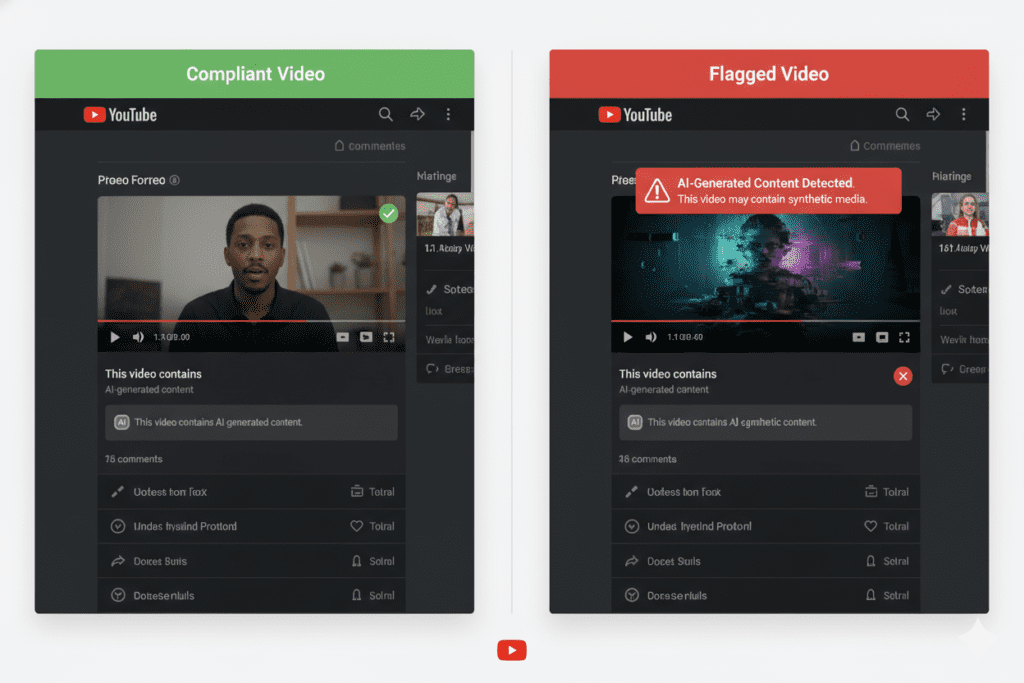
YouTube asks creators to report AI-generated or edited material if it includes an accurate portrayal of persons, locations, or occurrences
Common examples include:
- Realistic synthetic people: AI makes a real person appear to say or do something they never said or did.
- Cloned voices of other people: AI generates realistic speech that imitates another person in a way covered by YouTube’s policy.
- Altered real events: AI meaningfully changes footage of an actual event, potentially misleading viewers about what happened.
- Realistic fabricated scenes: AI creates photorealistic footage of an event or situation that never occurred.
- AI-generated music: Music generated synthetically using AI is an example of content requiring disclosure.
For instance, if an individual uploads an authentic-looking video including a political figure giving a speech that they did not actually deliver, the creator should identify the artificially generated content.
Similarly, if you create realistic footage of a natural disaster that never happened and present it as genuine news footage, disclosure is required.
The key distinction is not simply whether AI was used. It is whether the finished content falls within YouTube’s disclosure criteria.
What AI Content Does Not Need Disclosure?
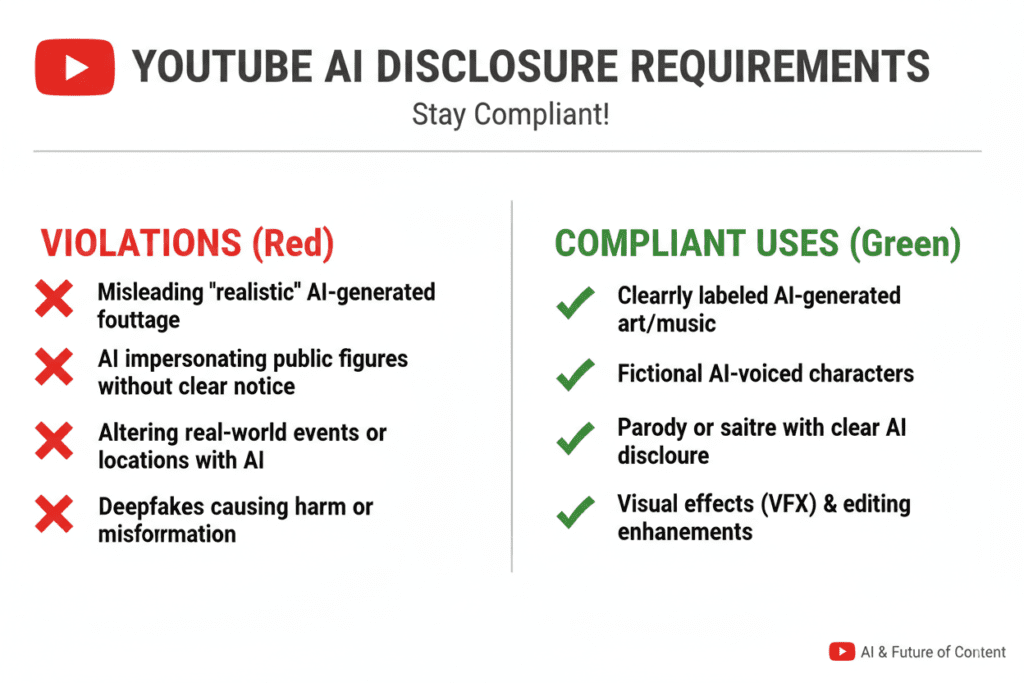
YouTube says creators are not obligated to report every instance of AI use. Routine uses of artificial intelligence, obviously unrealistic videos, or even some minor uses of AI do not need to be disclosed to YouTube.
Examples include:
- Scriptwriting and brainstorming: Using AI to develop ideas, outlines, or video scripts.
- Production assistance: Using AI to generate titles, captions, subtitles, or other supporting materials.
- Minor visual edits: Making routine adjustments to lighting, color, or image quality.
- Clearly unrealistic content: Creating fantastical animation or obviously fictional scenes.
- Voice cloning for personal use: Cloning your own voice for voiceovers or dubbing.
For example, a creator who uses AI to write a tutorial script does not need to disclose that assistance by itself.
Similarly, cloning your own voice for narration is listed by YouTube as an example that does not require disclosure.
However, the final content matters. A video featuring typical AI usage combined with somewhat realistic AI-generated imagery, significantly modified authentic depictions, or AI-enhanced soundtracks may necessitate disclosure.
Do not assume that all AI-generated audio, visuals, or voiceovers are automatically exempt. Check YouTube’s official disclosure examples if your content falls into an unclear category.
How Do You Disclose AI Content in YouTube Studio?
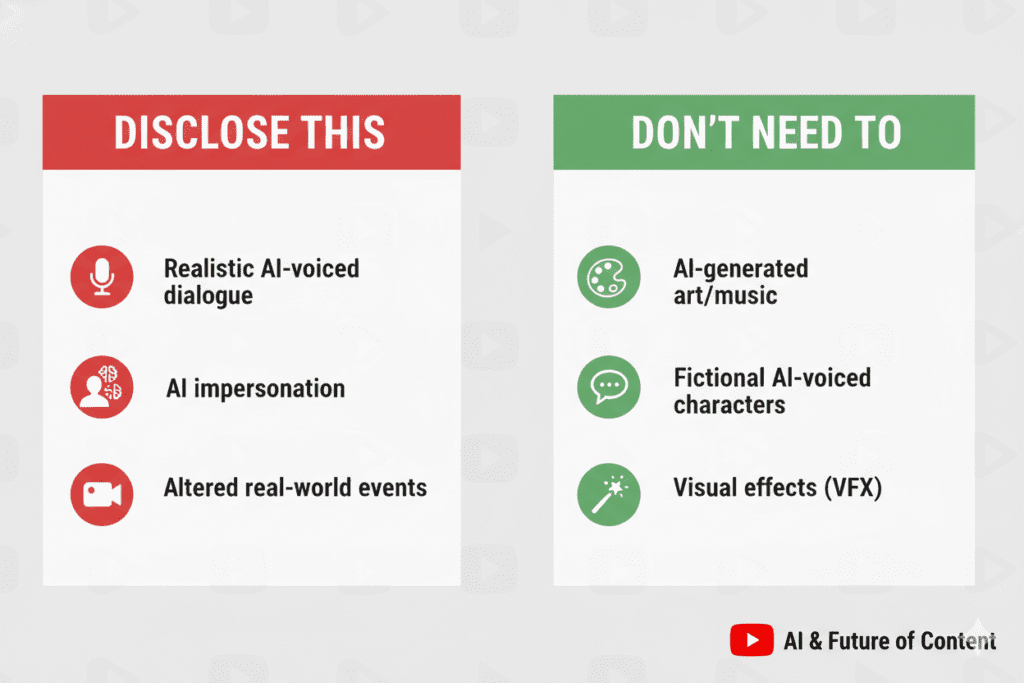
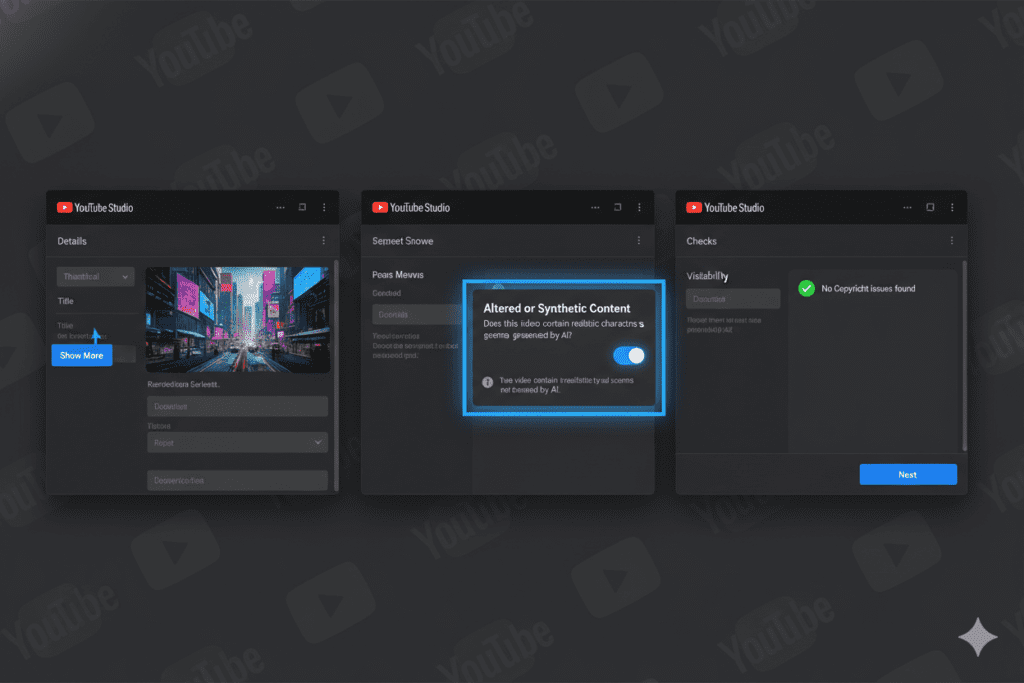
If your video meets YouTube’s AI disclosure requirements, use the disclosure setting in YouTube Studio when uploading or editing the video.
Steps to disclose AI use
- Open YouTube Studio.
- Start uploading a video or open an existing video in your content library.
- Find the AI use setting under Attributes, where available in the current interface.
- Select the appropriate disclosure option if your video contains content that meets YouTube’s disclosure criteria.
- Save your changes and review the video details before publishing.
YouTube may update the names or placement of controls in Studio. If your interface looks different, follow the current instructions in YouTube’s official help documentation.
What if YouTube adds an AI label automatically?
YouTube announced additional measures in May 2026 to identify certain realistic AI-generated or altered content when creators have not disclosed it.
If YouTube applies an incorrect label, creators can correct the disclosure status in Studio in many cases. However, certain labels imposed by YouTube or integrated with verified content credentials can not be eliminated by creators.
Automatic recognition does not exempt the creator from the obligation to comply with disclosure policy.
Where Does YouTube Display AI Disclosure Labels in 2026?
YouTube announced changes to AI label visibility on May 27, 2026; the changes concern where the label appears depending on the type of video and the nature of the disclosure.
- Long-form videos: Labels for covered realistic synthetic content appear directly below the video player, above the description.
- YouTube Shorts: Labels for covered content appear as an overlay on the video.
- Other disclosure information: Some labels or details may appear in the expanded description, depending on the content and the applicable policy.
YouTube may also apply labels automatically when its systems identify certain AI-generated or altered content.
Not every video made with AI receives the same label. The disclosure requirement’s applicability depends on the content’s nature, whereas the label’s placement can depend on the current implementation by YouTube.
Therefore, it is recommended that creators review their videos’ details to ensure that the disclosure has appeared after publishing to viewers.
Does YouTube’s AI Disclosure Policy Affect Monetization or Views?
Adding an AI disclosure label does not in and of itself reduce a video’s reach or make it ineligible for monetization. According to the YouTube guidelines, “disclosing realistic altered or synthetic content does not limit its reach or eligibility to earn money.”
The problem is that disclosure and monetization policies are two different things. A video that has been properly labeled can still contain other rule violations.
Creators should distinguish between three requirements:
- AI disclosure: Whether the video requires a label under YouTube’s synthetic content policy.
- Monetization eligibility: Whether the channel and its videos meet YouTube Partner Program requirements.
- Community Guidelines and copyright: Whether the content follows YouTube’s rules and respects applicable copyright requirements.
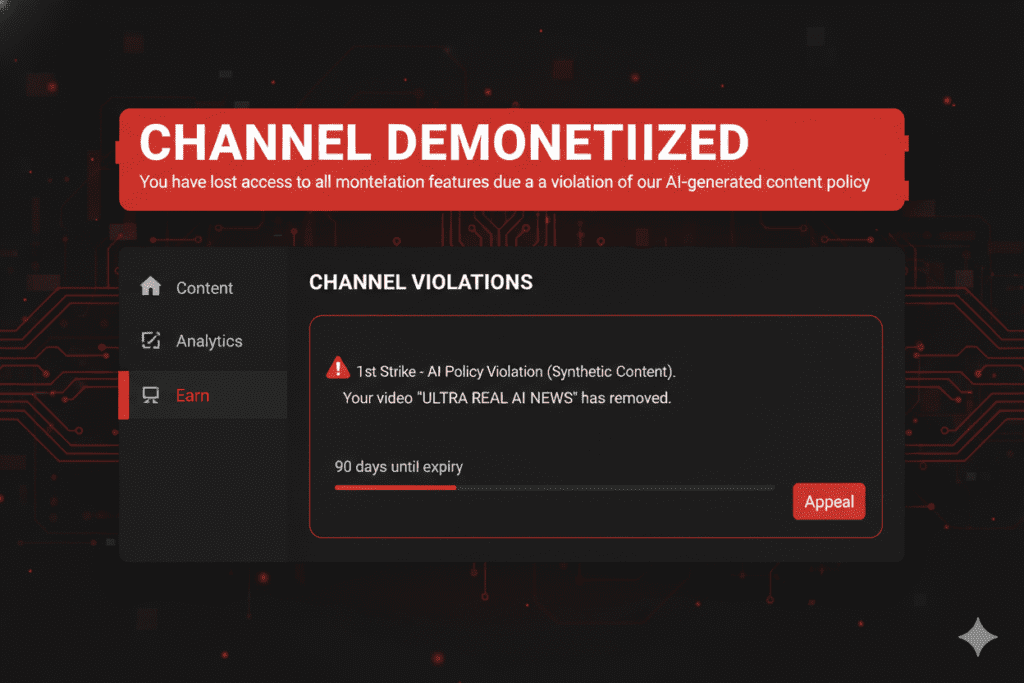
Not disclosing content that should be disclosed will lead to enforcement of YouTube policies. The outcome of such enforcement depends on the case, which means that all failures to disclose content do not necessarily result in a strike, demonetization, or channel termination.
Can AI-Generated YouTube Videos Be Monetized?
Yes. AI-generated and AI-assisted videos can be monetized on YouTube. Using AI does not automatically make a video ineligible for the YouTube Partner Program.
The monetization rules of YouTube are clearly focused on the content’s compliance with the platform’s policies, including the requirement of authenticity and originality.
On July 15, 2025, YouTube clarified its existing repetitious content policy by renaming it the inauthentic content policy, which covers repetitive or mass-produced content.
Examples of content that may have monetization problems include:
- Videos that use nearly identical templates with little meaningful variation.
- Mass-produced uploads that provide little original educational, creative, or entertainment value.
- Repetitive slideshows or scrolling text with minimal commentary or added value.
- Content copied from other sources with little meaningful transformation.
However, one may use AI for a wide range of purposes in the creative process. For instance, one may use AI for scriptwriting, creation of auxiliary visual and narrative elements, or audio commentary.
The utilization of such tools per se will not lead to a video’s invalidation. Nevertheless, the final result should still meet all of YouTube’s guidelines.
Moreover, one should also consider that policies regarding the use of AI tools may also apply. Hence, there is a list of requirements that one should comply with in order to monetize the content on YouTube.
What Should Creators Check Before Publishing an AI Video?
Before publishing an AI-generated or AI-assisted video, review the content and make sure it follows YouTube’s disclosure and monetization policies.
Use this checklist:
- Does the video realistically show a real person saying or doing something they never did?
- Does it meaningfully alter footage of a real event or place?
- Does it create a realistic scene that never happened?
- Does it contain AI-generated music that requires disclosure?
- Is AI being used only for exempt production assistance, such as scriptwriting, captions, or minor edits?
- Does the finished video offer original value rather than relying on repetitive or mass-produced material?
- Have you checked the applicable disclosure setting in YouTube Studio?
If your content falls within a disclosure category, select the appropriate setting before publishing. If you are unsure, review YouTube’s official disclosure examples.
Remember that meeting the disclosure requirement does not automatically make a video eligible for monetization. The video must also follow YouTube’s other applicable policies.
Why ytZolo Is Better Than Other Tools
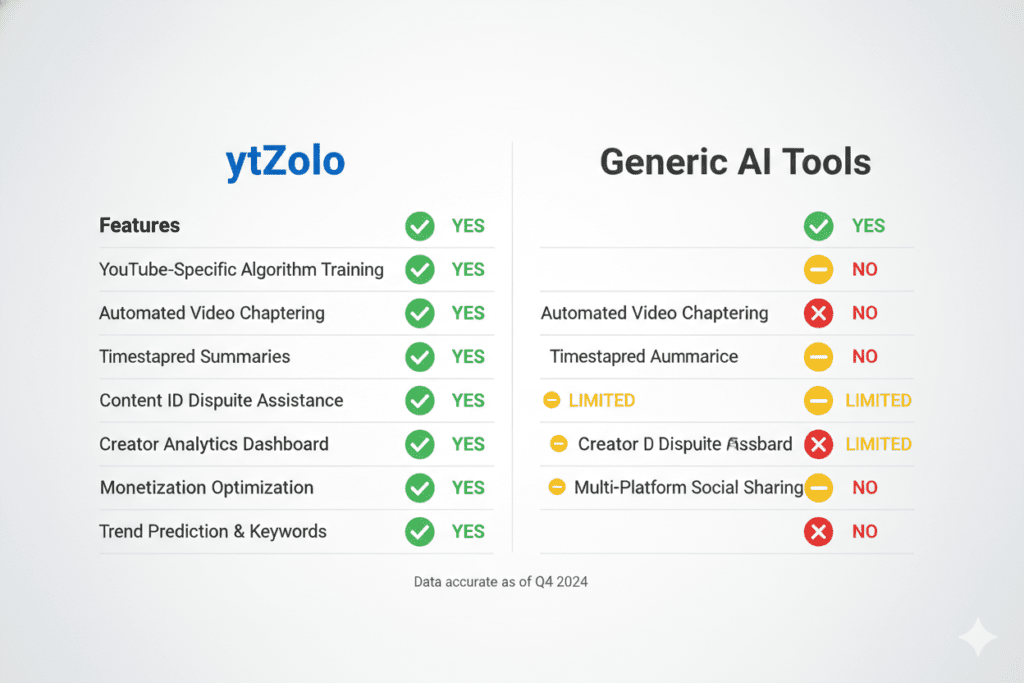
There are dozens of AI tools out there claiming to help YouTubers grow. Most of them fall short in critical ways.
Here’s how ytZolo stands apart from the competition:
ytZolo Is Built Exclusively for YouTube
Generic AI writing tools like ChatGPT or Jasper aren’t optimized for YouTube under youtube policy on ai generated content disclosure. They don’t understand SEO rankings on YouTube, they don’t analyze what’s actually trending in your niche, and they have no idea what makes a thumbnail click-worthy.
ytZolo is purpose-built for the YouTube ecosystem. Every feature is designed around YouTube growth, engagement, and compliance.
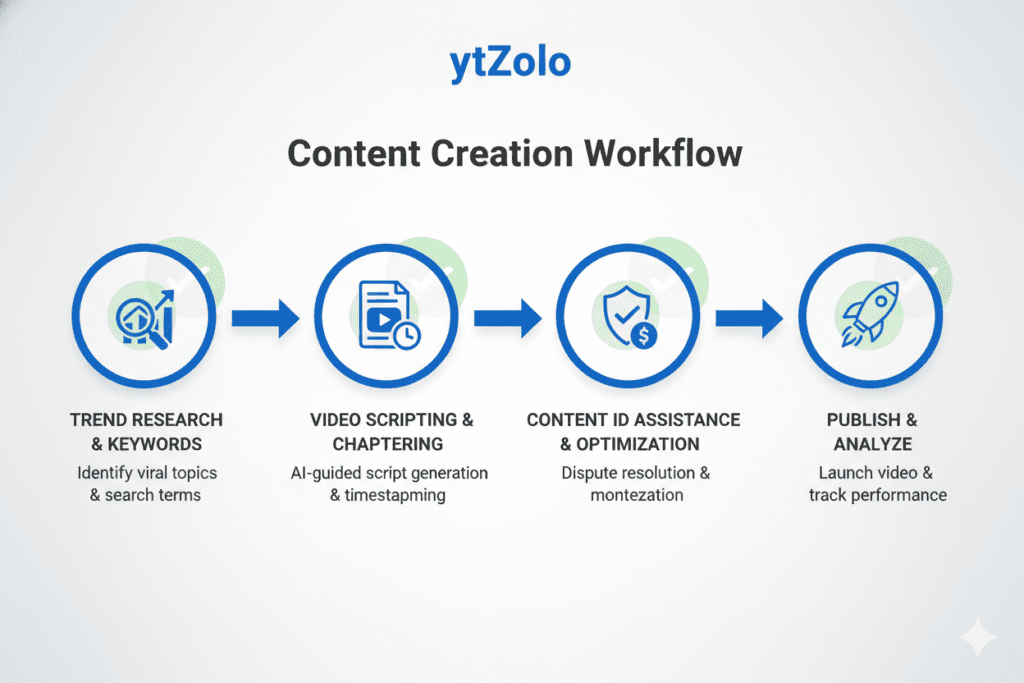
ytZolo Covers the Full Content Creation Workflow
Most AI tools do one thing. ytZolo does everything:
- AI-powered title generation — viral, SEO-optimized titles that make people click
- Script writing — structured, engaging scripts that retain viewers and satisfy YouTube’s quality standards
- Thumbnail ideation — compelling thumbnail concepts designed for maximum CTR
- Description optimization — SEO-rich descriptions that rank in search
- Tag research — smart tags that help the algorithm understand and distribute your content
- Trend analysis — real-time insight into what’s working in your niche right now
No other tool gives you this kind of complete workflow in one place. Learn more about how ytZolo transforms YouTube channels on the ytZolo blog.
ytZolo Keeps You on the Right Side of YouTube’s Rules
This is the part most tools ignore completely.
With the YouTube policy on AI generated content disclosure getting stricter by the month, using AI carelessly can hurt your channel. ytZolo helps you create content that adds real human value — the kind YouTube rewards, not penalizes.
The platform helps you work with the algorithm, not against it.
ytZolo Saves You Incredible Amounts of Time
What used to take a creator 6–8 hours — researching, scripting, optimizing, designing — can be done in a fraction of the time with ytZolo. That means more videos, faster growth, and less burnout.
Other tools make you piece together a workflow from five different apps under youtube policy on ai generated content disclosure. ytZolo puts it all in one place, so you can focus on what actually matters: creating.
How ytZolo Helps You Stay Compliant AND Go Viral
The smartest creators in 2025 aren’t choosing between compliance and growth. They’re achieving both — because they use the right tools.
ytZolo helps creators navigate the YouTube policy on AI generated content disclosure by focusing on what YouTube actually wants: original content with real human value.
Here’s how it works in practice:
Step 1: Research trends with ytZolo. Instead of blindly guessing what to create, ytZolo shows you what’s already performing in your niche — so you create targeted content from the start.
Step 2: Generate a human-first script. ytZolo’s AI scripting tool doesn’t replace your voice — it enhances it. Scripts are structured for YouTube’s format, but they leave room for your personality, commentary, and expertise.
Step 3: Optimize your title, description, and tags. ytZolo’s SEO tools ensure your content gets discovered. Properly optimized metadata also signals originality to YouTube’s algorithms.
Step 4: Design with purpose. ytZolo’s thumbnail ideation tools help you create click-worthy visuals that stand out in the feed — without relying on deceptive AI imagery that could trigger disclosure requirements.
Step 5: Publish with confidence. Your content is original, optimized, and human-centered. No synthetic voices impersonating real people. No fabricated events. No risk of surprise demonetization.
This is what working smarter looks like in 2025.
Explore everything ytZolo can do for your channel at ytzolo.com — and check out creator success stories and tutorials on the ytZolo blog.
Frequently Asked Questions
Does using AI to write a YouTube script require disclosure?
No. Using AI to brainstorm ideas, draft scripts, or create outlines does not require disclosure by itself. However, the finished video may still need disclosure if it contains realistic synthetic or altered content covered by YouTube’s policy.
Do YouTube Shorts need AI disclosure?
Yes, if the content meets YouTube’s disclosure requirements. YouTube’s May 2026 update says labels for covered realistic AI-generated or altered content appear as an overlay on Shorts.
Do I need to disclose an AI voiceover?
It depends on how the voice is generated and used. Cloning your own voice for voiceovers or dubbing is listed as an example that does not require disclosure. Realistic synthetic audio that imitates another person may require disclosure. Check YouTube’s official examples for your specific use case.
What happens if I forget to disclose AI content?
YouTube may apply a disclosure label automatically when its systems identify certain realistic synthetic content. Failure to disclose covered content may also lead to enforcement under YouTube’s policies. The outcome depends on the circumstances, so an omitted disclosure does not automatically mean a strike or demonetization.
Does the AI disclosure label reduce views?
YouTube says the disclosure label itself does not limit a video’s audience or affect its eligibility to earn money. Other policy violations may still affect a video’s status.
Can faceless AI videos be monetized?
Yes. Faceless videos are not automatically prohibited from monetization. Eligibility depends on whether the channel and videos meet YouTube’s requirements, including its rules on original, authentic content and repetitive or mass-produced uploads.
Is YouTube banning AI-generated videos?
No. YouTube allows AI-generated and AI-assisted content, subject to its disclosure requirements and other platform policies. Creators must disclose covered synthetic content and follow applicable Community Guidelines, copyright rules, and monetization policies.
Final Takeaway
YouTube does not require creators to disclose every use of AI. The key is understanding which synthetic or altered content falls within the platform’s disclosure requirements and using the appropriate setting in YouTube Studio.
Before publishing, check whether your video requires disclosure, make sure the finished content offers original value, and review YouTube’s current policies when requirements change.
Start creating smarter, faster, and more viral YouTube content with ytZolo today.
👉 Visit ytzolo.com to get started — and follow the ytZolo blog for the latest YouTube growth strategies, policy updates, and creator tips.


Pingback: YouTube Monetization AI Disclosure Requirements 2026 Exposed
Pingback: YouTube AI Generated Content Disclosure Policy 2026 Proven
Pingback: 7 Proven YouTube Policy on AI Generated Content Shorts Tips