
Table of Contents
The Hard Truth About Growing on YouTube in 2026
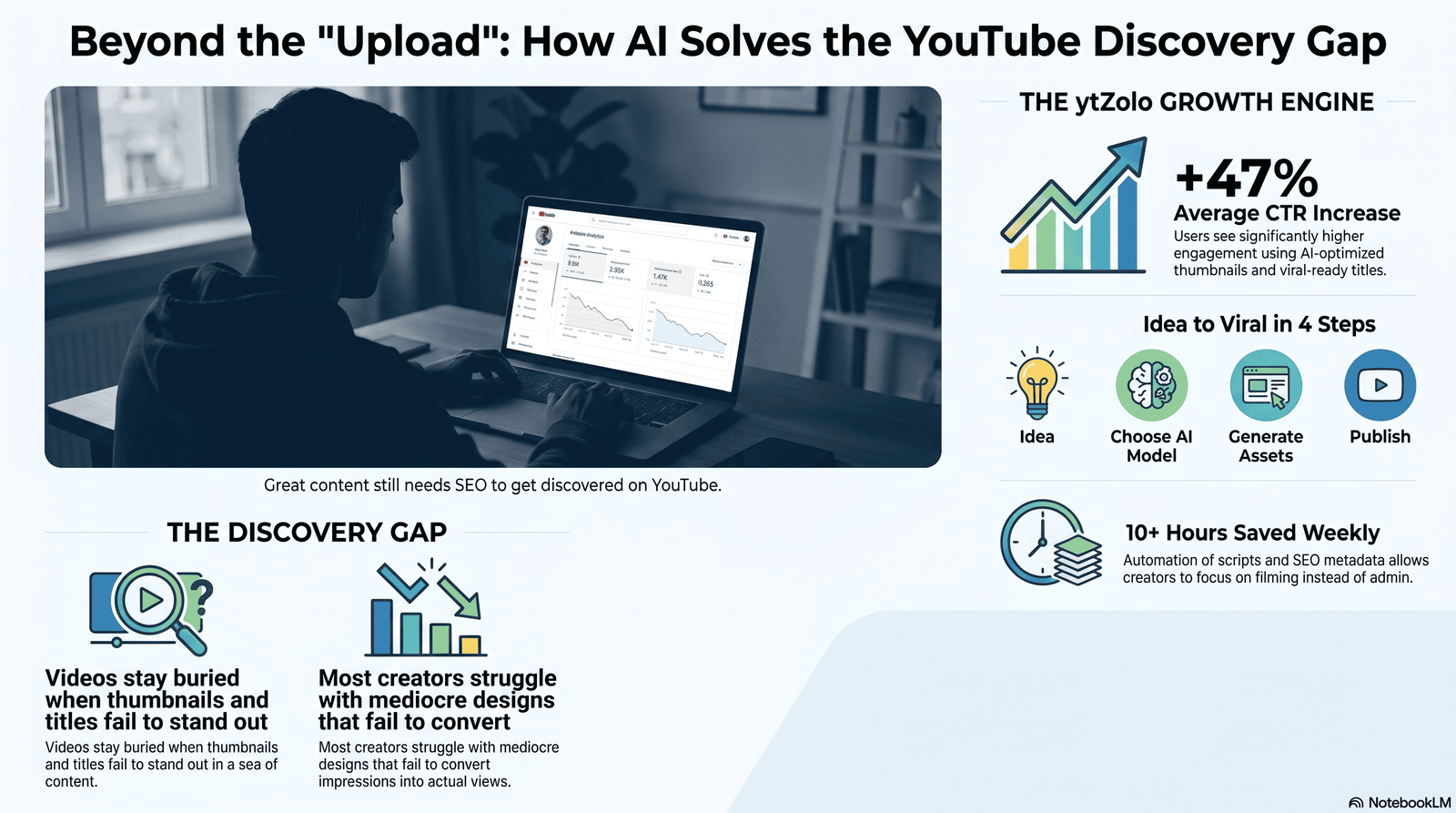
You film for hours. You edit carefully. You hit publish, sure it’s a winner.
Then 48 hours pass, and the view count barely moves.
Your content might genuinely be good. But if the algorithm can’t find it, none of that matters.
Over 800 million videos already live on YouTube, and roughly 500 hours of new footage uploads every single minute. Without a plan — and without the best AI tools for SEO YouTubers — your video is one voice in a stadium.
The creators pulling ahead in 2026 aren’t just more talented. They’re using AI tools for SEO YouTubers, including platforms like ytZolo, to work faster and rank smarter. This guide shows you exactly which ones are worth it.
Why YouTubers Need AI Tools for SEO Right Now
Manually guessing at titles, copying competitor tags, and writing descriptions from scratch is slow and unreliable.
YouTube’s algorithm rewards four things: watch time, click-through rate, engagement, and relevance. Hitting all four by hand, video after video, isn’t realistic.
This is exactly where AI tools for SEO YouTubers earn their place. They handle keyword research, surface what’s actually ranking, and help you build content around real search intent.
Skip this step and you’re leaving views, subscribers, and ad revenue on the table every week. Your competitors using AI tools for YouTube SEO are not waiting around.

What Makes a Great AI Tool for SEO YouTubers?
Not every tool that claims “AI-powered” belongs in your workflow. Here’s the checklist worth using:
- Keyword research with real search volume and competition data
- Title generation that’s both keyword-optimized and click-worthy
- Script writing built around search intent, not generic outlines
- Description and tag optimization that helps YouTube understand your video
- Thumbnail assistance to lift click-through rate
- Voice and audio tools — AI voiceover, music, and dubbing for faster, borderless production
- Competitor and trend detection so you know what’s working before you film
- Real time savings, not more tabs to manage
Most tools check two or three of these boxes. Few check all of them — which is exactly what separates a genuinely useful AI tool for SEO YouTubers from a nice-to-have add-on.
The Best AI Tools for SEO YouTubers (Ranked)
1. ytZolo — Best All-in-One AI Tool for SEO YouTubers
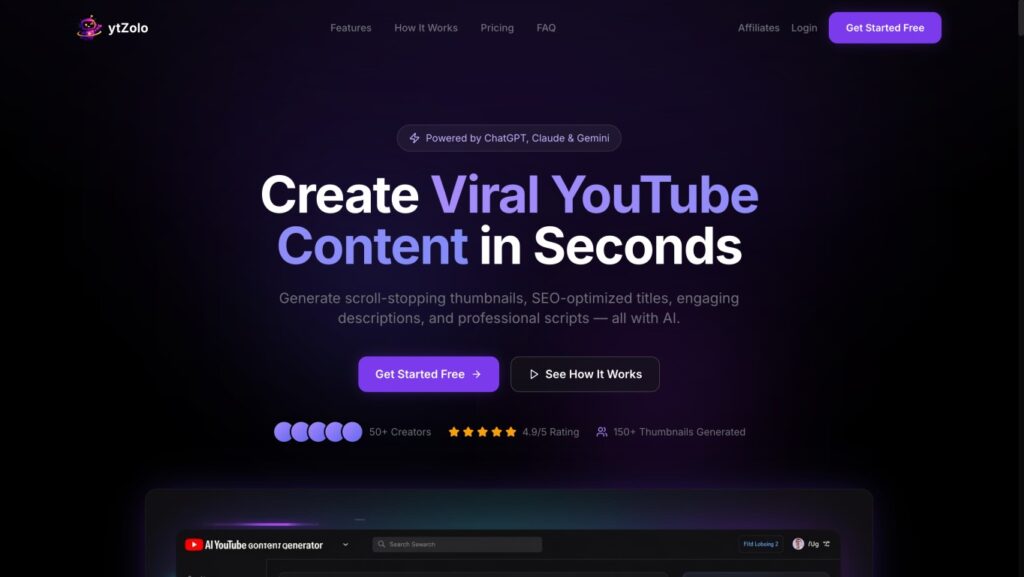
ytZolo is built specifically for YouTube growth, not general content marketing.
It combines AI-generated titles, scripts, thumbnails, descriptions, and tags with a full AI Audio Studio — voice generation, music, sound effects, and dubbing — under one workspace.
We’ll break this down fully in the next section. Short version: if you only try one tool from this list, make it ytZolo.
2. VidIQ
VidIQ is a familiar name in YouTube SEO, with keyword scoring, competitor tracking, and trend alerts. Its 2026 update adds an AI title generator and click-probability scoring.
It’s solid for keyword research, but it stops there — it doesn’t cover full content creation the way a dedicated AI tool for SEO YouTubers does.
3. TubeBuddy
TubeBuddy remains popular for A/B testing titles and thumbnails, with an AI Studio for tags and chapter generation. It integrates directly into YouTube Studio.
It’s more of a utility layer on top of content you’ve already made than a tool that helps you build it.
4. Descript
Descript is strong for editing and script creation, with voice cloning and filler-word removal built in. For a full workflow comparison, see ytZolo vs Descript vs VEED.
It lacks dedicated YouTube SEO optimization — think of it as a production tool, not a growth engine.
5. OpusClip
OpusClip repurposes long-form video into Shorts, finding viral moments and auto-generating clips with captions. It’s added basic keyword suggestions per clip in 2026.
Great for repurposing. Not built to support the full SEO workflow from idea to upload.
Why ytZolo Is the Most Complete AI Tool for SEO YouTubers
Most AI tools for SEO YouTubers do one or two things well. ytZolo covers the entire pre-upload workflow.
AI title generator. Get keyword-rich, emotionally compelling titles calibrated to your niche and current search trends — no blank-field staring required. Related reading: the free AI title generator breakdown.
Script writing AI. ytZolo drafts full scripts structured around your target keywords and search intent, complete with hooks, talking points, and CTAs.
Thumbnail concepts. Since thumbnails drive click-through rate, ytZolo generates visual concepts proven to perform in your niche.
SEO-optimized descriptions. Writing descriptions eats more time than it should. ytZolo generates keyword-rich descriptions that help YouTube’s algorithm understand and rank your content — see the YouTube description generator comparison for a deeper look at this category.
Smart tag generation. A full set of relevant, high-performing tags, generated instantly for every upload.
Content ideas and niche research. ytZolo analyzes your niche and surfaces video ideas backed by real demand, so you’re not guessing what to make next.
ytZolo’s AI Audio Studio: The Feature Most “Best AI Tools” Lists Miss
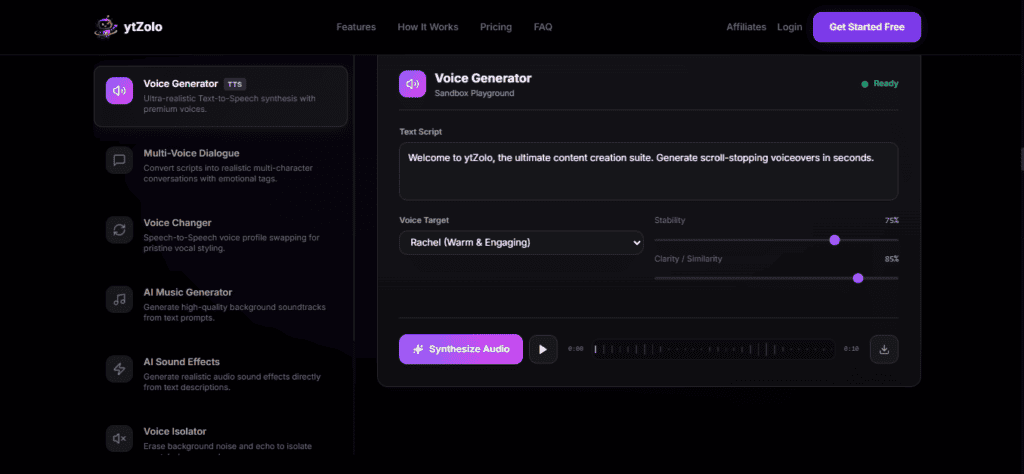
Here’s where ytZolo pulls ahead of every other AI tool for SEO YouTubers on this list: production doesn’t stop at the script.
The AI Audio Studio includes text-to-speech voice generation, multi-voice dialogue, a voice changer, an AI music generator, text-to-SFX sound effects, voice isolation for cleaning up noisy audio, and AI dubbing with forced alignment for accurate timing.
This matters most for faceless and voiceover-style channels, where narration, music, and sound design are the production step — not an afterthought handled in a separate app.
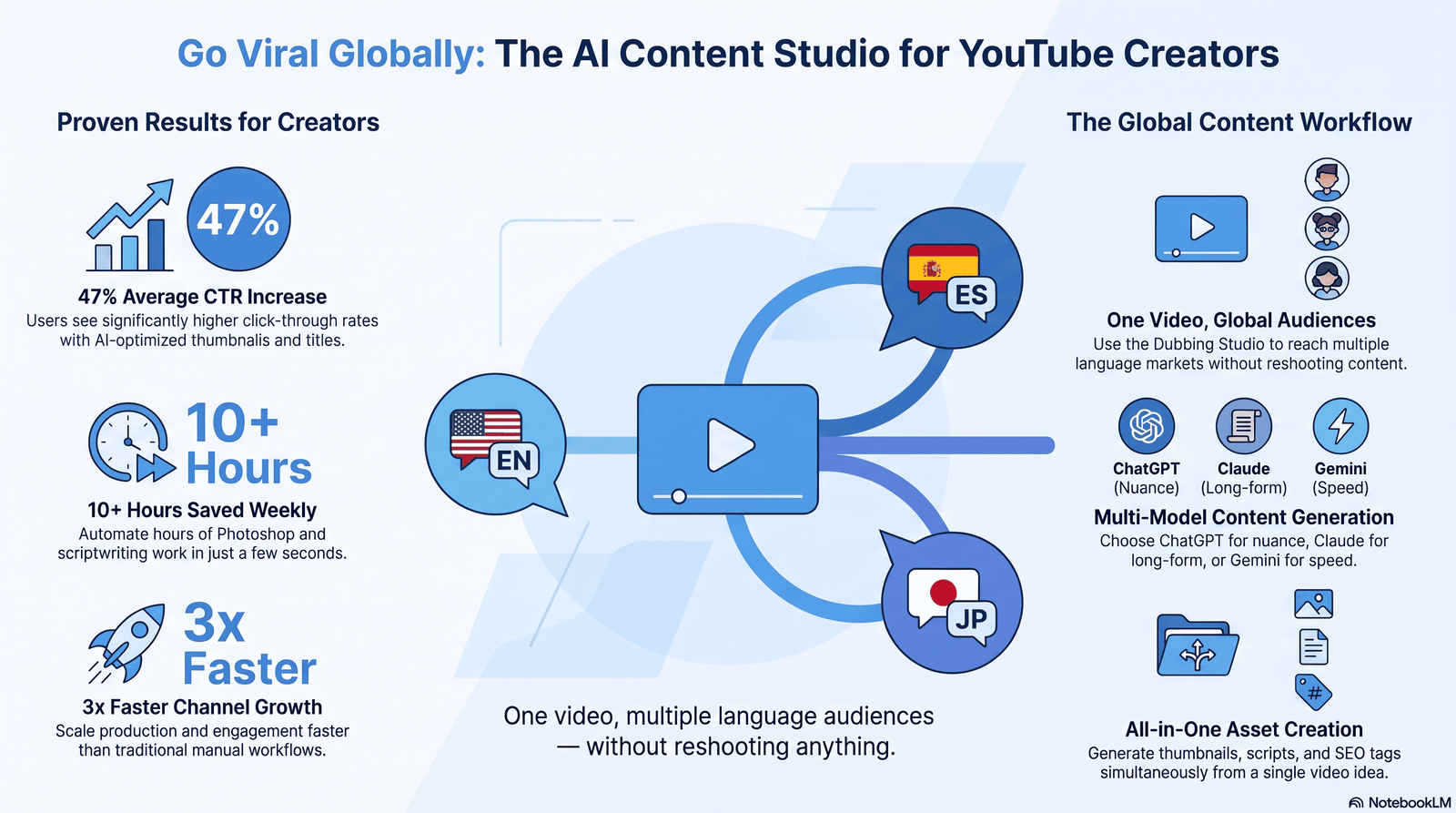
It also matters for reaching new audiences. Dubbing a video into another language lets one upload rank in multiple language markets on YouTube, instead of just one. Our full AI dubbing software guide covers how this works in more detail.
No other tool on the original list — VidIQ, TubeBuddy, Descript, or OpusClip — combines SEO writing tools with this level of audio production in one place.
Quick Comparison: ytZolo vs Other AI Tools for SEO YouTubers
| Tool | Titles & Scripts | Thumbnails | Voice, Music & Dubbing | Best For |
|---|---|---|---|---|
| ytZolo | Yes | Yes | Yes — TTS, music, SFX, voice changer, dubbing | Creators who want one full workflow |
| VidIQ | Titles only | No | No | Keyword and competitor data |
| TubeBuddy | Tags/chapters | A/B testing | No | YouTube Studio add-on tasks |
| Descript | Scripts | No | Voice cloning (editing-focused) | Video editors |
| OpusClip | No | No | No | Repurposing long-form into Shorts |
Pricing and plan details change over time — check ytZolo’s current plans and feature list directly before choosing a tier.
How to Use AI Tools for YouTube SEO: A Step-by-Step Guide
Step 1: Find your topic. Use ytZolo’s content idea generator to find topics with real demand and lower competition in your niche.
Step 2: Research your keywords. Pick one primary keyword, two or three secondary keywords, and a few long-tail variations to build the video around.
Step 3: Generate your title. Let the AI title generator give you five to ten options, then pick the one balancing keywords with emotional appeal.
Step 4: Write your script. Use the script tool for a full draft built around your keyword structure, then add your own voice, stories, and pacing.
Step 5: Produce your audio. Filming on camera? Go create. Running a faceless or voiceover channel? Generate narration, background music, and sound effects directly in the Audio Studio.
Step 6: Generate your metadata. Before uploading, create your description and tags. Copy, paste, done — your video is optimized before it hits the feed.
Step 7: Design your thumbnail. Use the thumbnail concepts as a starting point, then test them against your niche’s visual style. For more on this step, see the thumbnail maker guide for beginners.
Step 8: Publish and monitor. Upload, publish, and check performance after 24–48 hours. Repeat what works.
This workflow is repeatable and dramatically faster than doing each step manually.
Growing Beyond Borders: AI Dubbing and Multilingual YouTube SEO
Most AI SEO guides stop at English-language optimization. That leaves real growth on the table.
YouTube can serve different audio tracks to viewers based on their language settings. One video, dubbed into two or three additional languages, can rank in markets it never reached before.
Dubbing alone isn’t enough, though — pair it with translated titles, descriptions, and tags for the localized version to actually surface in that language’s search results.
This is a genuine SEO lever, not just an accessibility nice-to-have, and it’s one most “best AI tools for SEO YouTubers” lists skip entirely. Read the full breakdown in our AI dubbing software buyer’s guide.
Common Mistakes YouTubers Make Without AI
Even skilled creators fall into these traps when working without support:
- Picking topics on gut feel instead of real search data
- Writing clever titles that aren’t searchable — keyword-optimized and compelling isn’t a trade-off
- Leaving descriptions thin or blank, a missed SEO opportunity on every upload
- Using random tags with no strategy behind them
- Skipping repurposing, when every long video is a source for Shorts and clips
- Burning out on pre-production, which is when momentum — and channels — quietly die
Creators using AI tools for YouTube SEO avoid these traps by design, publishing more consistently with less burnout.
FAQ
What are the best AI tools for SEO YouTubers in 2026? The strongest options are ytZolo, VidIQ, TubeBuddy, Descript, and OpusClip. ytZolo leads because it covers keyword research, scripting, titles, descriptions, tags, thumbnails, and a full audio production suite in one platform.
How does AI improve YouTube SEO? AI tools analyze search trends and audience behavior to guide keyword choices, write optimized titles and descriptions, and generate content aligned with what viewers are actually searching for — leading to better rankings and faster growth.
Does ytZolo offer AI voiceover and dubbing? Yes. ytZolo’s Audio Studio includes text-to-speech voice generation, a voice changer, AI music, sound effects, voice isolation, and AI dubbing — useful for faceless channels and for localizing videos into new language markets.
Is there a free plan to try ytZolo? ytZolo offers a free tier alongside paid plans. Current details are listed on the pricing page, since plans and limits can change.
Can AI tools help small YouTube channels grow? Yes — small channels often benefit the most, since AI tools for SEO YouTubers give solo creators the same data-driven advantage larger channels get from a full team.
How much time can AI tools save for YouTubers? Creators typically spend 3–5 hours per video on pre-production SEO work alone. With an AI tool for SEO YouTubers like ytZolo, that same workflow often takes under 30 minutes.
Final Thoughts: Work Smarter, Rank Higher, Grow Faster
YouTube in 2026 doesn’t reward guesswork. It rewards relevance, and relevance runs on data.
The best AI tools for SEO YouTubers aren’t optional anymore — they’re the baseline for any creator serious about growth.
ytZolo earns the top spot on this list because it supports the full workflow: keywords, scripts, titles, thumbnails, descriptions, tags, voice, music, and dubbing, all in one place.
You don’t need to outwork your competition. You need to outsmart it.
Explore more creator guides on the ytZolo blog, including how to get more YouTube clicks and AI tools for YouTube creators.
External resources:
- YouTube Creator Blog — official tips and algorithm updates
- Google Search Central — how search and discoverability work
- HubSpot Video Marketing Statistics — data on video content performance
About the Author
Anshika Verma Email: anshika@ytzolo.com
Anshika Verma researches AI creator tools, YouTube growth workflows, and multilingual video production. Her work focuses on testing AI writing, voice, and dubbing platforms against real creator use cases, then translating that testing into practical guidance for YouTubers and small teams navigating an increasingly AI-assisted content pipeline.

