
Quick Summary: Choosing between an AI music generator and a stock music library isn’t about which option is universally “better.” The right choice depends on your upload schedule, budget, creative workflow, and how much control you want over your soundtrack. This guide compares the real differences in cost, production time, sound quality, originality, and licensing risk, then helps you choose the best fit for your channel with a practical decision matrix. If you’re looking for an all-in-one workflow, platforms like ytZolo combine AI music generation with other creator tools, making it easier to produce original audio without slowing down your publishing schedule.
Table of Contents
Introduction
You’re staring at two tabs. One is a stock music library with 40,000 tracks and a search bar. The other is an AI music generator with a blank prompt box.
Both promise the same outcome: background music for your video. But the ai music vs stock music decision affects your budget, your weekly time spent editing, and how original your channel actually sounds.
This isn’t a generic “AI is the future” pitch. Stock libraries still have real strengths, and AI music generators still have real limits. This guide compares them on the factors that actually change a creator’s workflow.
For the technical side of how these tools generate music in the first place, ytZolo’s complete AI music generator guide covers that ground in more depth.
What’s Actually Different Between the Two
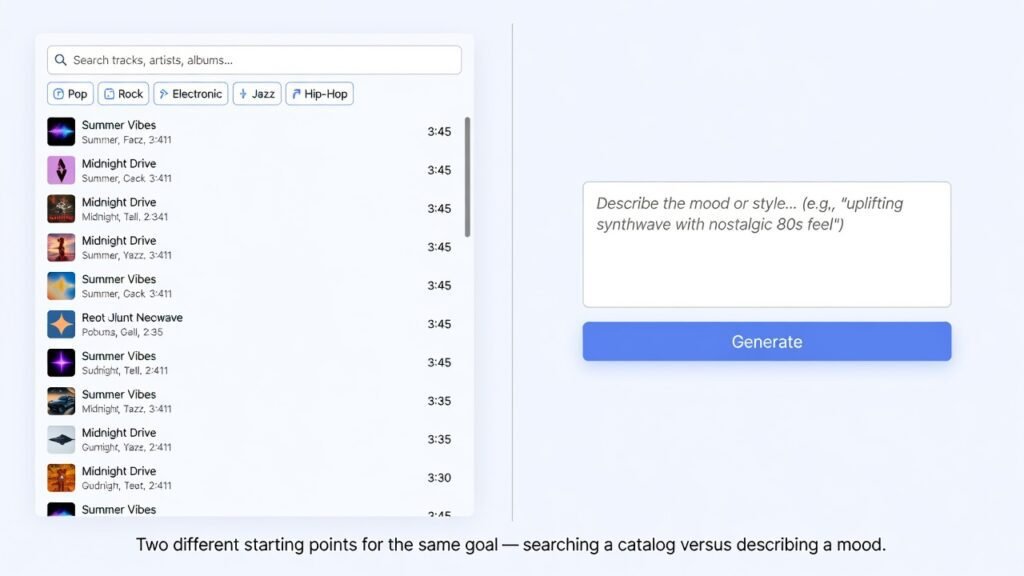
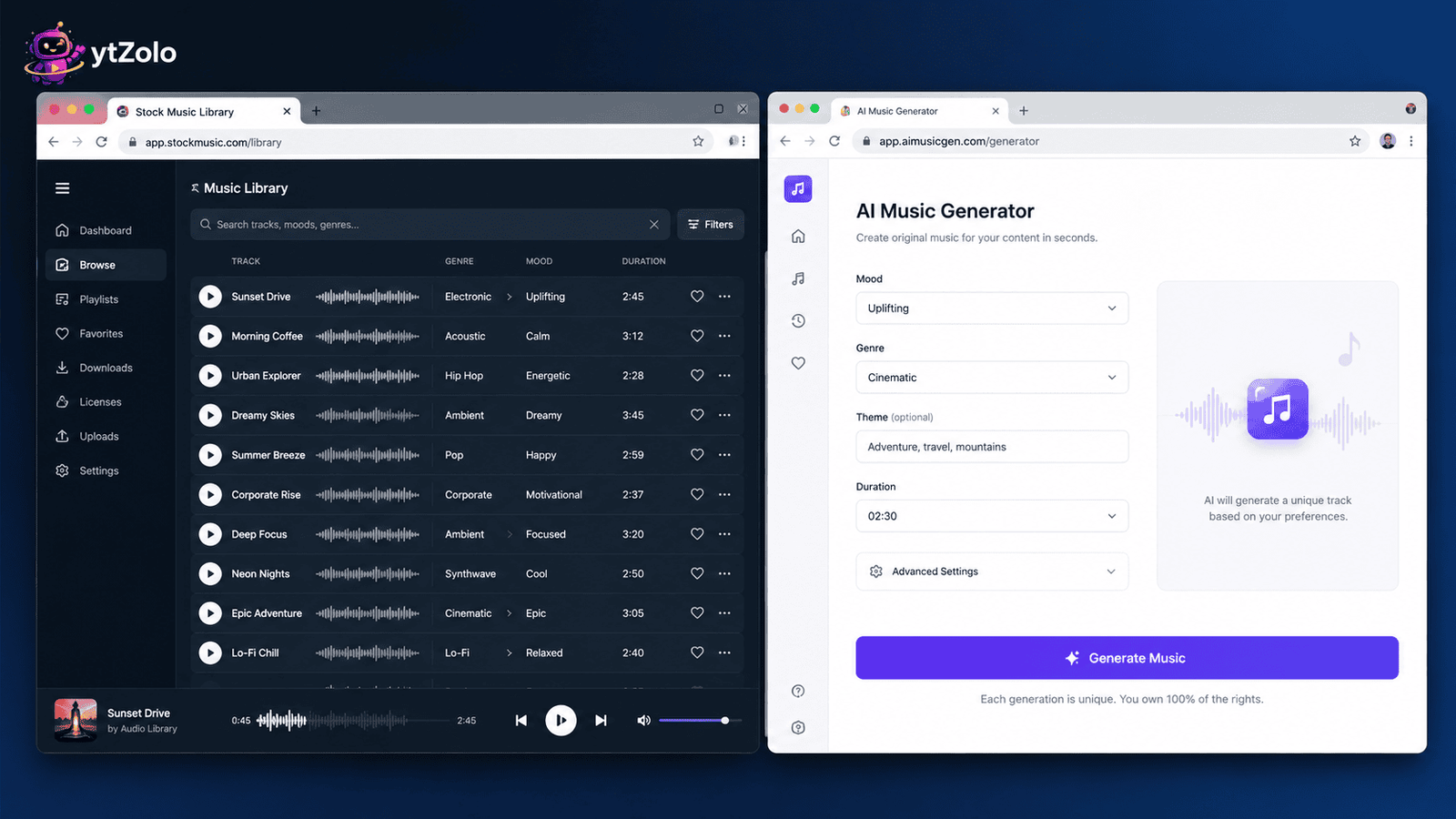
A stock music library is a fixed catalog. Thousands of pre-recorded tracks sit behind a subscription, and you search, filter, and download.
An AI music generator composes something new for your specific prompt. Nobody else gets the exact same output from the same input, which changes the originality math entirely.
Neither format is “fake” music — stock tracks are made by real composers, and AI tracks are generated from models trained on real recordings. The difference is in how the track reaches you.
Cost Comparison: What You Actually Pay Over a Year
Sticker price alone doesn’t tell the full story. What matters is cost against how often you actually publish.
Stock libraries typically run flat monthly subscriptions regardless of how many tracks you download that month. Epidemic Sound sits around $9.99–$15/month for individual creators, and Artlist runs closer to $199/year.
AI music generators often price by credits or generation limits, which scales differently depending on how many tracks you produce weekly.
| Upload Frequency | Stock Library (annual) | AI Music Generator (annual, mid-tier) | Cheaper Option |
|---|---|---|---|
| 1 video/week | ~$120–$180 | ~$60–$120 (light credit plan) | AI generator, usually |
| 3–4 videos/week | ~$120–$240 | ~$150–$300 (higher credit tier) | Roughly comparable |
| Daily uploads / multi-channel | ~$240+ (multiple seats) | ~$300–$500+ (bulk credits) | Depends on the platform’s bundling |
Prices shift often across this category — always confirm current rates on the vendor’s pricing page before budgeting a full year.
Bundled platforms like ytZolo fold music generation into a suite that also covers voice, scripting, and SEO, which changes the math again since you’re not paying for five separate subscriptions.
Speed and Workflow: Minutes vs. Hours
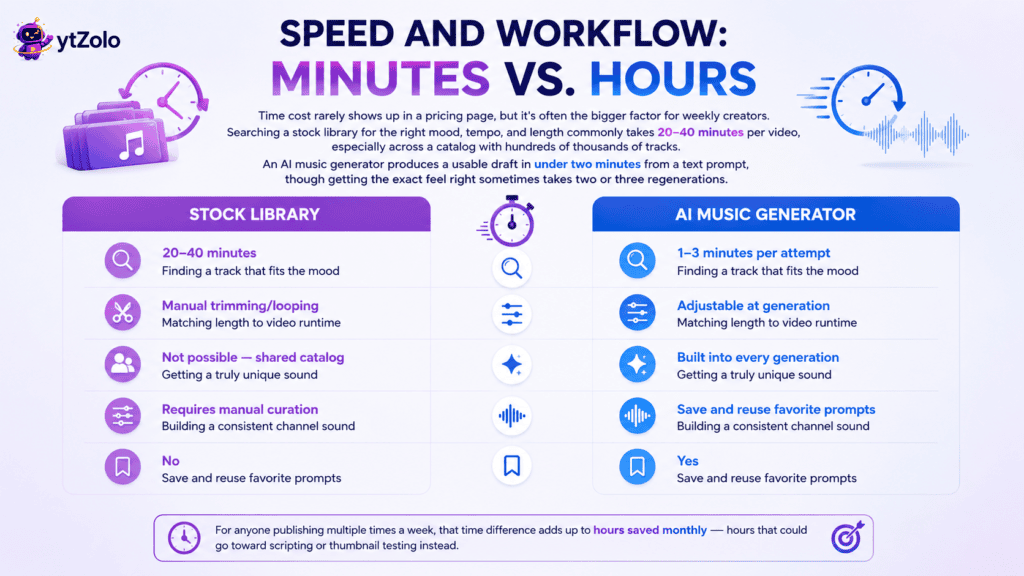
Time cost rarely shows up in a pricing page, but it’s often the bigger factor for weekly creators.
Searching a stock library for the right mood, tempo, and length commonly takes 20–40 minutes per video, especially across a catalog with hundreds of thousands of tracks.
An AI music generator produces a usable draft in under two minutes from a text prompt, though getting the exact feel right sometimes takes two or three regenerations.
| Task | Stock Library | AI Music Generator |
|---|---|---|
| Finding a track that fits the mood | 20–40 minutes | 1–3 minutes per attempt |
| Matching length to video runtime | Manual trimming/looping | Adjustable at generation |
| Getting a truly unique sound | Not possible — shared catalog | Built into every generation |
| Building a consistent channel sound | Requires manual curation | Save and reuse favorite prompts |
For anyone publishing multiple times a week, that time difference adds up to hours saved monthly — hours that could go toward scripting or thumbnail testing instead.
AI Music vs Stock Music: Sound Quality and Production Value
This is where stock libraries still hold an edge in specific cases. Tracks from Epidemic Sound or Artlist are composed, mixed, and mastered by professional musicians.
AI-generated tracks can sound excellent for background beds, but quality varies more between generations, and complex orchestral or vocal-heavy output isn’t always as polished as a human-produced equivalent.
For simple, looping instrumental beds under narration, the quality gap is small. For a flagship intro theme or a brand-defining sound, a stock or custom-composed track may still edge out generated audio.
Originality: Will Your Music Sound Like Everyone Else’s?
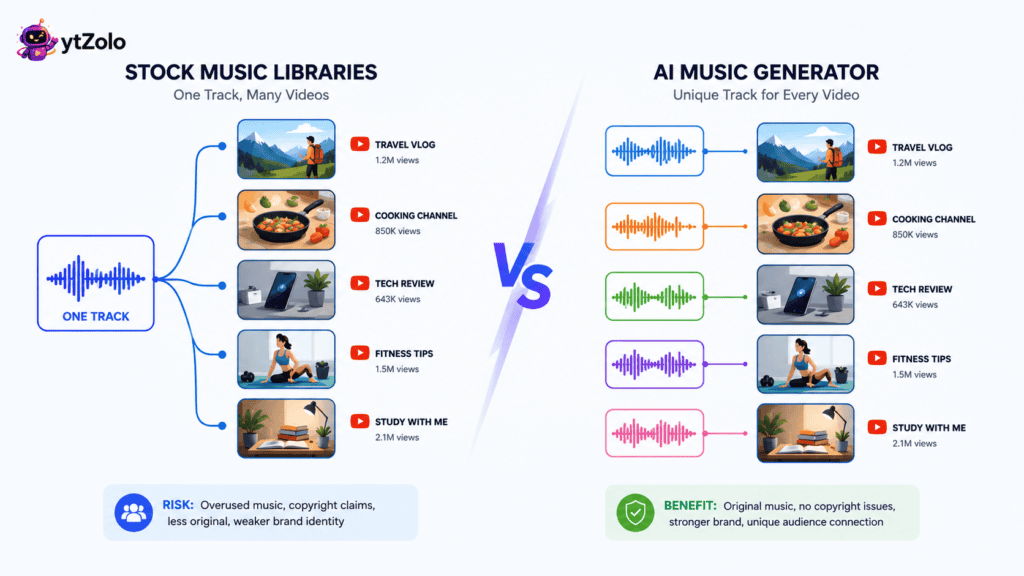
Stock tracks get reused. A popular Epidemic Sound or Artlist track can end up under thousands of unrelated videos, and attentive viewers do notice repeated tracks across different channels.
An AI-generated track is composed fresh from your prompt, which meaningfully lowers the odds that another creator’s video is running the identical piece of music.
This matters more for channels trying to build a distinct audio identity — a recognizable “sound” tied to their brand rather than a generic library loop anyone could be using.
Creative Control and Customization
A stock library gives you what already exists. If the mood, tempo, or length you need isn’t already recorded, you compromise or layer multiple clips together.
An AI music generator lets you describe exact mood shifts, request a specific instrument feel, or set duration precisely — no browsing required.
That said, most AI tools cap how much fine-grained editing you can do post-generation. If you need bar-by-bar control like a professional composer, some platforms — Soundraw among them — go further than others.
Licensing and Copyright Risk (Short Version)
Neither format is automatically “safe” just because it’s licensed or generated. Stock library tracks are usually tied to an active subscription, and AI tracks are usually tied to a specific plan tier’s commercial terms.
The deeper legal nuance — what “copyright-free” actually means, who owns an AI-generated track, and how Content ID treats each format — is covered in full in ytZolo’s AI music copyright free guide.
The short version: always confirm commercial-use rights before publishing a monetized video, regardless of which format the track came from.
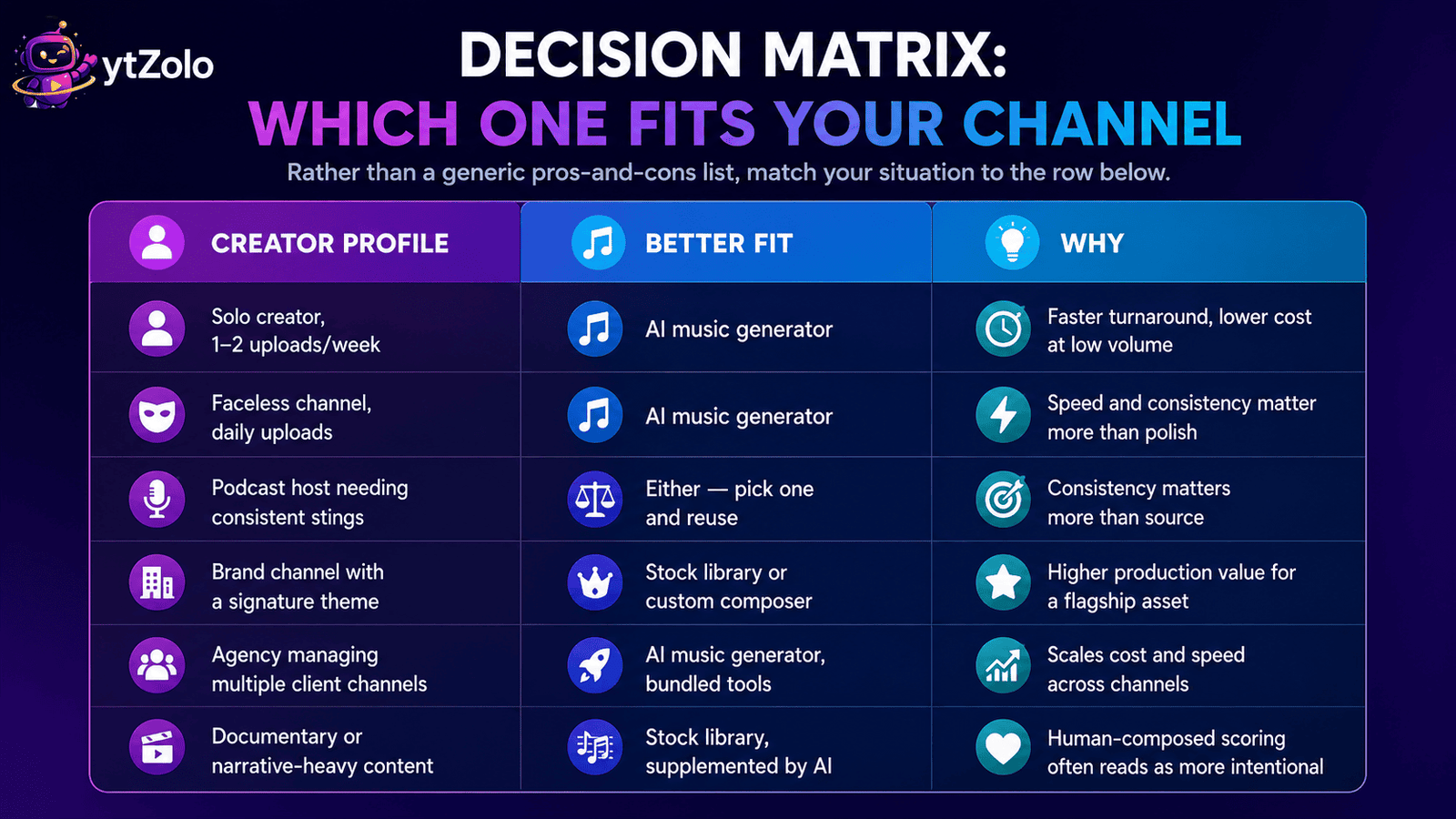
AI Music vs Stock Music Decision Matrix: Which One Fits Your Channel
Rather than a generic pros-and-cons list, match your situation to the row below.
| Creator Profile | Better Fit | Why |
|---|---|---|
| Solo creator, 1–2 uploads/week | AI music generator | Faster turnaround, lower cost at low volume |
| Faceless channel, daily uploads | AI music generator | Speed and consistency matter more than polish |
| Podcast host needing consistent stings | Either — pick one and reuse | Consistency matters more than source |
| Brand channel with a signature theme | Stock library or custom composer | Higher production value for a flagship asset |
| Agency managing multiple client channels | AI music generator, bundled tools | Scales cost and speed across channels |
| Documentary or narrative-heavy content | Stock library, supplemented by AI | Human-composed scoring often reads as more intentional |
If you fall between two rows, the safer default is testing both on a free tier before committing to either one long-term.
The Hybrid Approach: Using Both
Most experienced creators don’t pick a single side of the ai music vs stock music debate — they use both, depending on the asset.
A common pattern: stock library tracks for a channel’s signature intro, and AI-generated background beds for the bulk of weekly video content where speed matters more.
This hybrid approach also hedges licensing risk — if one platform changes its terms, you’re not depending on a single source for every track on your channel.
What Makes a Good AI Music Generator
Not every AI music tool is worth adding to your workflow. The strongest ones combine mood-based prompting, clear commercial licensing, and export formats that drop straight into your editor.
ytZolo’s breakdown of what makes a good AI music generator covers this in detail — including how licensing clarity, mood matching, and workflow integration separate a genuinely useful tool from a novelty generator.
If your channel also needs voiceovers or multilingual dubbing, it’s worth checking whether your music tool sits inside a broader Audio Studio rather than a standalone app.
Common Mistakes When Choosing
Picking based on price alone. A cheap subscription that eats 40 minutes per video search isn’t actually cheaper once you count your time.
Assuming AI-generated always means unlicensed for commercial use. Plenty of AI tools restrict monetized use to paid tiers — check before publishing.
Never testing the free tier first. Both stock libraries and AI generators usually offer a trial or limited free plan — use it before committing to a year-long subscription.
Ignoring your own upload frequency. A daily-upload channel and a monthly-upload channel have completely different cost-per-video math.
Sticking with one platform out of habit. Licensing terms and pricing shift often enough in this category that it’s worth re-checking annually.
Frequently Asked Questions
Is AI music better than stock music for YouTube? Neither is universally better. AI music generally wins on speed, cost at low-to-mid volume, and originality; stock libraries often win on polished, human-produced quality for flagship assets.
Which is cheaper: AI music generators or stock music libraries? It depends on upload frequency. For one to two videos a week, AI generators are usually cheaper; at very high volume, the math can flip depending on the platform’s credit pricing.
Can I use AI-generated music on a monetized YouTube channel? Usually yes, if your plan includes commercial-use rights. Free tiers frequently restrict monetized use — see ytZolo’s AI music copyright free guide for the full breakdown.
Do stock music tracks get flagged by Content ID? Properly licensed stock tracks generally shouldn’t trigger a claim, but mismatched licensing or expired subscriptions occasionally cause issues.
Is AI-generated background music copyright-free? Not automatically — it depends on the platform’s license terms, which is covered in depth in the dedicated copyright guide.
Can I mix AI music and stock tracks on the same channel? Yes, and many creators do — using a signature stock track for intros and AI-generated beds for the bulk of regular content.
Which option sounds more “professional”? For complex orchestral or vocal-driven pieces, stock libraries composed by human musicians still tend to sound more polished. For simple background beds, the gap is small.
Do AI music generators support long-form background tracks, or just short clips? Most support full-length tracks matched to a video’s runtime, not just short stings — length is usually adjustable at generation.
Will my AI-generated track sound like someone else’s? Unlikely, since it’s composed fresh from your specific prompt, unlike a stock track that’s available to every other subscriber of the same library.
How do I know if a tool is a good AI music generator for YouTube specifically? Look for explicit Content ID or commercial-use language in the terms, plus mood-matching controls suited to video pacing rather than standalone songs.
Is it worth paying for both a stock library and an AI music generator? For channels with a signature theme plus high-volume weekly content, yes — the hybrid approach is common among established creators.
Do AI music tools work for podcasts the same way they work for YouTube? Yes. Short intro and transition stings are one of the most common uses for AI music generators in podcast production.
What should I check before switching from a stock library to an AI generator? Confirm the AI tool’s commercial licensing terms, test output quality against your actual footage, and compare real cost at your specific upload frequency.
Final Thoughts
The ai music vs stock music decision isn’t really about which category is objectively superior — it’s about matching the tool to your publishing schedule and budget.
If speed, originality, and low cost at moderate volume matter most, an AI music generator is usually the stronger fit. If a polished, human-composed signature sound matters more than speed, a stock library still holds real value.
Many creators land somewhere in between, using both depending on the asset — and that hybrid approach is a completely reasonable long-term workflow.
Whatever you choose, treat licensing terms as a checklist item for every track, not an afterthought — a few minutes of verification is cheaper than a held payout during a dispute.
Author
Anshika Verma Email: anshika@ytzolo.com
Anshika researches AI creator tools, YouTube audio workflows, and content automation hands-on, testing platforms across scripting, SEO, thumbnails, and audio production before writing about them. Her comparisons are based on direct use of these tools and published pricing pages, rather than promotional claims, with a focus on what actually holds up in a real creator’s publishing schedule.

